

Understanding Layers in Photography
An in-depth look at a renaissance technique

Layering is a technique that’s older than photography itself, and it might be the missing piece in your work. Even if you haven’t consciously used it yet, there’s a good chance it’s present in several images you’ve come to admire. I’ve touched on it before, but this week, we’re going to dive deeper.
What is layering? Why is it valuable? And most importantly, how do you start practicing it with your own lens? Let’s get into all that and more.
Upcoming Events & Workshops
Leica Connect: Photo Stories from Around the World - Seattle
I’ll be joining a free event at Leica Store Bellevue for an evening of stories from my recent photography adventures with my SL kit. If you’re in the greater Seattle area, come by and let’s connect.
Leica Akademie: Video for Photographers
The next Video for Photographers Akademie is coming to London this June. Sign up here to be notified.
Seats for my 2026 India workshop are currently sold out. If you’re still interested, you can join the waitlist here to be notified if a spot opens up or when new dates become available.
What Is Layering?
In photography, layering is a technique used to create depth and separation. The goal is to distribute elements across three distinct planes so that the image appears to extend away from the viewer.
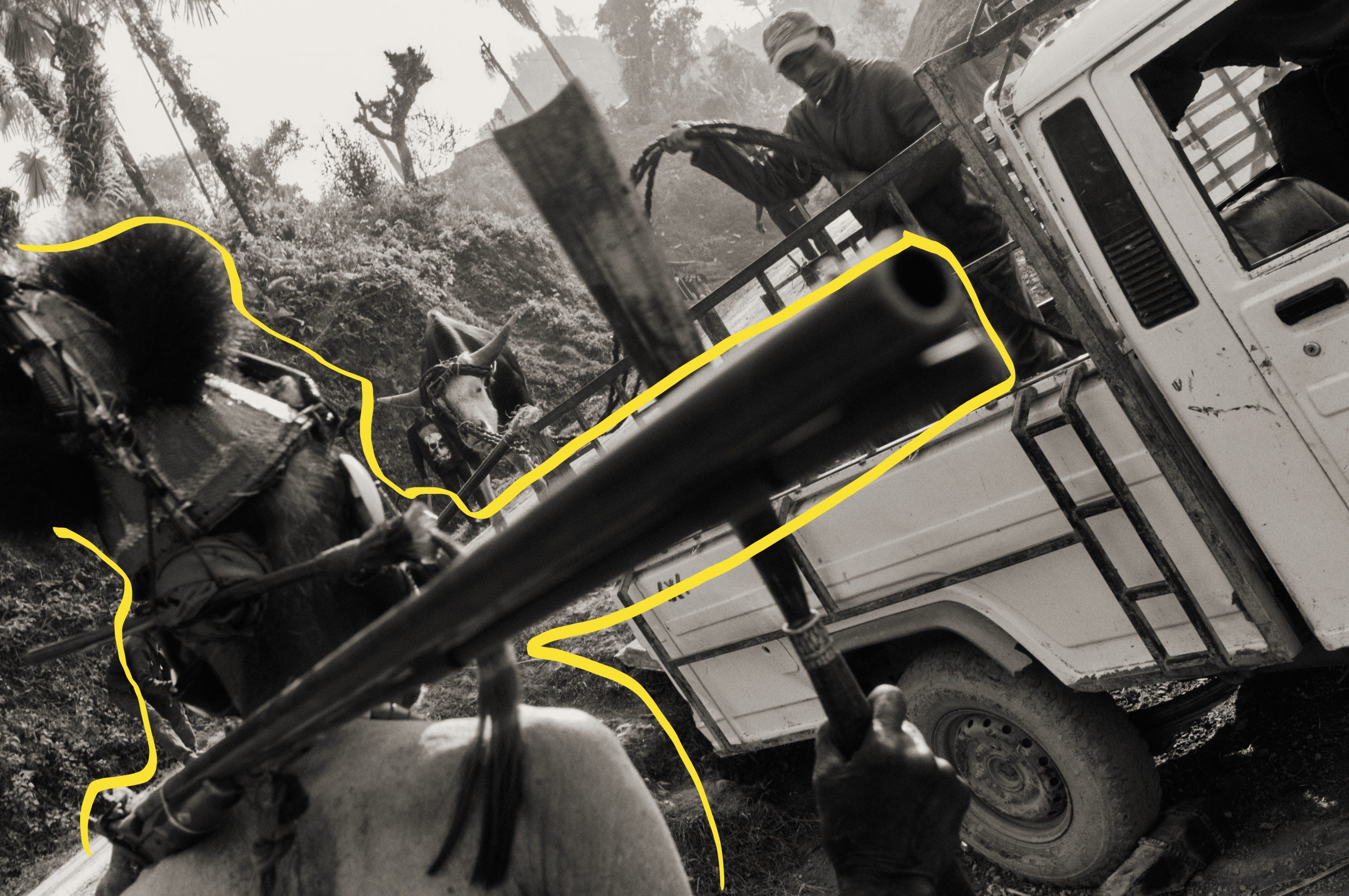
First, there’s the foreground. This sits closest to the lens and often serves as the entry point for our eyes. It’s designed to grab our attention and begin our journey into the frame.
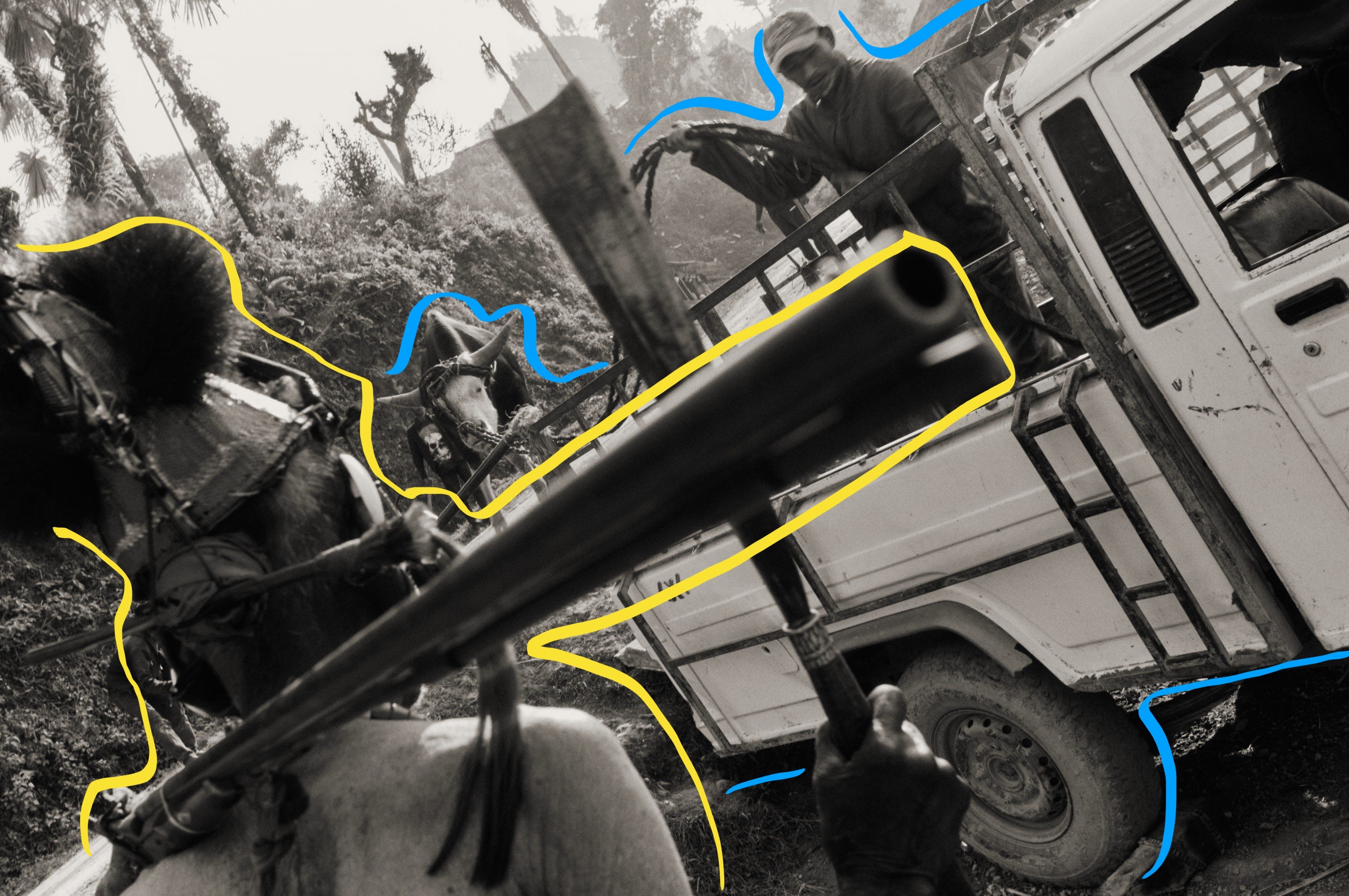
Next is the mid ground. This plane usually houses the core of the story. It’s where the heart of the image exists, with the foreground often acting in service of this central narrative.
Last, there’s the background. This plane looks to provide scale, context, and maybe even a sense of time. It sets the expectations for the environment in which the story unfolds.
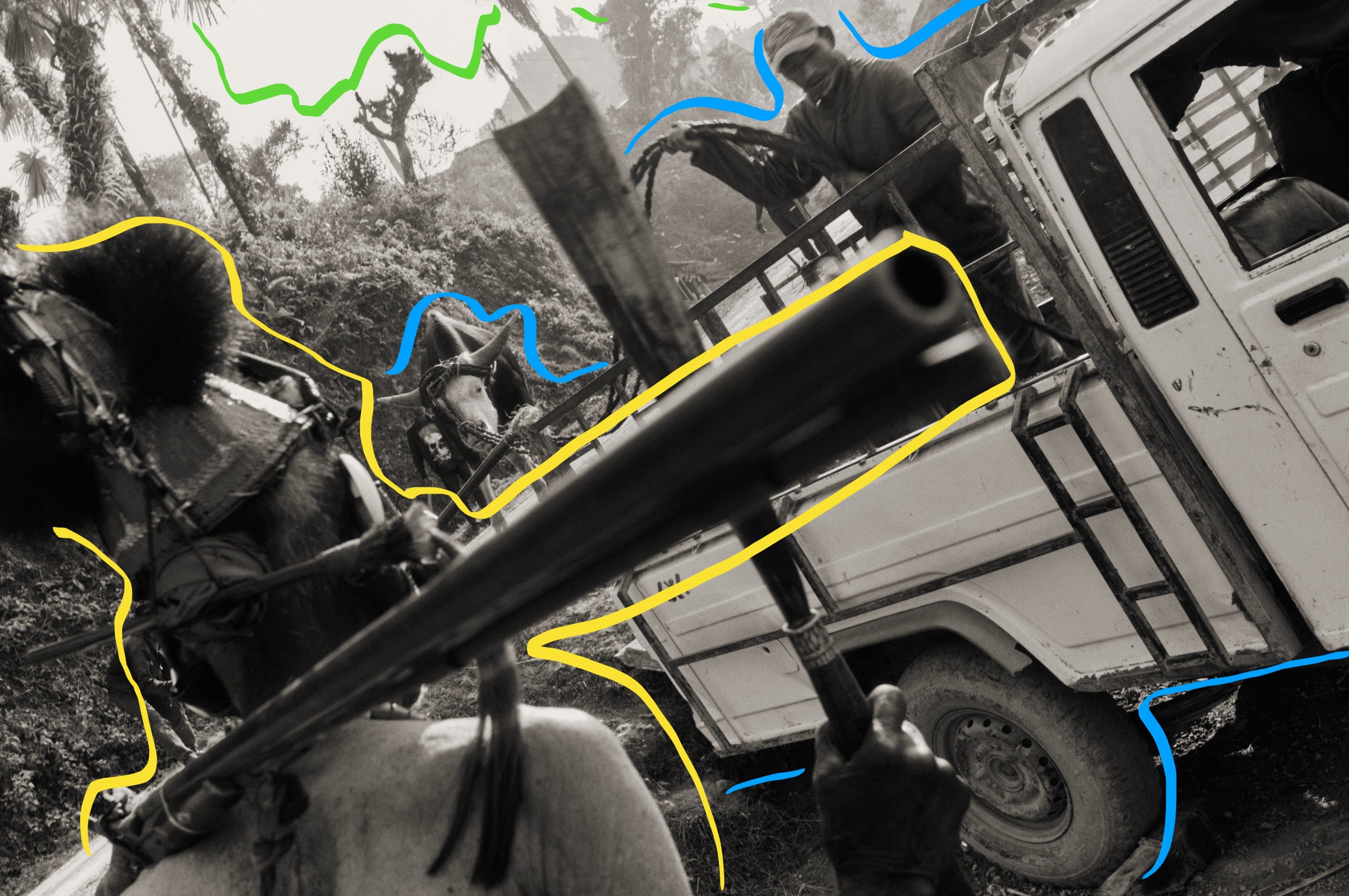
When used effectively, these planes transform the two dimensional nature of photography by adding the feeling of a third dimension. It’s the birth of a Z-axis that makes the image feel like you could reach right into it.
That’s the power of layering.
Where Did Layering Come From?
The technique of layering arrived long before the first photographers. While there’s some debate regarding its exact origin, I find myself leaning toward the renaissance period with legends like Leonardo da Vinci and Raphael. These masters developed painting techniques that added profound depth to their work, ultimately pioneering a new era of art.
Leonardo moved away from hard, contoured lines and invented the sfumato method. This created a sense of atmospheric perspective that allowed colours to blend into a smokiness that made the painting feel more like a lived-in world. Raphael furthered the art with linear perspective, where distant objects are rendered with lighter tones and less detail to create the illusion of this vast distance.
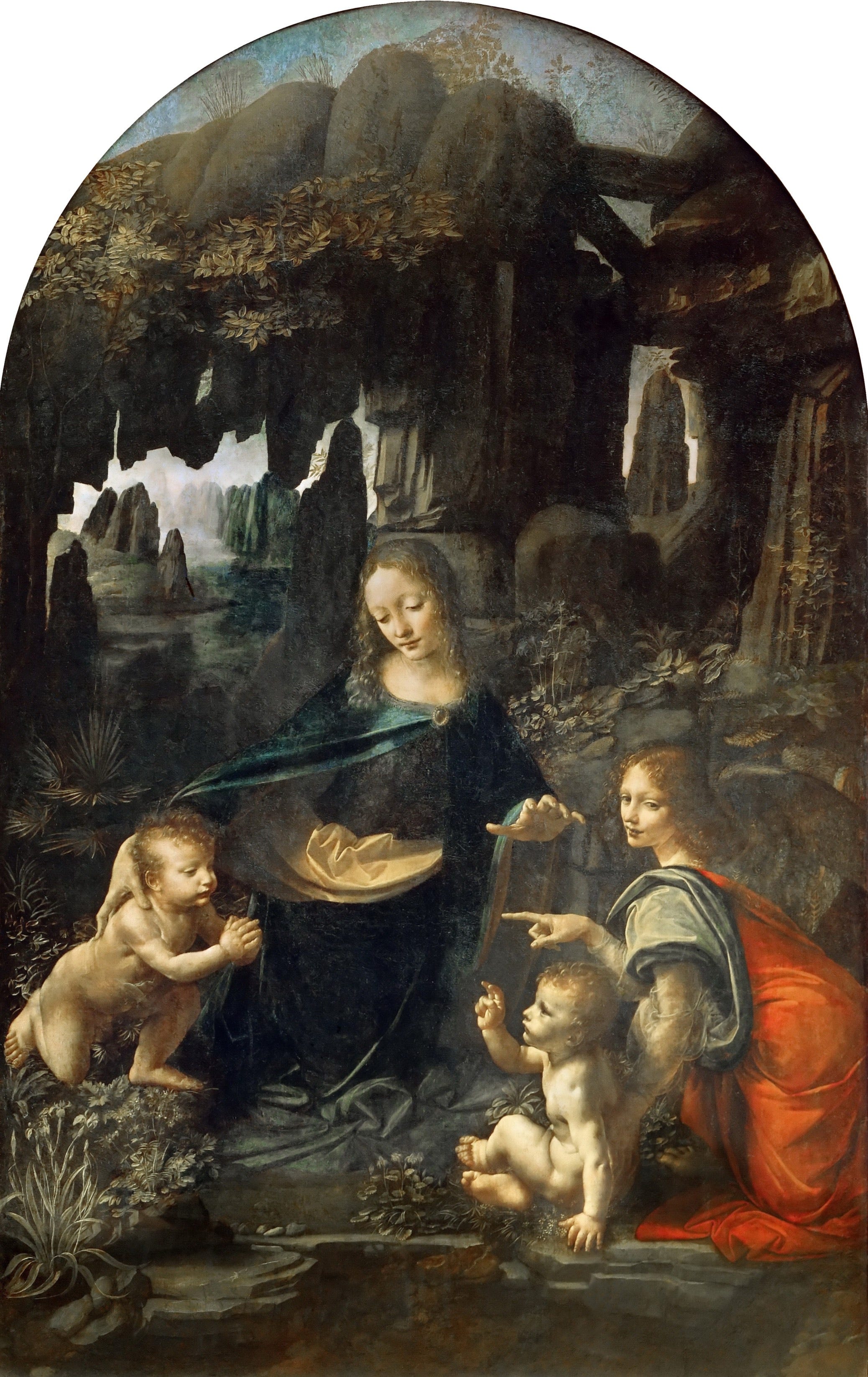
While Western art often dominates the narrative, we can look further back to find an even earlier foundation. The Chinese art of shanshui painting from the 5th century—a full millennium before Leonardo—showcases layering and vertical composition in powerful ways. When you stop to study these mountain and water landscapes, the intentionality behind the depth is pretty striking.
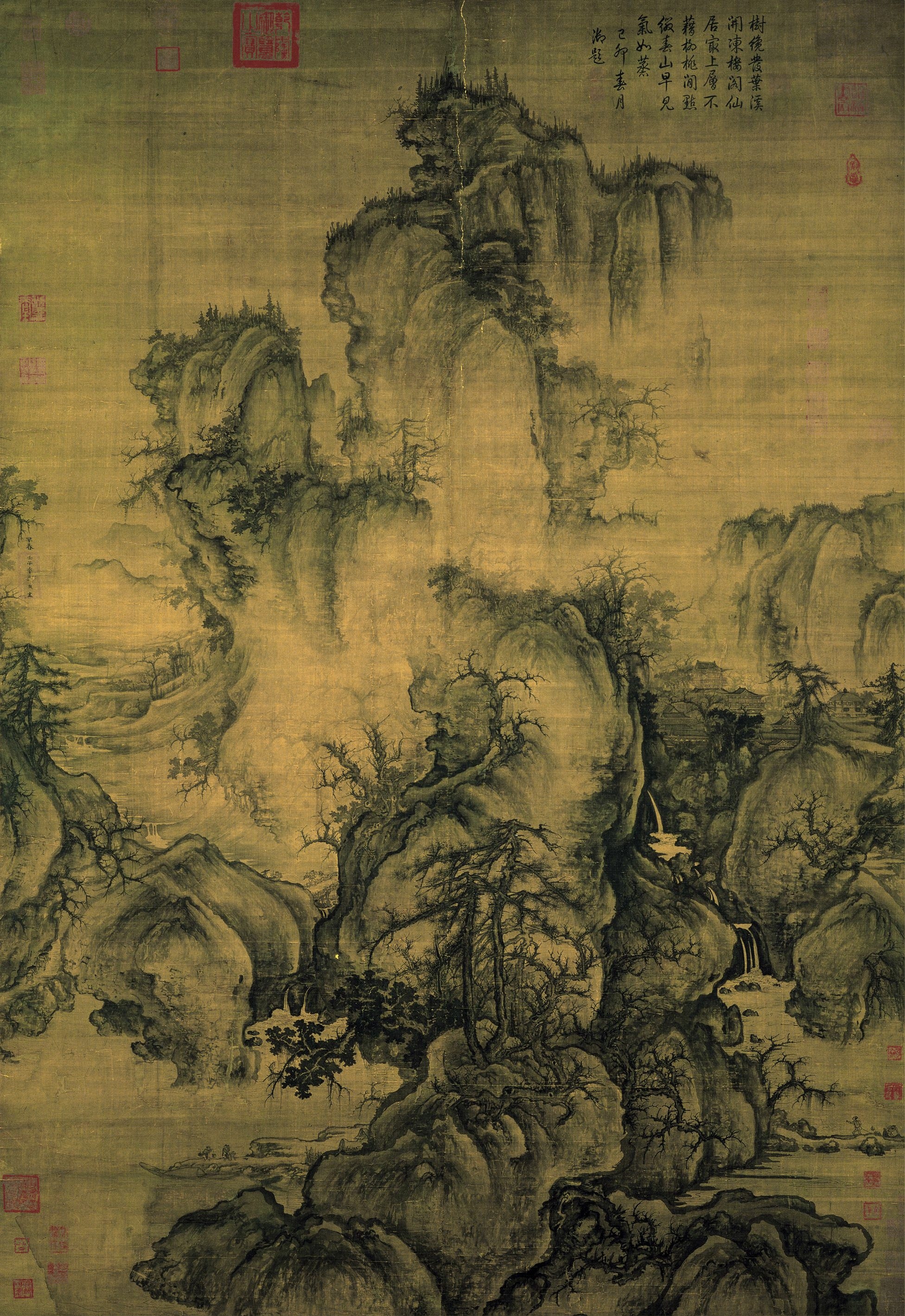
Now, why is any of this important? Developing an understanding of art theory and history prepares us as photographers for the work we wish to create. If we hope to travel the world and capture our best images, it’s in our best interest to understand the techniques that have stood the test of time. We can then choose to employ or omit those methods to create our most meaningful work.
Quite simply, we learn from the past to better inform our future.
How Is Layering Valuable To Photography?
Fundamentally, there are two reasons why layering is valuable to our photography. First, and perhaps the most obvious, is that it creates physical depth. There’s a staccato of lines, shapes, or colours that provides a seamless path for our gaze. When done effectively, it feels natural and our eyes just sink into the image. Great layering creates a pool for us to swim in.
The second reason why layering is valuable is that it creates emotional depth. The physical elements of the image come together and play off each other to create something larger than the sum of their parts. It can lead us to examine not only the scene, but our environment as whole and perhaps, even our existence within it.
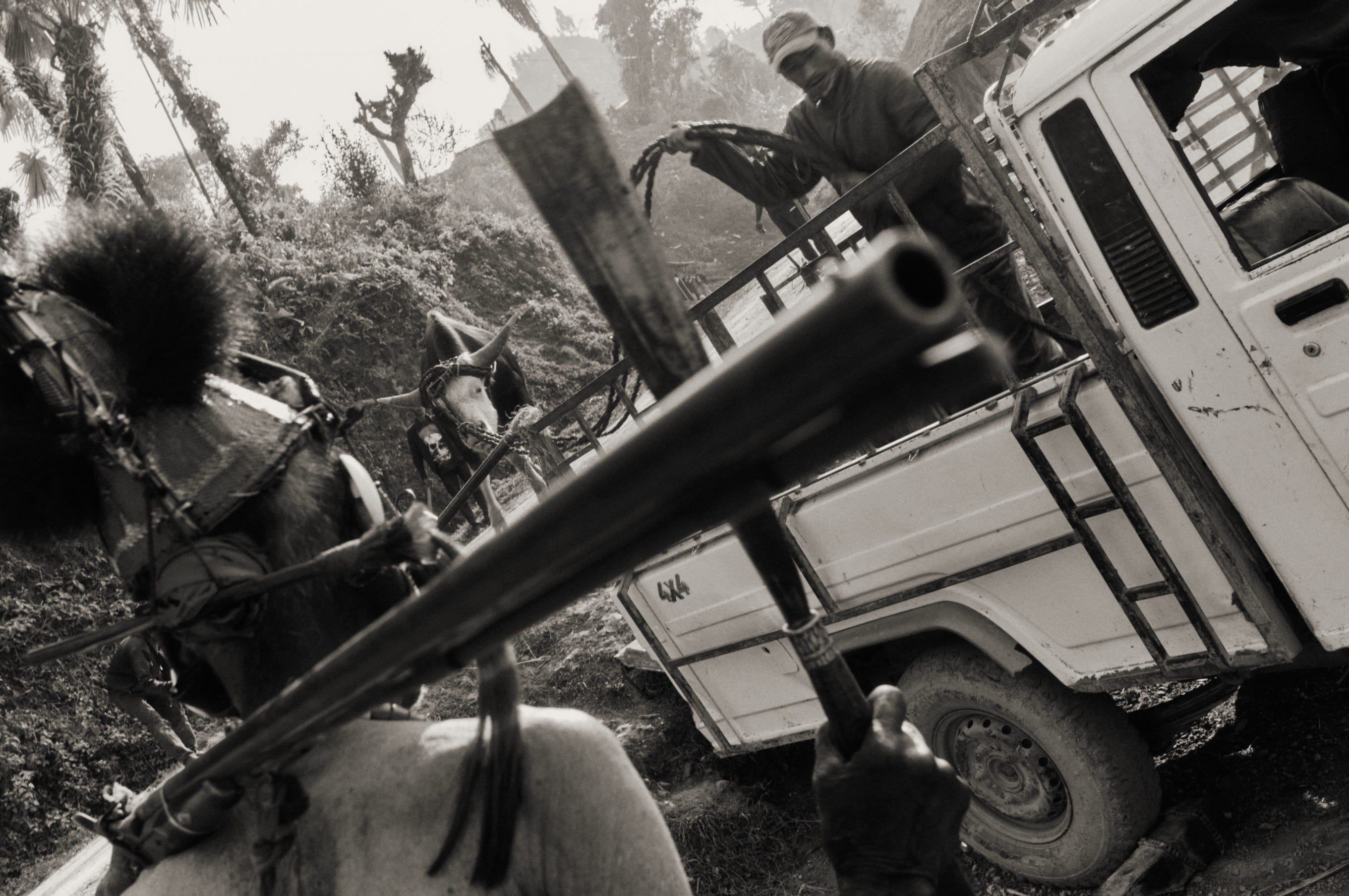
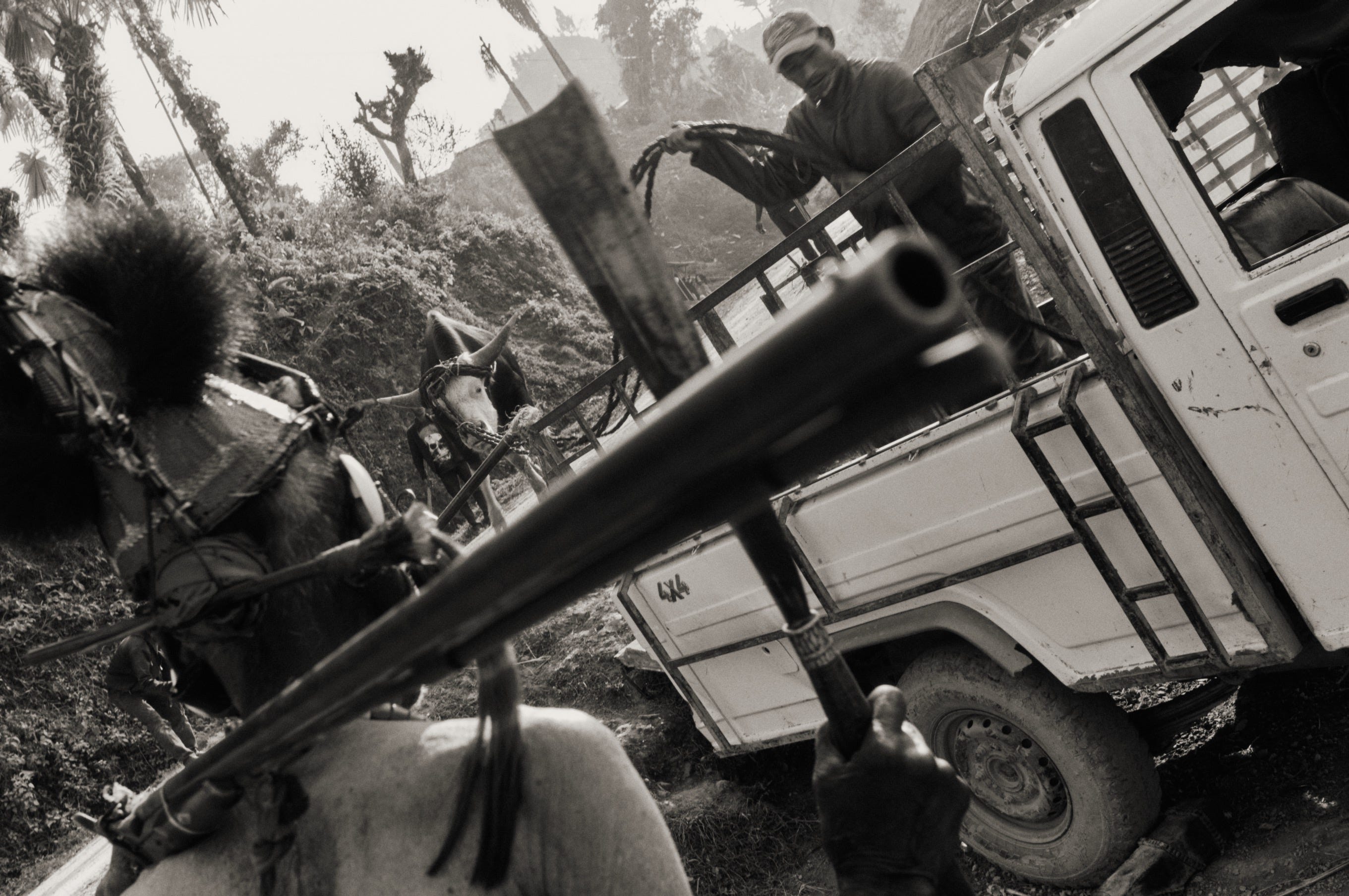
This scene was captured during my time in Nagaland last month. It was a tense moment where the locals were loading an unrelenting ‘mithun’ bull into a truck for transport. As things started to escalate, the local elder we’d been photographing jumped into the fray and started calling out instructions. Armed with his rifle and machete, he became a natural foreground element that helped frame the scene. I leaped into documentary mode and just started framing and firing.
Equipped with my M11 and 28mm Summicron, I started maneuvering behind the elder to position him so that he could lead our eyes toward the bull. I made slight adjustments and kept firing throughout, bobbing and weaving to find a meaningful frame. Interestingly, the tip of the rifle where the bullet would exit is what serves as an entry point for our eyes.
Staring down the barrel.
After a tense 30 minutes, there were hundreds of photos to go through and, ultimately, this one stood out as the best representation of the moment. There’s a physical depth created by the elements, and an emotional weight brought by the characters and their actions.
Why Is Layering Worth Practicing?
Chiaroscuro. Blocking. Shutter drags. Off-camera flash. All techniques. Techniques I’ve talked about here and employ as needed to create a meaningful frame. Layering is another technique that, with practice, expands our ability to create meaningful images. It can go on to define our work, or be omitted altogether. But we don’t truly know its value to our journey until we make an effort to practice.
If you’re asking me, though, the juice is worth the squeeze.
Think of this as if it were a stage play. If the actors, the props, and the painted scenery were all pushed onto a single line, the performance would feel cramped and flat. By spacing them out, it feels more like a world the audience can inhabit. Layering does the same for your frame, turning a flat image into a stage where a story can actually breathe.
Where Should You Begin
So, how do you start integrating layering into your work? This is something I spend a lot of time teaching and reviewing in the field. Which is to say, sharing a precise methodology in a convenient list might be a little reductive…
But, who cares. Let’s reduce it.
Develop a feel for the scene. Look to explore the elements available to you and pay attention to the details.
Identify the core subject or story. Ask yourself, “Where will our gaze go?”
Consider the three planes. Foreground, mid ground, and background. Decide what exists where and how they interplay to elevate the image.
Move your camera. Shift up, down, left, or right (X and Y axis) to reframe and change how much space each plane occupies.
Study the greats. Find photographers known as masters of layering and examine their work in great detail. Personally, I’d start with Alex Webb.
As with any photography technique, this takes time. It takes effort. And it demands intention. Which is exactly why it’s a pursuit worth engaging. Now, get out there and start building your world, one plane at a time.
Previous Favourites
February Contest
This month, I’ll be giving away a $250 gift card to the Moment Shop where the winner can save big on their next camera, lens, bag, or courses. Moment has so many creative products to choose from and $250 can absolutely make for a great deal.
How will I pick the winner? Make sure you’re signed up for this newsletter then leave a comment on at least one post from this month. I’ll be randomly picking one person, confirming they meet the requirements and contacting them directly before announcing the winner publicly.
As always, this contest is void where prohibited by law. Good luck!
My thanks to the team at Moment! Not only for this contest but for being the longest supporter of my work online. They’re a lean team of passionate creators that truly believe in supporting other creatives on their journey. Whether it’s a new camera, lens, workshop, or just some great articles, visit ShopMoment.com today.
What’s Next?
Indulge me for a moment while I plug a recent interview I did with one of my favourite teams. Espresso Displays are a brand I count on for my travel displays and they have a worthwhile blog. I especially respect their approach to interviewing pros. So when they reached out to profile me, I happily said yes.
If you want to learn more about my approach to documentary work, my contingency planning, and my thoughts on AI in photography, visit the link here.
Shameless plug yes, but I believe the Espresso did a great job of structuring this piece. Let me know what you think.
GB
I wonder how many people take the time to think like this these days? I love the addition of the Asian perspective. It is worth getting familiar with other ways of seeing or experiencing what our senses are telling us. An "educated" eye that can see without getting overly technical about it and just using the info to build subtlety is important in this craft.
This is so awesome, we just shot a video about it last week.