

Svalbard Is For Storytellers
Recapping an unforgettable group adventure to the Arctic Circle

Last summer, I posted a simple question on Instagram: who wants to join me on a trip to the Arctic Circle? What I didn’t expect was nearly 200 people raising their hands and requesting details.
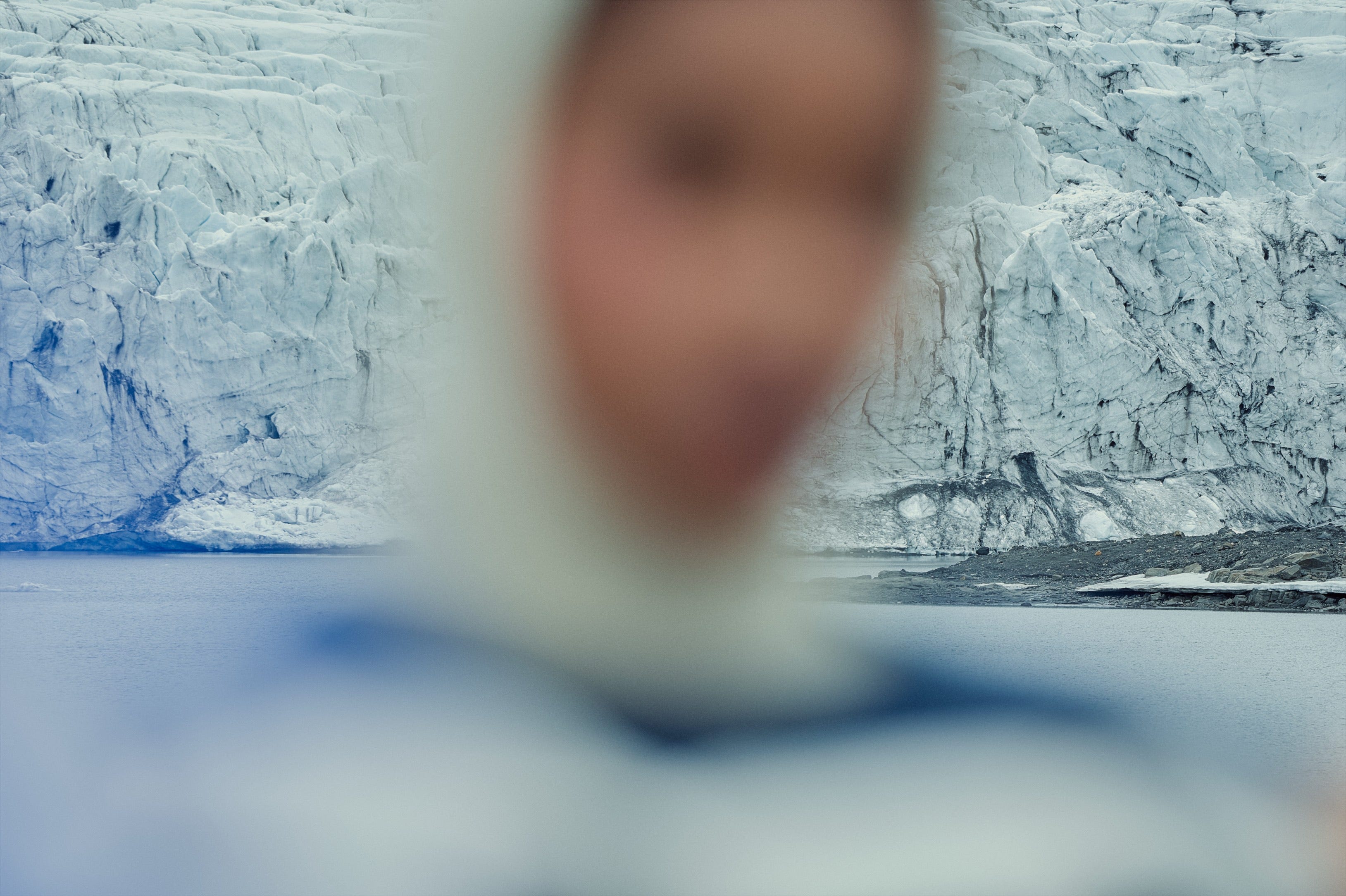
This prompt wasn’t random. Two years prior, I’d travelled to Svalbard and had the experience of a lifetime. The raw, unflinching environment triggered something inside me. I went from someone who never shot landscapes and hated the cold to spending hours outdoors building a visual study through shades of blue.
Svalbard changed me, my work, and my worldview. After three years of traversing the polar regions, I had to go back. Only this time, I’d bring a group of photographers to share the journey.
The Group
Eight months later, that Instagram prompt crystallized into 24 adventurers from across the globe converging in Helsinki. Before we even touched down on the tarmac at our destination, the atmosphere was already buzzing. The camaraderie was instantaneous and infectious. These weren’t casual tourists looking for a soft, predictable holiday. They were curious, deeply engaged individuals looking to push past their comfort zones and check off a bucket list experience.
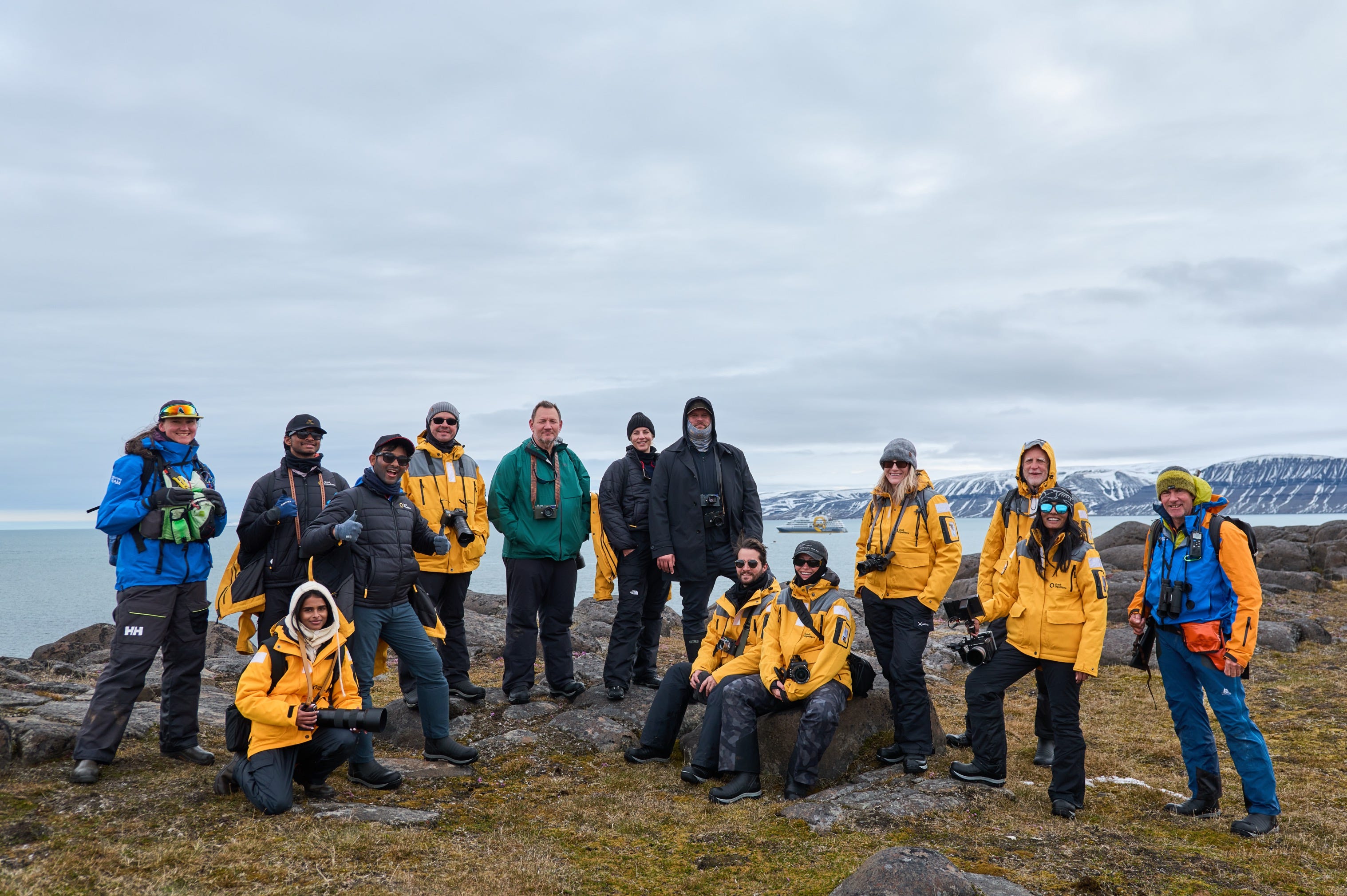
After quick introductions and surprise goodie bags, we boarded an early morning charter flight out of Helsinki, tracking north toward Longyearbyen. Under the guidance of a seasoned expedition team, our group spent the better part of ten days circumnavigating one of the most remote regions in the Arctic Circle.
The Gear
For this trip, I was fortunate enough to have a pre-release Leica SL3-P, which served as my primary tool to document the adventure, alongside my trusty Leica SL3 Reporter as a backup. For lenses, I brought my trusted pairing of the SL 24-90mm and 90-280mm. This was plenty for my needs but given the potential for rare wildlife encounters, I had my cinematographer bring his Sigma 60-600mm and a 2x teleconverter for extra reach.
Even though it wouldn’t see much reps, I also brought my Leica M11 with a Summilux 35mm F1.4 lens. Why? Because I just never leave home without it.
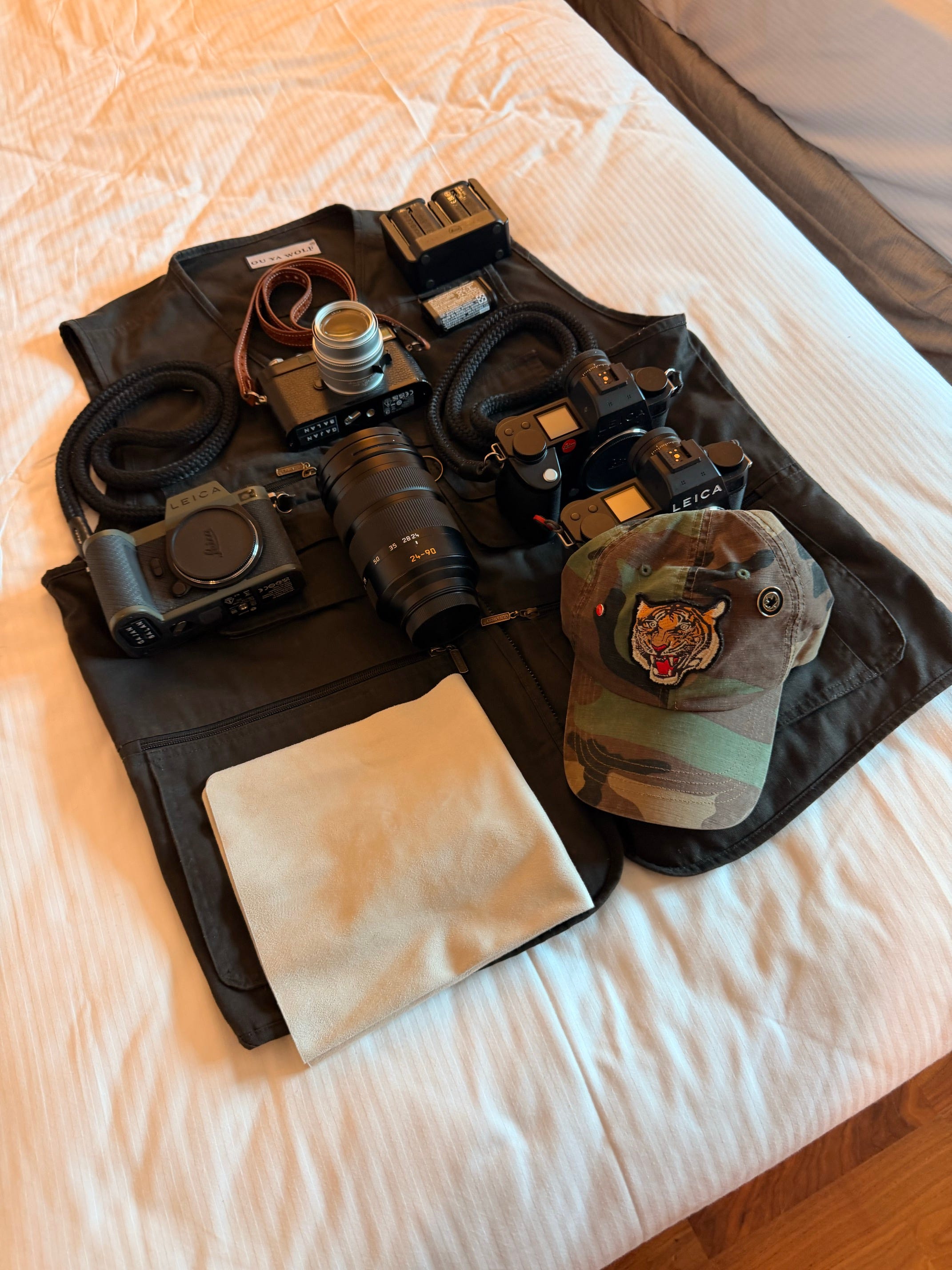
All my gear, along with batteries, a laptop, and storage, fit neatly into my WANDRD PRVKE 31L backpack. I’ve said it before and I’ll say it again: no one makes a better carry solution for creatives on an adventure.
While this was an incredible journey for the group, my team and I were working early mornings and late nights. To process everything, I packed my Mac Studio and two Espresso Displays. It might seem like overkill to some, but given the nature of my work, I need a setup that’s powerful, reliable, and adaptable.
Now that you know what kept the workflow running, let’s talk about the adventure.
Familiar Territory
Stepping off the plane and passing through Norwegian customs, you’re immediately struck by the history of Svalbard. Founded over a century ago as a rugged coal-mining settlement, Longyearbyen carries a unique human weight against an intimidatingly massive backdrop.
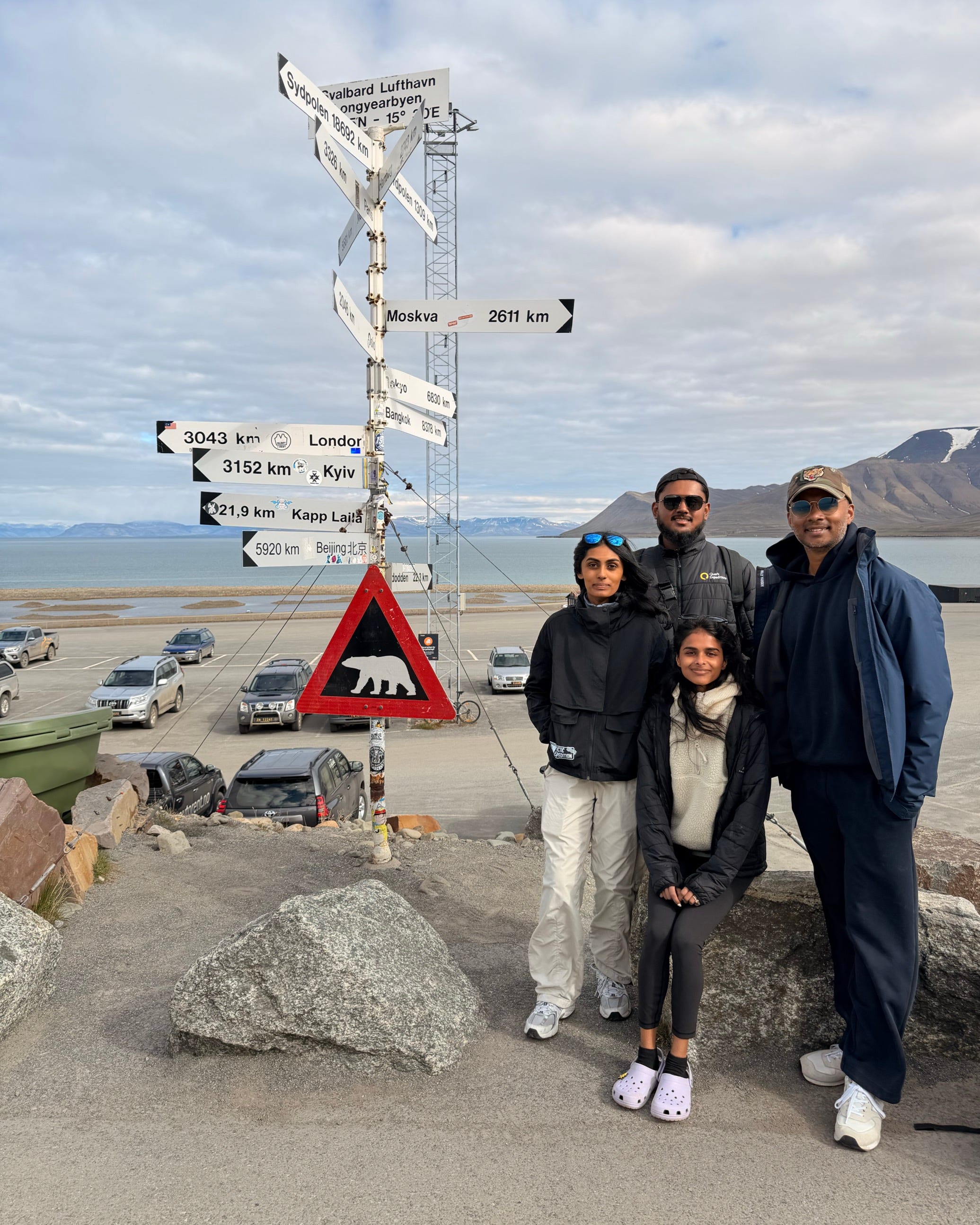
We spent a few hours exploring the small town before boarding our ship, meeting the world-class expedition team, and settling into our cabins. I’ve gotten to know much of the Quark team quite well over the last few years, and I always tell people that this isn’t some country club cruise where you sit back and watch the world float past. This is a true expedition company that hosts like-minded travellers on a small, beautifully equipped vessel.
Nobody on this ship was looking for an easy stroll in the sun. Everyone was hunting for stories, adventure, and memories that reflect a life well-lived.
Calibrating The Mind And Body
On our first morning, the sun was gleaming across Krossfjorden. The blues bouncing off the water and ice were as vibrant as I remembered. I sent a quiet, internal thank you to the skies right then. It wasn’t about my own photography. It was pure gratitude for a breathtaking reintroduction to the high Arctic. We spent two hours photographing from the top deck of the Panorama Lounge, a spectacular space offering a sweeping, uninterrupted view of the shifting landscape.
Soon enough, the loudspeakers hummed to life. It was Ryan McDevitt, our Expedition Leader, with his signature, “Good morning, good morning...”
It was time for our first excursion.
We geared up, stepped onto our Zodiacs, these heavy rubber pontoons, and floated into the calm, glassy waters of a fjord branch. It wasn’t long before our guide spotted bearded seals lazily lounging on floating slabs of ice. It was here I learned a fascinating bit of local ecology: the distinct, rusty red colouring across their faces and necks is the direct result of iron deposits they dig up from the seafloor while feeding.
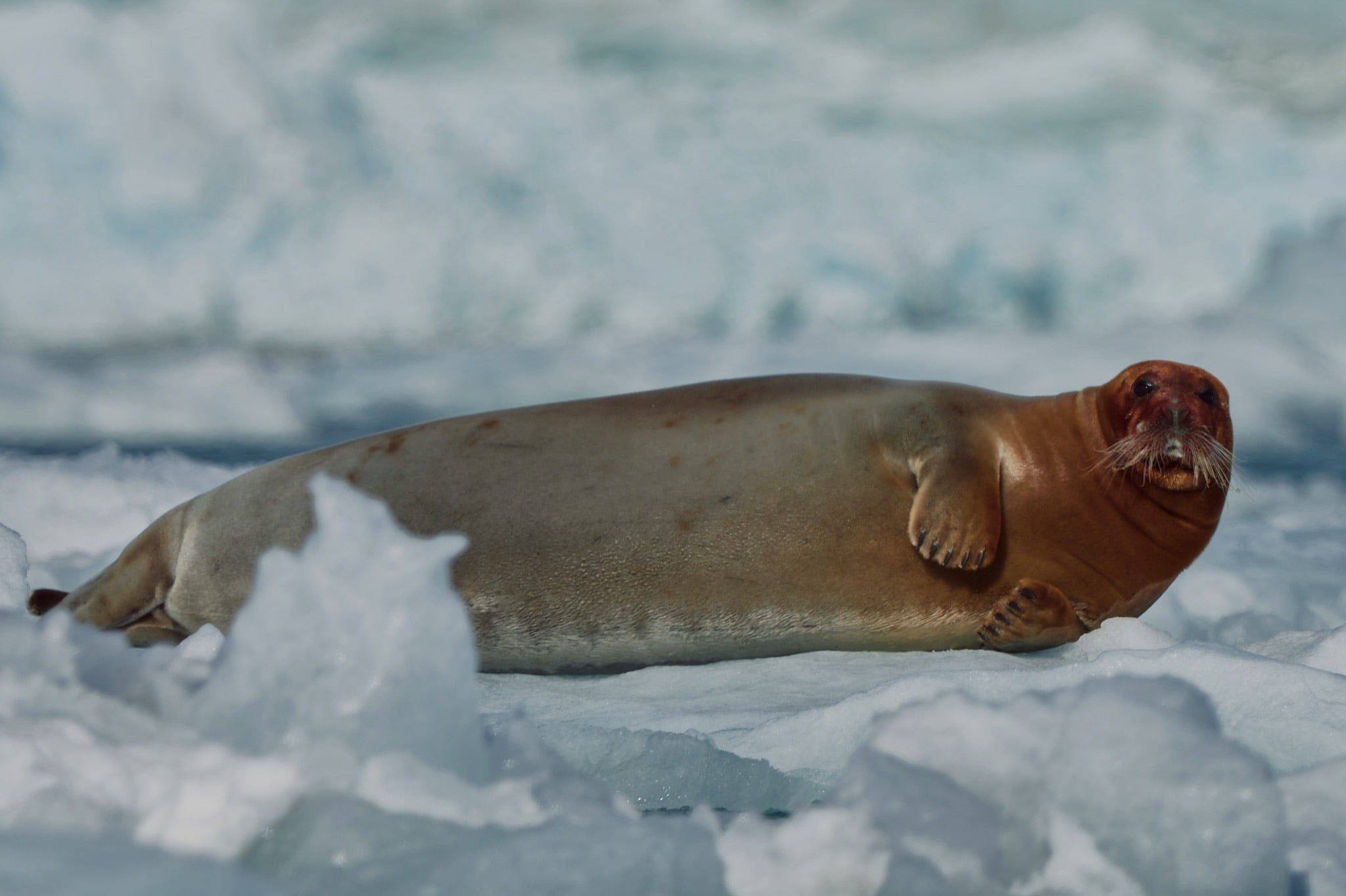
For the group, it was a masterclass in Arctic wildlife. For me, it was a calibration phase: re-training my muscles, hands, and eyes to the fluid rhythm of shooting from a moving watercraft. Operating a super-telephoto lens on a floating Zodiac is more dance than science. And I’ll admit that at this point, I was dancing with two left feet.
Later that afternoon, we transitioned into the dramatic expanse of Fjortende Julibukta. I’d stood in this exact bay two years prior but this time the Arctic offered a completely different face with clear, bright skies.
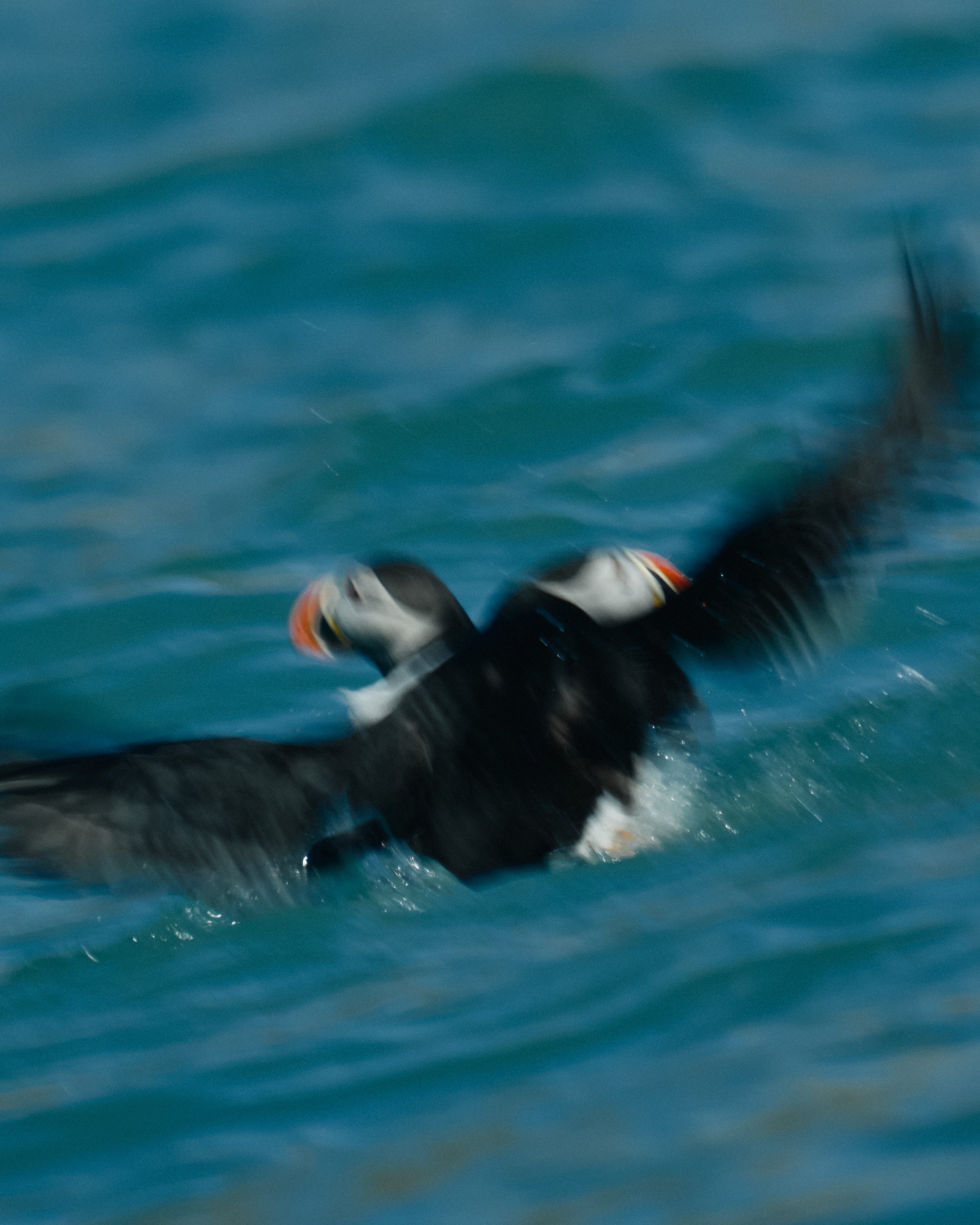
Our mission for the afternoon was navigating the waters below the bird cliffs to spot puffins. These little birds are notoriously tricky to capture here because they’re far less common than other nesting seabirds. But we managed to find a handful floating on the water.
Trying to frame a tiny, fast-moving bird on choppy water while handholding a massive 600mm lens paired with a 2x teleconverter is a serious workout. Your arms burn, your core is locked, and the water is constantly trying to dictate your composition. In that moment of physical friction, I just gave in and leaned into the chaos.
From there, we pushed deeper into the icy waters near the glacial face, where freshwater runoff meets the sea. Watching massive blocks of ice calve off the main structure and crash into the ocean never ceases to be a humbling, thunderous reminder of nature’s scale.
The Air, The Land, and The Sea
Armed with the new SL3-P, my focus shifted toward an editorial project that, if successful, could serve as a testament to the spirit of our trip. I wanted to execute a conceptual fashion shoot in the high Arctic structured as a triptych representing three distinct elements: air, land, and sea. To pull this off in such a volatile environment, I needed an incredible team and absolute trust in the tools.
My good friend and fellow Leica Ambassador, Alex Drewniak, took the reins as Art Director, mapping out a stunning collection of looks, while our incredible muse, Sharuka, provided the physical presence needed to match the scale of the environment. Crucially, we had the permission and support of Ryan and his team, who served as the backbone of the project.

For the sea component, we took a Zodiac out into the overwhelming environment of Alkefjellet. If you’ve never seen it, Alkefjellet is a geometric marvel where towering basalt columns and dolerite cliffs rise 100 metres straight out of the water. These structures serve as the chaotic breeding grounds for tens of thousands of Brünnich’s guillemots.
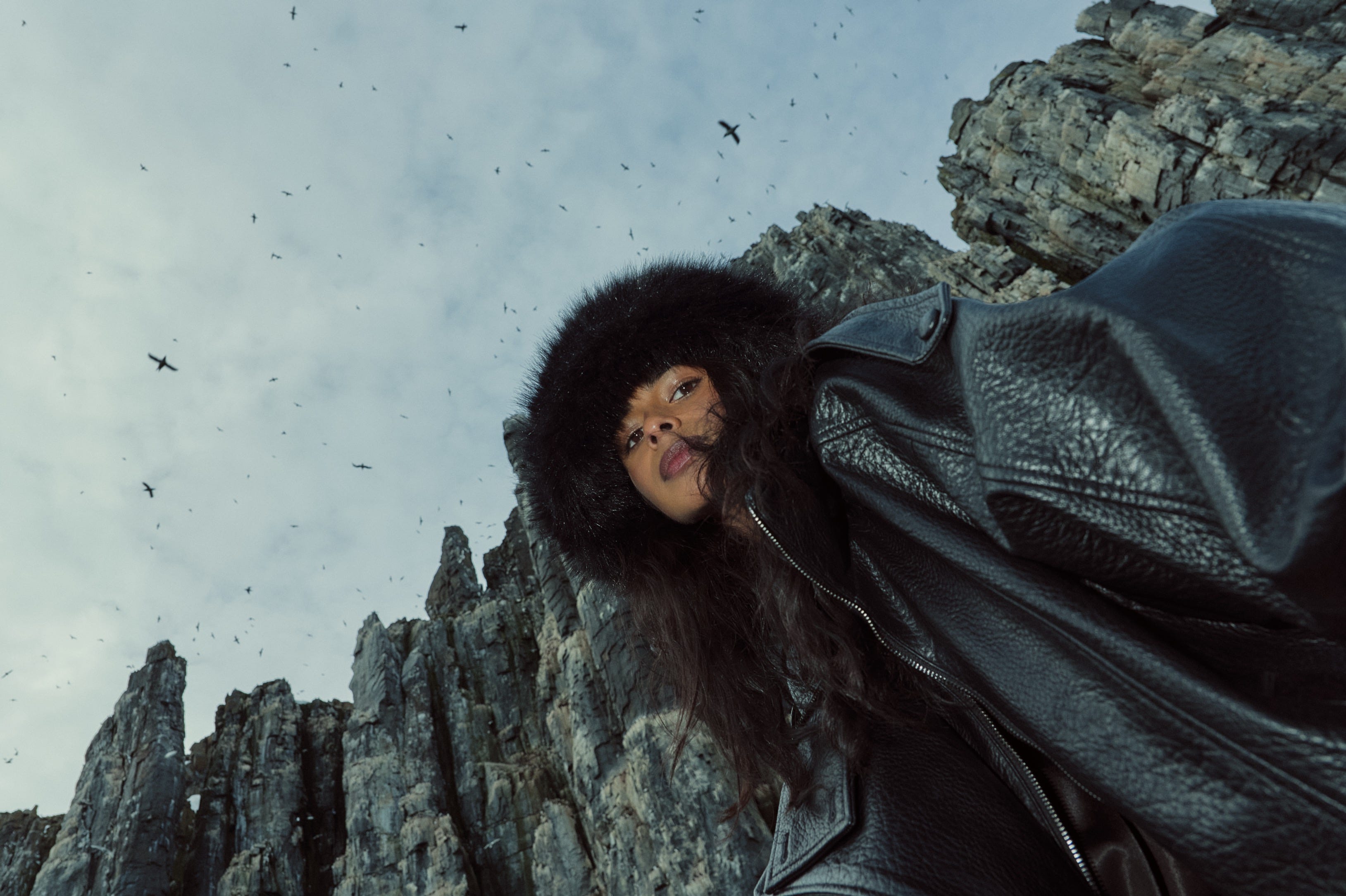
This shoot was a true trial by fire with the SL3-P. Picture this: two expedition staff managing navigation and safety, Alex overseeing looks while holding our off-camera flash, Sharuka fighting every instinct to show how cold it was, one of my cinematographers weaving around us to document the experience, and me trying to capture the frames we needed. The conditions were ruthless, and the SL3-P handled them flawlessly. Its intuitive ergonomics and responsive handling gave me instant confidence, proving it was a reliable creative extension of my hands.
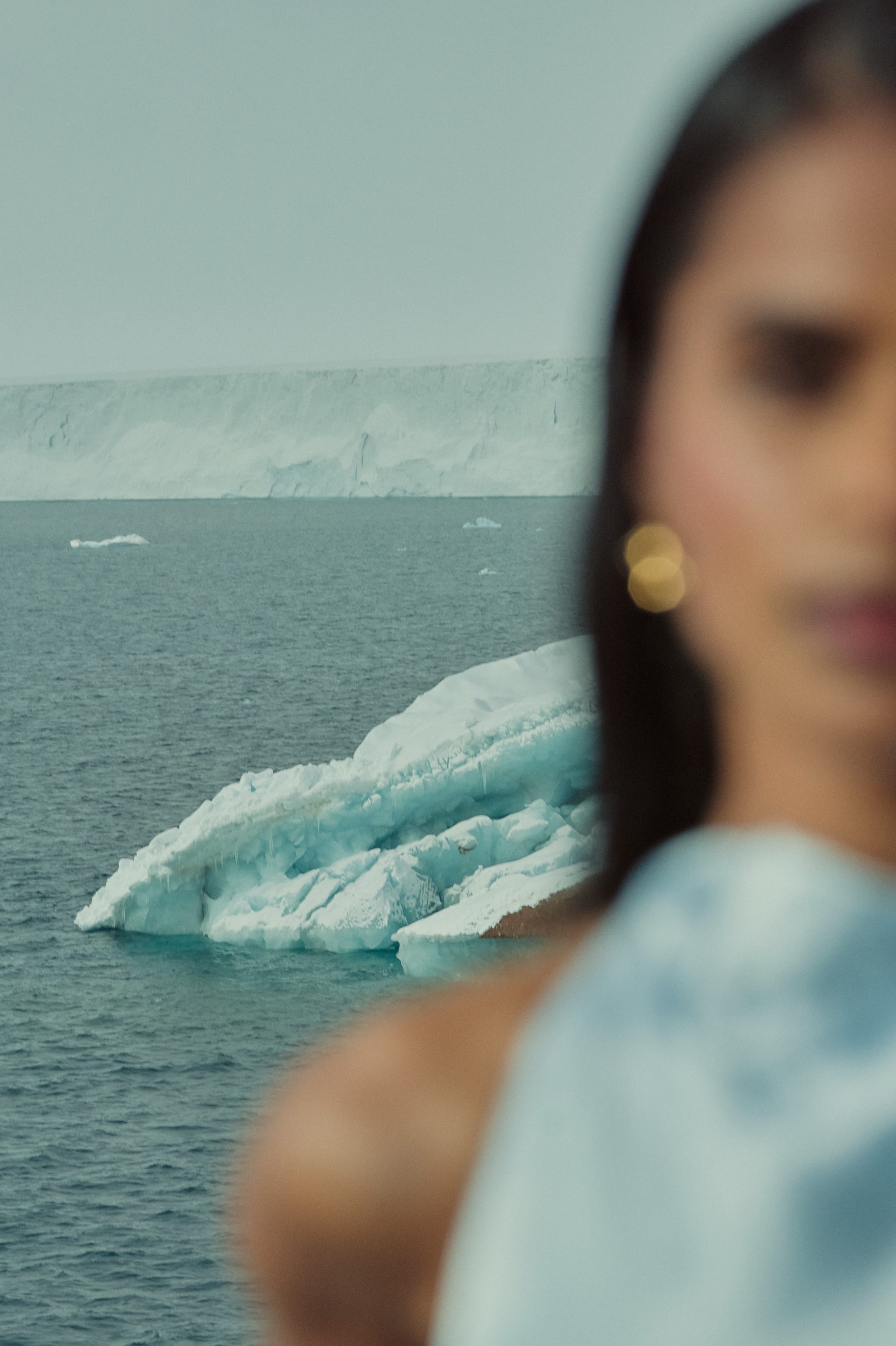
On day five, we pivoted to the air component, which was shot directly on the ship’s helicopter deck. We’d travelled through the pack ice along the eastern side of Spitsbergen, navigating to the massive ice front of Bråsvellbreen stretching out behind us like a mythic wall of ice. This location provided an unreal palette of deep, vibrant blue tones that beautifully set the mood. Given the extra space, I invited members of our group to rally together and help us pull off the shoot quickly, safely, and with technical precision.
The final piece of the puzzle, the land component, came together at the southern tip of Svalbard in Hornsund. We ventured into Austre Burgerbukta, a breathtaking glacial bay flanked by sharp mountains and the dramatic Wibebreen tidewater glacier. Once again, Alex worked her styling magic, and we captured the final look against the stark textures of the valley.
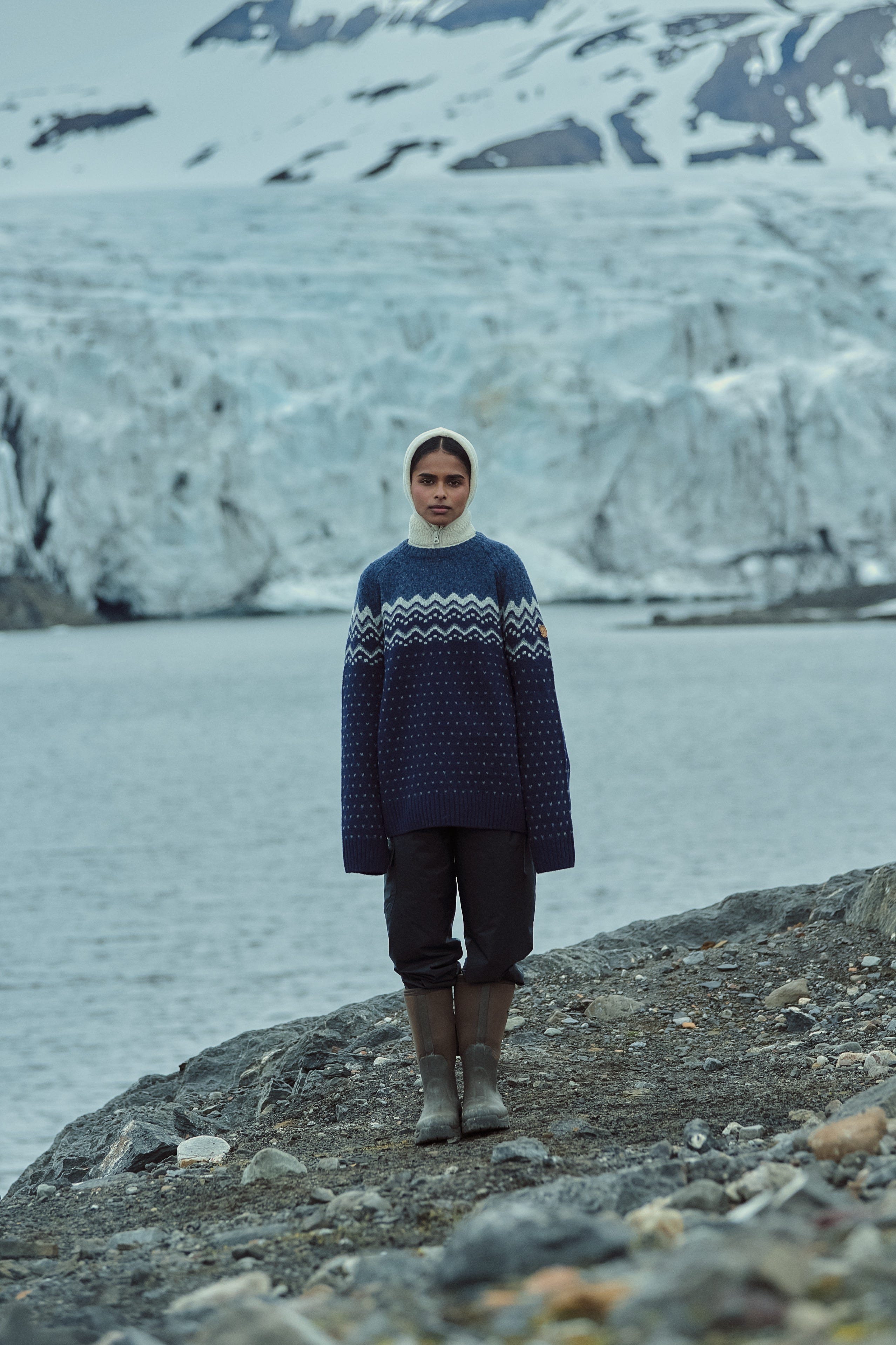
Executing this impromptu, high-concept project in one of the most remote places on Earth, surrounded by trusted friends I’ve met along this path, stands as one of the finest milestones of my creative journey.
To view the full gallery of images, visit the link here.
Friction As A Constant
While the creative victories felt incredible, the Arctic is always keeping score. A major theme of this journey was an open-minded willingness to observe how time and climate are actively reshaping these spaces. On day three, we made a landing at Texas Bar, a historic spot in Liefdefjord. It features a tiny, weathered trapper hut built back in 1927 by Hilmar and Martin Nøis, who spent nearly four decades living in Spitsbergen!
Today, the cabin stands in remarkable condition, serving as a vital emergency shelter from polar bears, a historical logbook for travellers, and an eccentric communal repository of spirits left behind by previous expeditions.
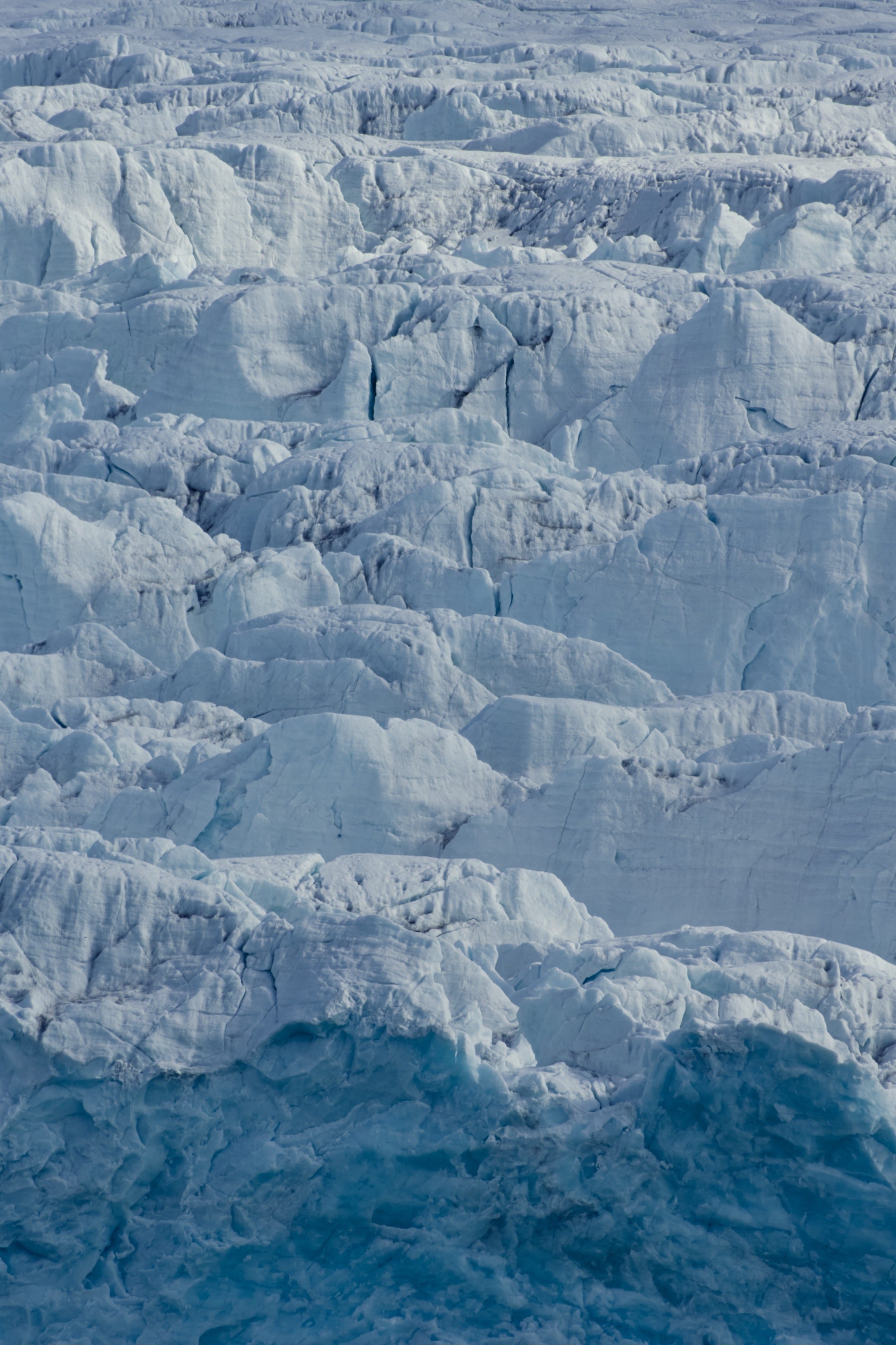
As we set out from the beach for a long hike into the hills, the physical landscape told a specific story. Much of the winter snow on the lower ground had already melted away, leaving only small pockets of white in the higher ridges. The terrain felt completely different from the deep snow cover I’d navigated during my mid-May expedition two years prior.
Reaching the high ridge, our entire group shared a few minutes of absolute silence. Standing together with no sound but the wind moving across the tundra allowed everyone to fully absorb the quiet peace of the North.
That reflective mood carried over into our afternoon cruise around Monacobreen. Named after Prince Albert I of Monaco from his early 20th-century mapping expeditions, the glacier here is a stunner. What was recently a single, massive wall of ice had visibly retreated, splitting into two separate fronts: Monacobreen and Seligerbreen.
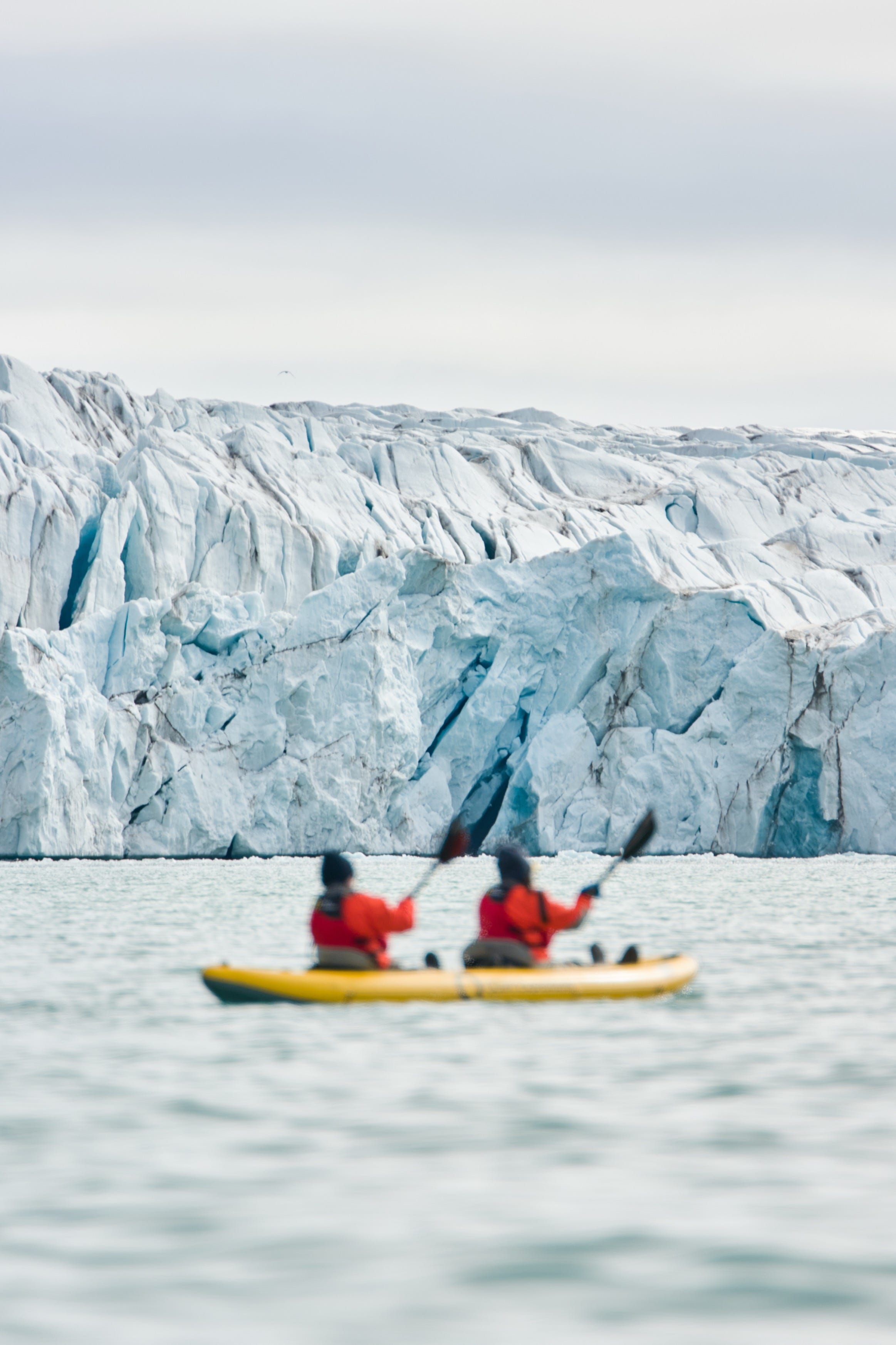
Seeing that physical separation with my own eyes was a tangible indicator of just how much ancient ice is being lost to the sea year after year. It reinforces why I make these trips, why I document these spaces, and why I share these stories.
The friction of the landscape is physical as well as environmental. On our final expedition day, we landed at Alkhornet, a majestic horn-shaped mountain in Northern Isfjorden National Park. The sun was shining so bright we actually had to break out the sunscreen.
We started with an easy trek across the rich green tundra, watching local reindeer and foxes forage below the massive seabird colonies. However, the route down quickly transformed into a disciplined descent over steep, uneven scree slopes. Navigating that loose stone required real concentration and teamwork, ensuring every member of our group made it back to the shoreline safely.
Safety out here isn’t guaranteed. It’s earned through trust, patience, and discipline.
The Beacon That Build Bonds
The true soul of our voyage always comes down to the shared human experience. After our hike at Monacobreen, we returned to the ship for an unforgettable rite of passage: the polar plunge. Over a dozen of us stripped down on the disembarkation deck, gathered our collective nerve, and threw ourselves directly off the platform into the freezing Arctic waters.
The immediate shock to the nervous system is something you can’t fully prepare for, but sharing that vulnerability and laughter, followed by a long, warm session in the sauna looking out at the glacial ice, anchored the deep communal bond of the trip.
That sense of shared gratitude peaked late on our fourth evening. We’d sailed north, pushing past the boundaries of Svalbard into the high Arctic pack ice. After dinner, as the ship drifted through frozen slabs, one of our expedition guides spotted a polar bear in the distance. The captain immediately cut the engines, and the announcement went out asking every soul on board to maintain absolute silence so as not to startle the animal.
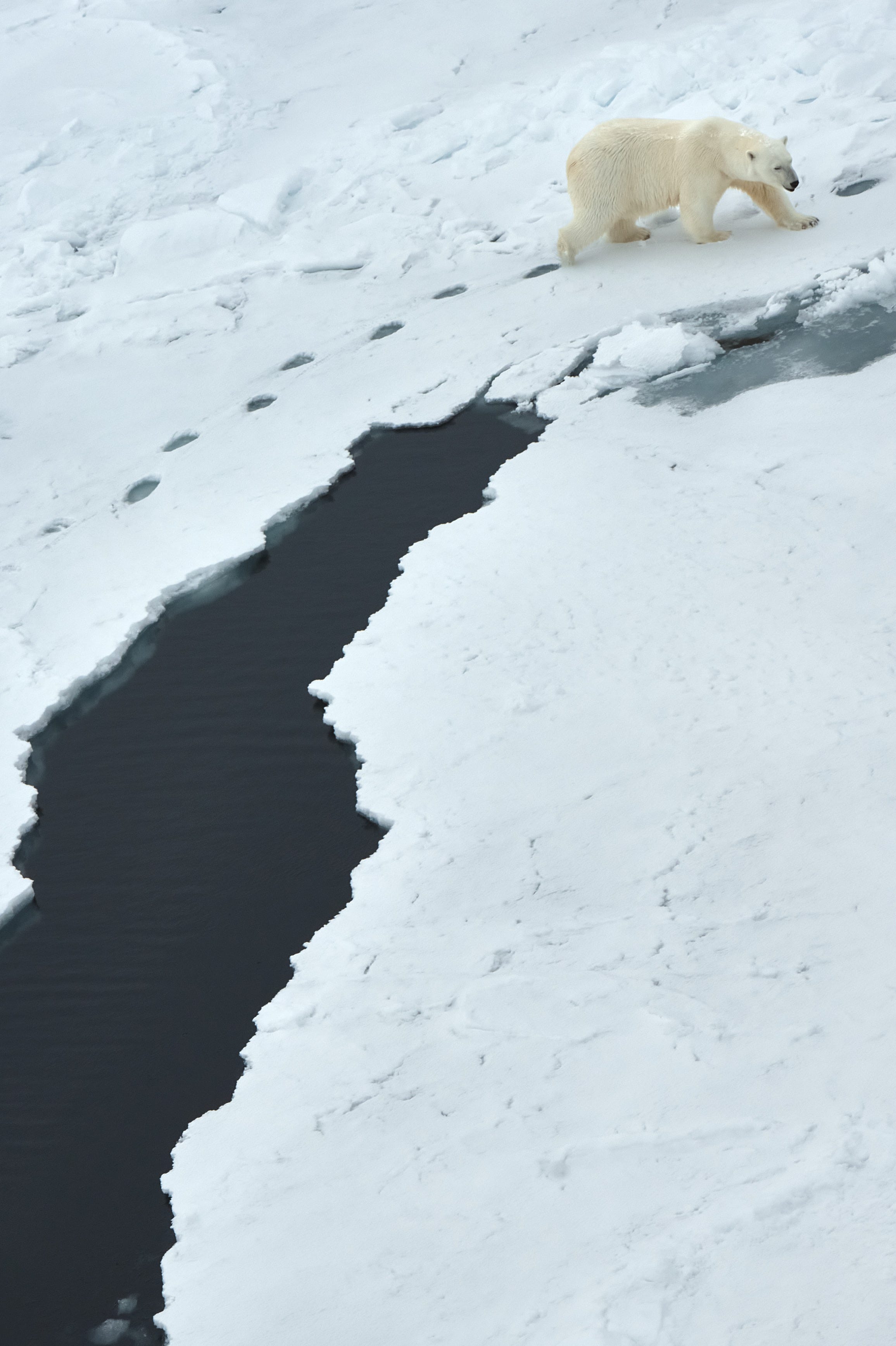
What followed was over 60 minutes of pure magic. Driven by natural curiosity, the bear slowly closed the distance between us. It sauntered across the ice floes until it was standing right beside our ship.
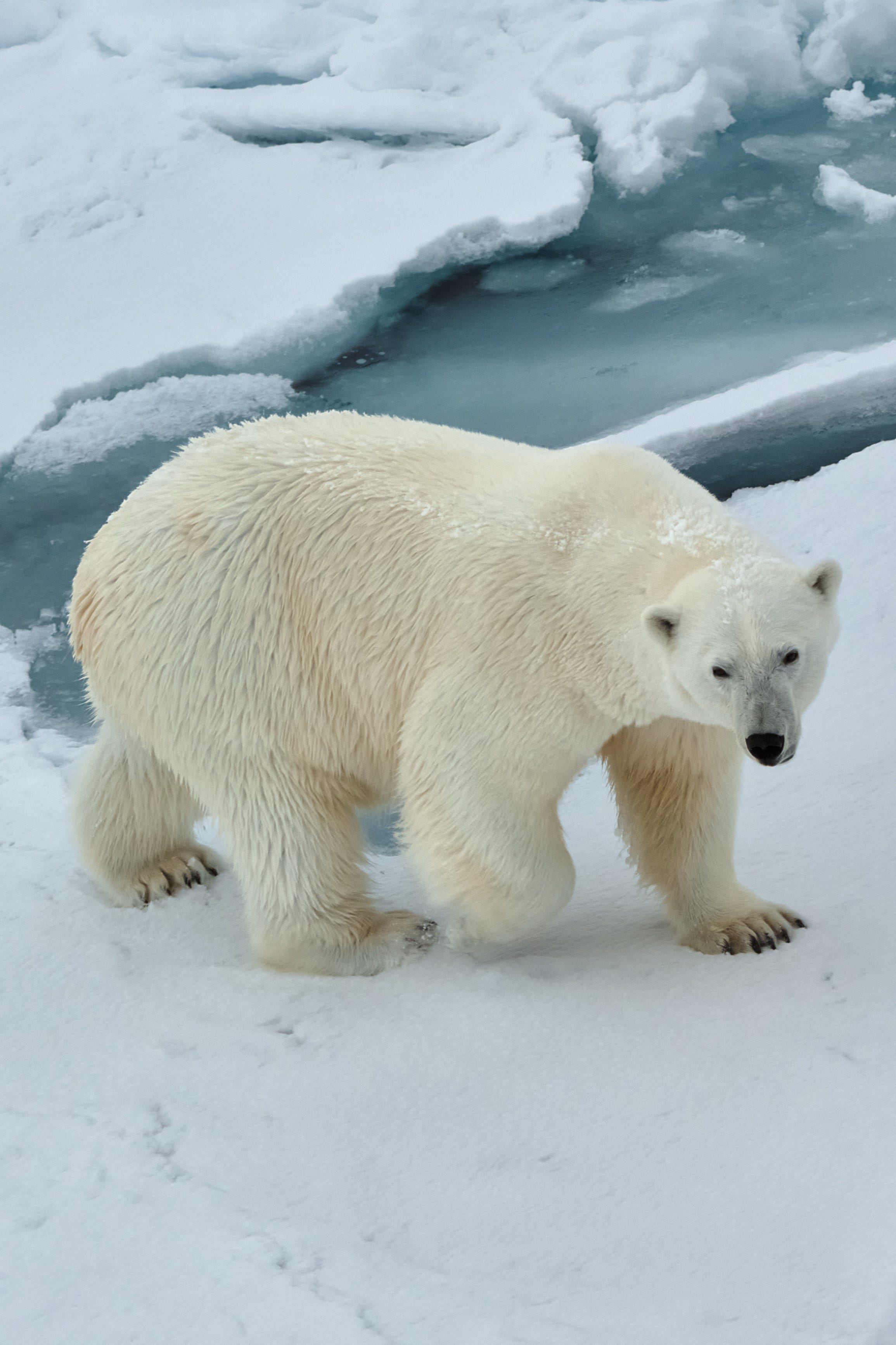
The bear walked around the hull, spent a few quiet moments exploring the area directly behind our stern, and then calmly headed back out into the white expanse.
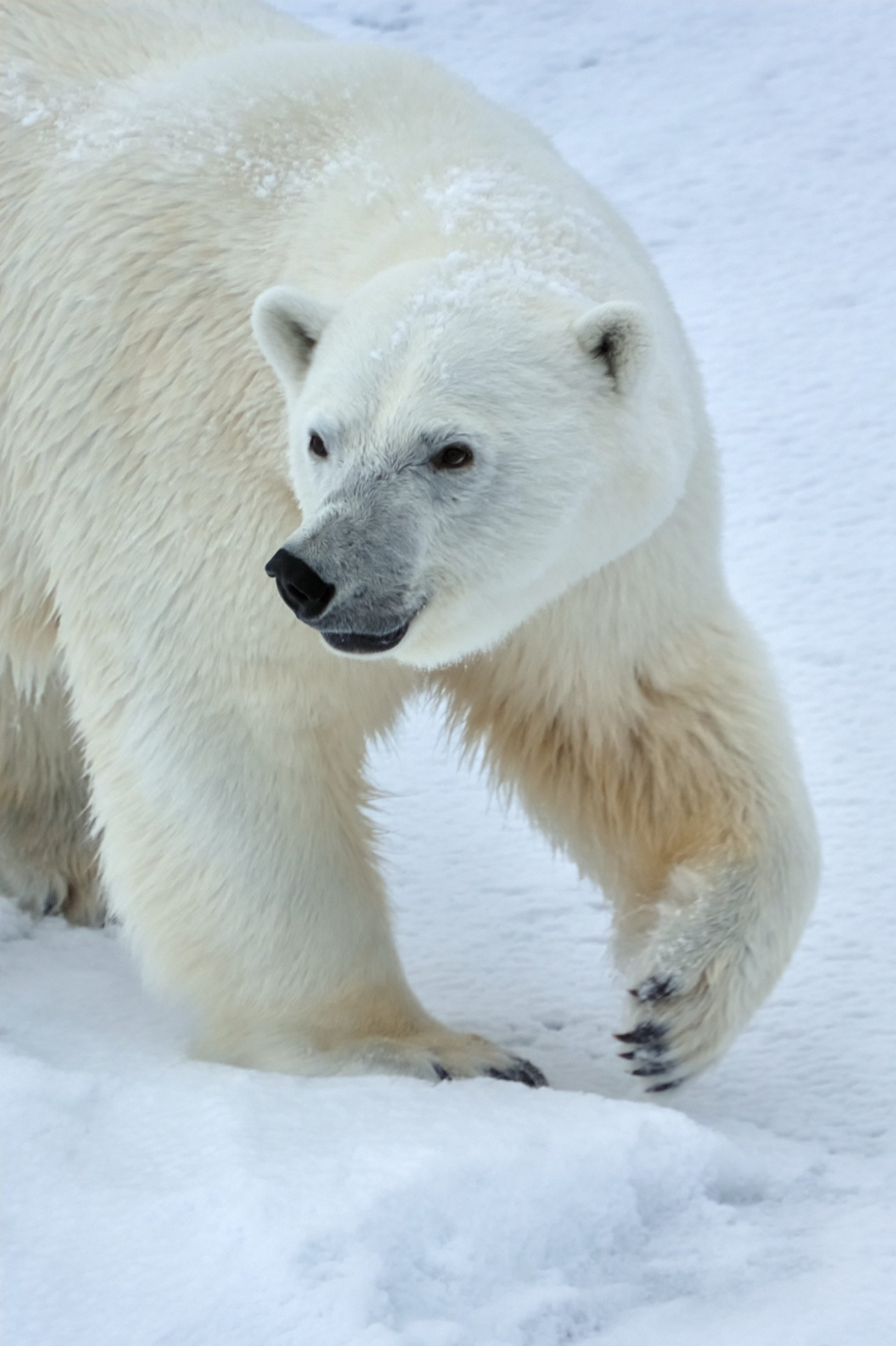
I’m no wildlife photographer, but standing on that silent deck alongside every creative on the ship, I felt the immense weight of the moment. It was my very first close encounter with a polar bear, and the collective understanding of how rare and privileged we were bound our group together permanently.
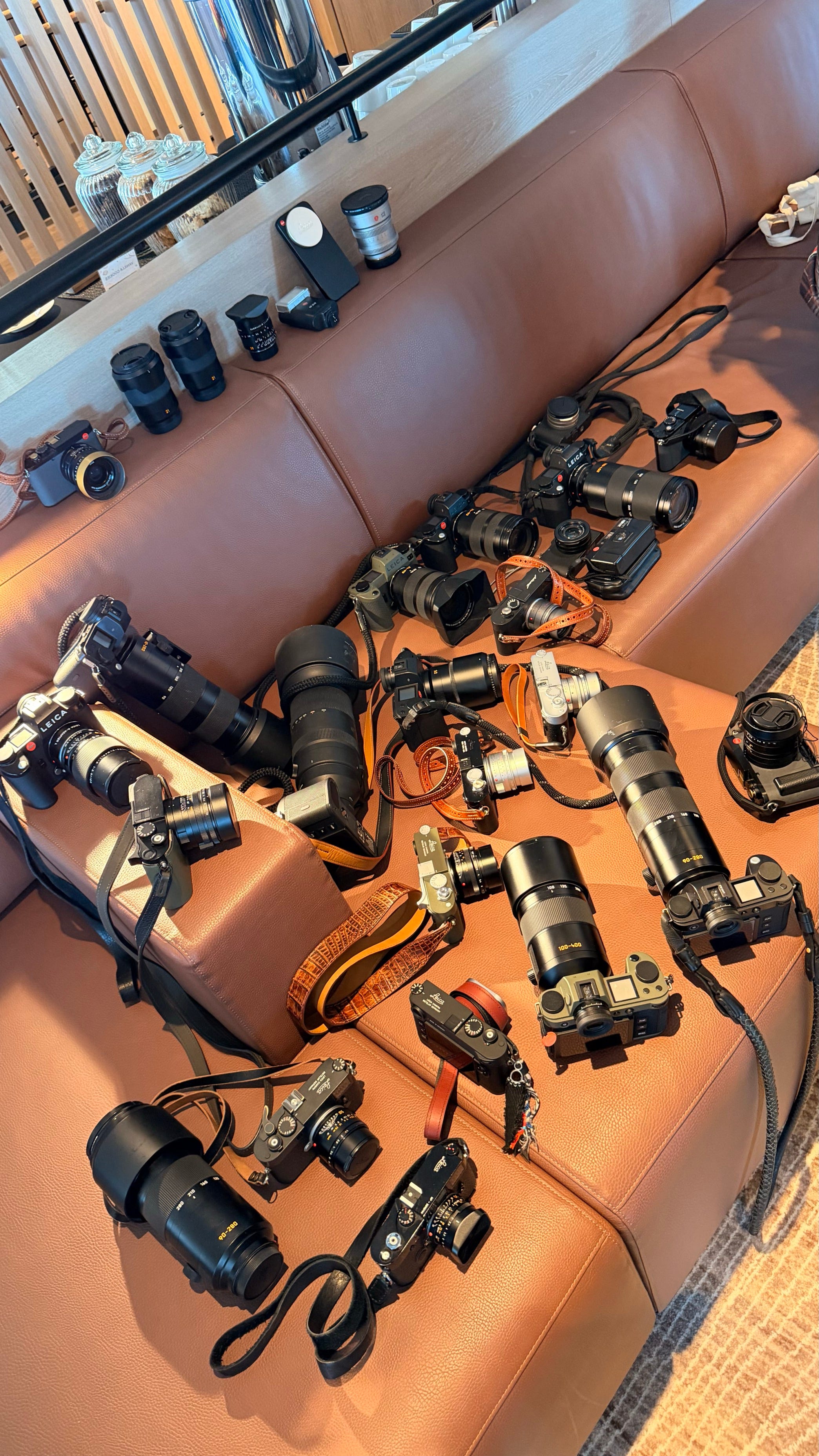
On day six, during some downtime, we gathered all our Leica friends in the lounge for a massive gear photo. My good friend Aaron Bludworth, who possesses an encyclopedic knowledge of the Leica catalogue, put on a brilliant impromptu parlour trick where he appraised the entire collection live. The final tally? Over $282,000 USD sitting in front of us. Not quite enough to buy the ship, ha.
Our final nights were filled with live music, endless conversations, and hilariously intense games of Uno that lasted well into the night. When the onboard photography guide, Julie Chandelier, presented the official voyage slideshow on our final evening, seeing our collective memories flash across the screen brought the entire experience home.
Here we were, 24 of us from all over the world with vastly different lived experiences, reflecting on the trip of a lifetime. After days committed to daily excursions, great meals, and continuous laughs, we sat together and celebrated something that could never happen again. At least, not like this.
If I had to describe Svalbard to someone, I’d say it’s a place for storytellers. When I look back on this expedition, more than the images, more than the polar bears, and even more than the spectacular meals we enjoyed in the Balena Restaurant, I’m filled with gratitude for the people I got to share this space with and the stories we collected.
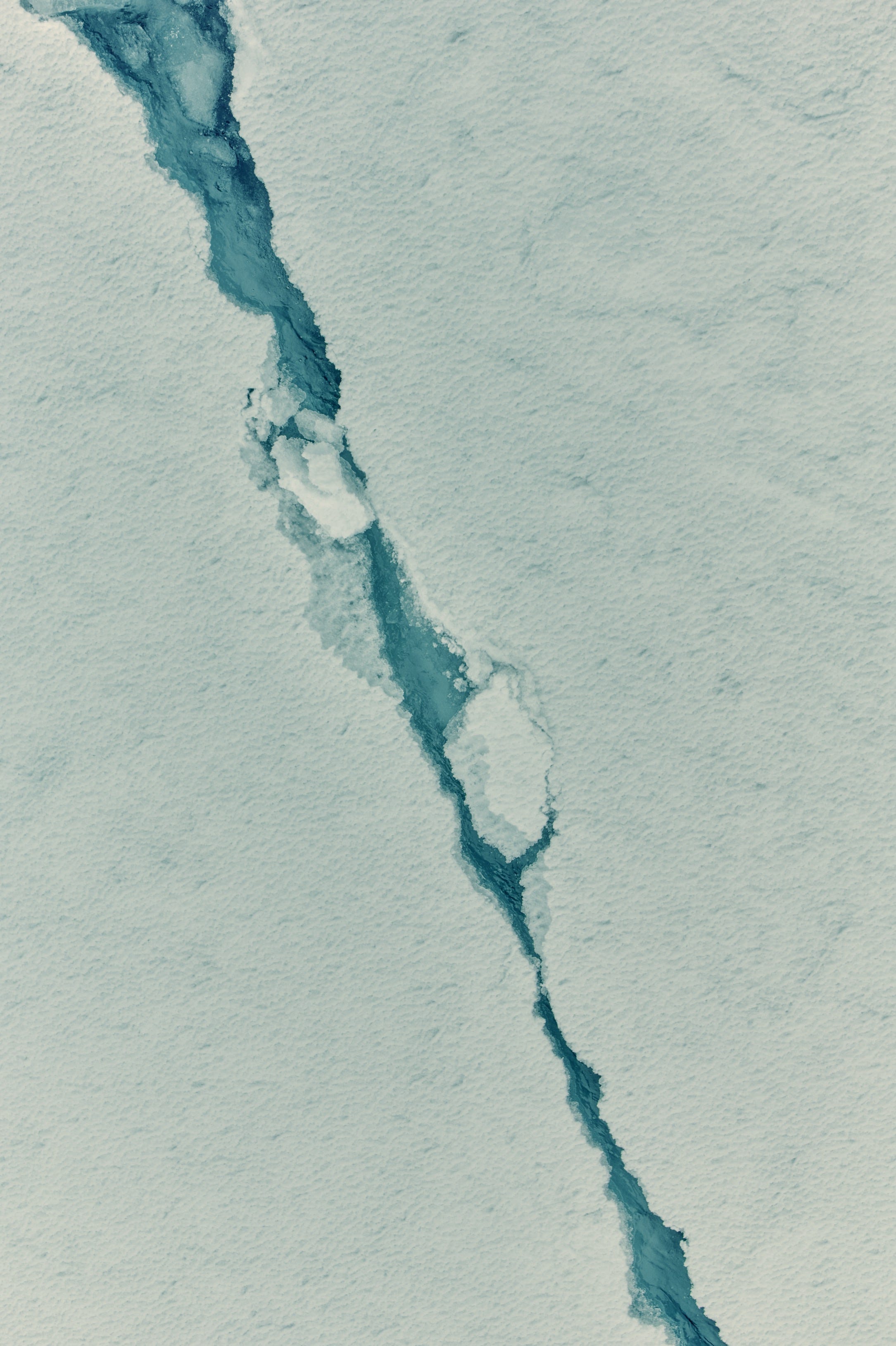
Photography is so much more than a collection of images on screens or prints on paper. It serves as a wondrous beacon, capable of pulling a ragtag group of individuals from completely different walks of life, scattering them across the Arctic Circle to share a sh*t ton of laughs and a deeply lived journey. It all comes together for stories. Stories that bind us, shape us, and inspire us moving forward.
So, What’s Next?
To the surprise of no one, I’m already itching for the next group trip, and with the help of my friends at Quark Expeditions, I won’t have to wait long. I’m proud to announce that next year I’ll be hosting a group trip to Antarctica!
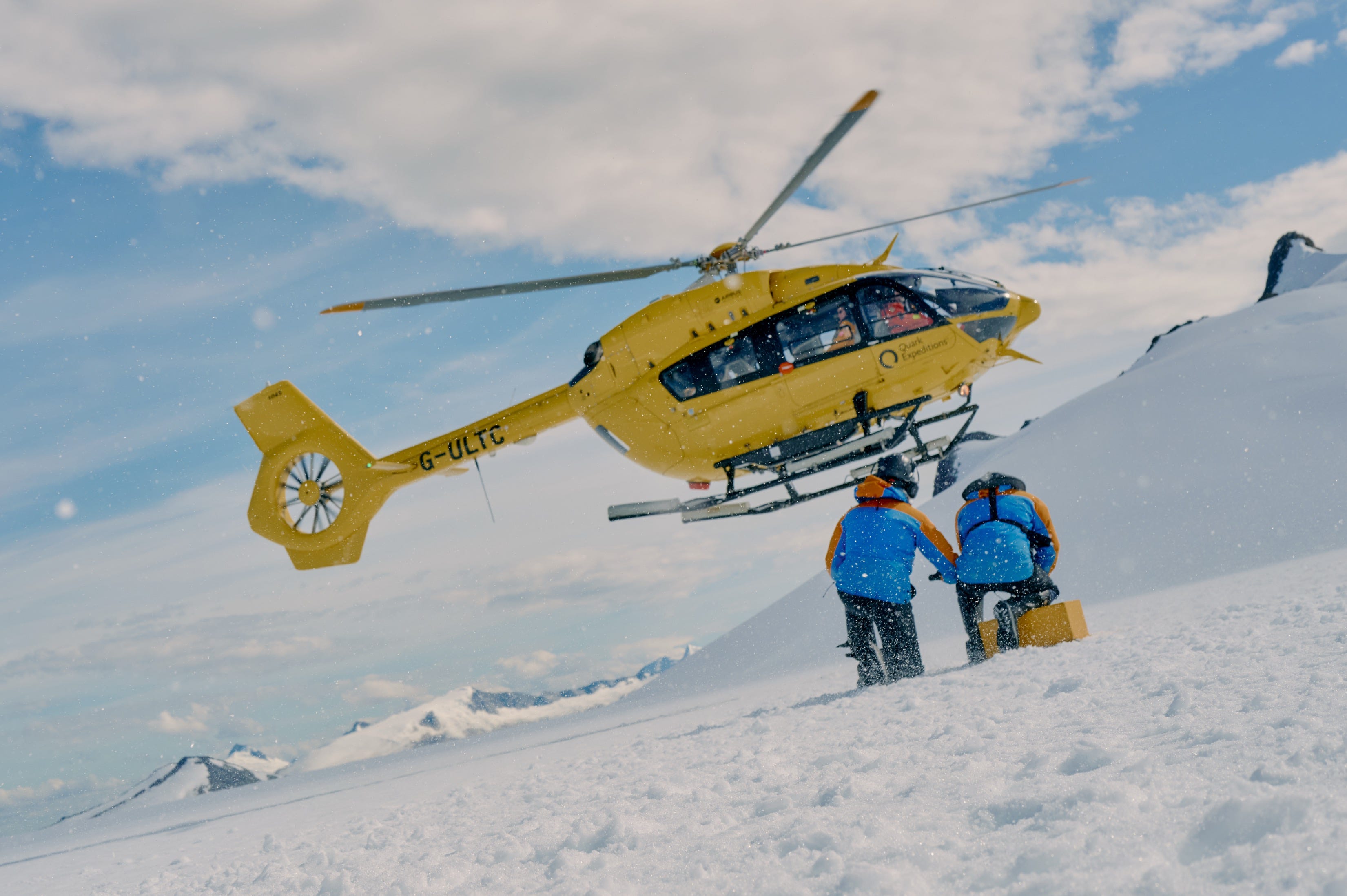
Over twelve days, we’ll sail across the Drake Passage to explore the Weddell Sea by water, land, and air. From Zodiac cruising to challenging hikes and even heli experiences, there’s going to be no shortage of adventure. More than anything, this is an opportunity to build bonds with creatives from all over the world through one incredible adventure.
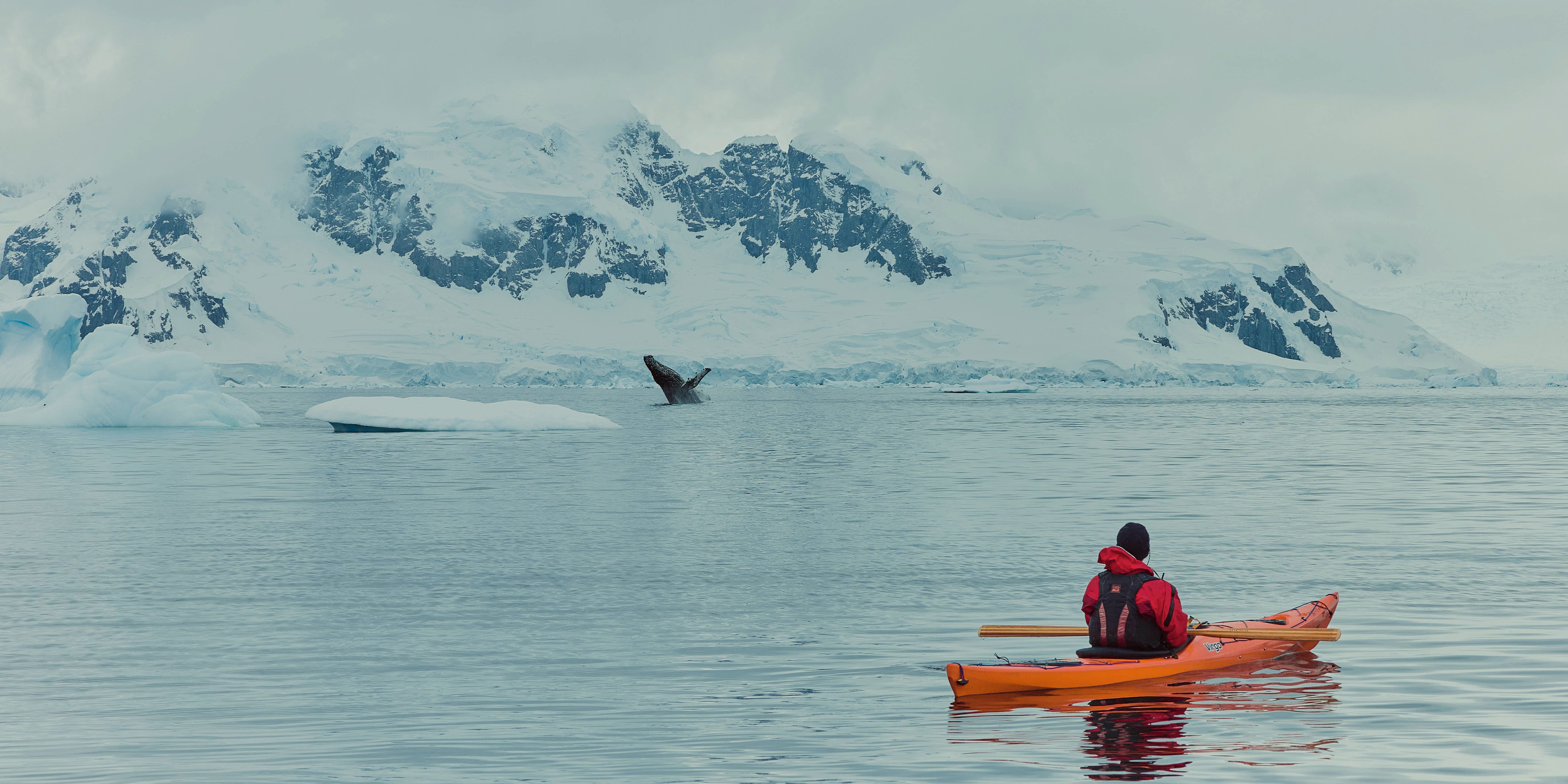
I should stress: this is not a workshop. This is a shared photography experience where like-minded creatives can embark on a once-in-a-lifetime journey to the 7th continent. That being said, there will be a lot to learn alongside the incredible guides from Quark Expeditions. We’ll enrich our experience with wildlife interpretation, geology, history, and photography guidance to make the most of every moment.
My group for this trip is limited to 25 people and our exclusive offer is only available to book until October 31st, 2026. If you’re interested in joining this adventure, you can find all the details here to reserve your spot.
I look forward to sharing this adventure with you.
This Week’s Sponsor: Espresso Displays
I’ve been using Espresso displays for over a year, and they’ve become a staple in my workflow—whether as an extra monitor at home or my main screen on overseas shoots. The Pro series is built for creatives who care about colour, clarity, and portability.
What sets them apart even more is their customer support. Based in Australia, the team at Espresso is focused on building quality products and backing them with top-tier service.
I only partner with brands I genuinely use and believe in. After years of putting these displays to work, I can confidently recommend them to any creative looking for a high-quality travel monitor.
Use code GAJAN10 at checkout to save 10% on your first order. And if you do try one out, let me know how it goes. I’d love to hear about your experience.
Upcoming Events & Workshops
My first ever fine-art print will be available from Aug 9-15th. If you’d like to support my work and own a piece of my journey, learn more here.
New York Photowalk
I’ll be in NYC early September and will host a photowalk of some kind. Stay tuned for details in the coming weeks.
India: North & South Street Photography Workshop
If you’re looking for an authentic and unforgettable street photography adventure across India, this workshop is for you. One seat is open for my workshop from February 5th-15th next year. Email me to reserve your spot.
Video for Photographers Masterclass (LONDON)
Our last Video for Photographers experience was a hit. If you’re a photographer looking to expand your skillset with video, this is the best workshop you can invest in. Email me to reserve your spot for early 2027.
What’s Next?
I’m currently on Quark Expedition’s Ocean Explorer vessel and prepping for one of my most ambitious projects to date. Stay tuned for some special updates in the weeks to come.
GB