

Photography Heals The Brain
Breaking down the act of photography and its impacts on cognitive function

I’ve been wanting to write this piece for years because it speaks to something that I truly believe: the act of photography can heal our brains.
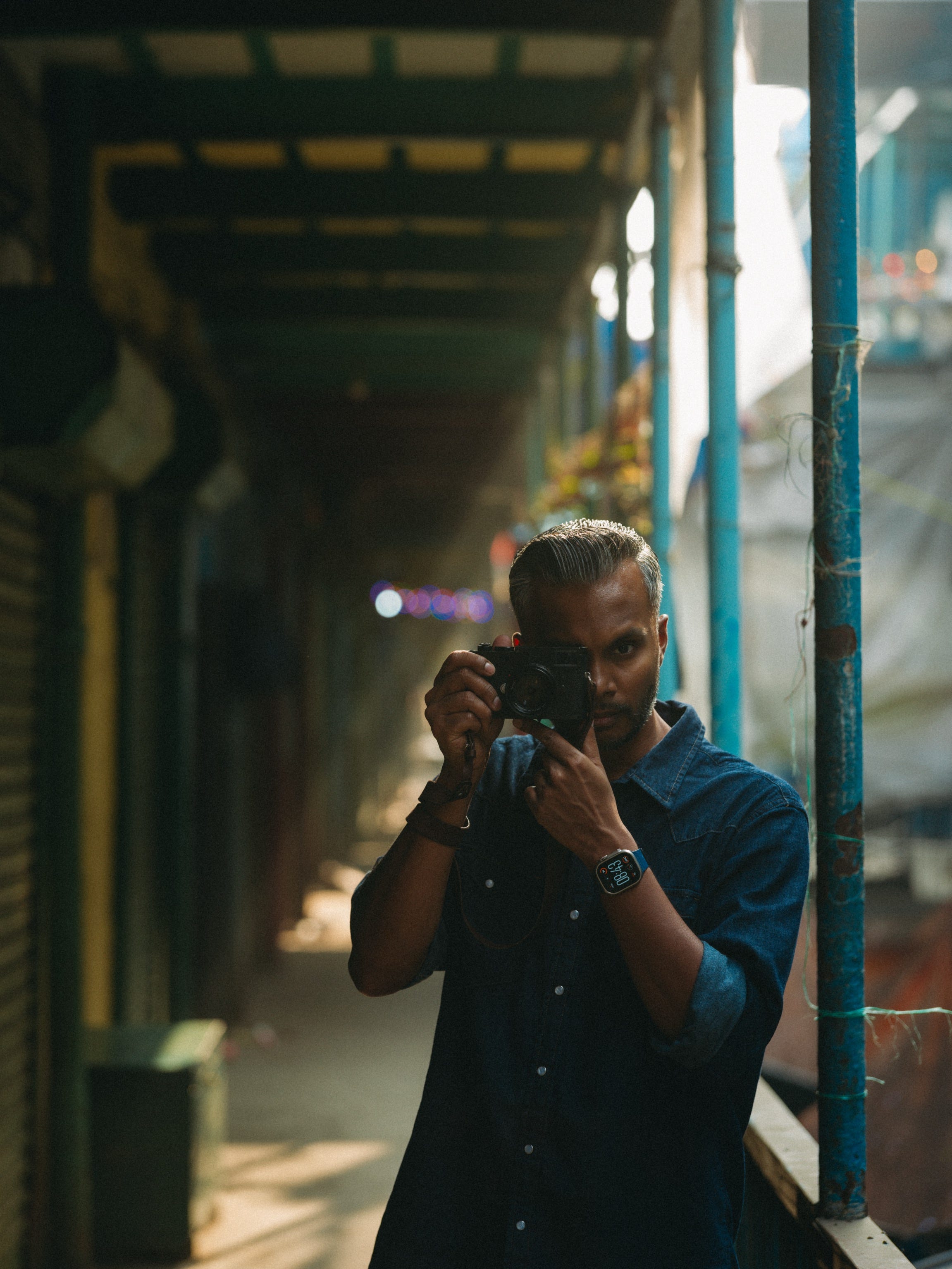
It’s a catchy headline and one that carries a lot of weight. But with an academic background in kinesiology and nearly a decade of travelling the world as a photographer, it’s something that I believe I can make a compelling argument about. However, it wasn’t until some recent events that I truly felt the spark to revisit my notes and create this piece.
Let me explain…
Upcoming Events & Workshops
LAST CALL: TWO WOLVES Limited Release
Today is the last day to order TWO WOLVES, the first print in my fine art collection. It’s an edition of 15 and you can find all the details here.
Leica.Connect: NYC Photowalk (SEP 5TH)
Join me in NYC for a free photography event. I’ll be sharing new stories from my recent adventures around the world and host a photowalk right after. Spots are limited so be sure to register early.
India: North & South Street Photography Workshop (FEB 2027)
If you’re looking for an authentic and unforgettable street photography adventure across India, this workshop is for you. One seat is open for my workshop from February 5th-15th next year. Email me to reserve your spot.
Video for Photographers Masterclass (LONDON)
Our last Video for Photographers experience was a hit. If you’re a photographer looking to expand your skillset with video, this is the best workshop you can invest in. Email me to reserve your spot for early 2027.
This year, over twenty photographers gathered in Svalbard for a group photography adventure unlike anything else. Next year, I’m looking to invite a group to the 7th continent. Spots are limited, details can be found here.
Expanding The Neuroarts Field
This year, I joined the advisory board of Fotophase, an organization that envisions a world in which photography-based neuroarts is established within the neuroarts field. What are neuroarts? In short, it’s this field of study that examines how artistic experiences impact and change the brain to improve overall health.
Fotophase believes that the act of making images can facilitate an experience that supports transformation and growth through education, experiential learning, and community engagement.
The Fotophase team is an incredible collection of doctors, researchers, and artists. One that I consider myself incredibly privileged to dialogue with. In a recent meeting, I got to speak with Dr. Ahmad Beyh, an established neuroscientist and photographer whose research spans conscious visual perception. We were discussing the act of photography, and I felt like he was reciting notes I had prepared for this story.
We shared this passion, along with the entire board, that photography has this immense potential to improve mental health, enact positive change in the body, and create meaning for artists of all kinds.
And it all came down to the holistic act of photography.
The Act Of Photography
Now, there’s no specific paper that proves the act of photography can heal the brain. But if we deconstruct the photography process into clear stages, we should have enough to examine how this art form could impact our brains.
When most people think of photography, the image that comes to mind is a person capturing an image where a finger is hitting the shutter. The truth is that photography is much more than that.
I believe there are four clear stages that make up the complete act of photography:
Activation
Observation
Composition
Curation
For me, these four stages are the building blocks of the photographic practice. Some may argue there’s more or less, but I’d say that’ll come down to semantics.
The important takeaway here is that photography is bigger than just pressing the shutter button on the camera, and I'll explain that with these four stages.
Activation
The first stage in the act of photography is what I’d call activation. It’s the physical process of moving your body in search of an image worth capturing. Again, photography isn’t just pressing down on the shutter of your camera. You have to move to position your camera in front of something you find interesting.
Interesting can be found at home or in the studio but if you’re like me, it thrives outdoors. And if you’re willing to make a concerted effort to regularly walk outside, you can have a significant effect on improving brain health.
A major 2022 study published in JAMA Neurology tracked over 78,000 adults to see how their daily step count affected their risk of developing dementia. Researchers discovered that walking as little as 3,800 steps a day acted as a minimum threshold and linked to a 25% lower risk of cognitive decline and dementia!
There was also a 2023 study in which researchers tracked nearly a thousand participants to see how a light walking pace affected their cognition over time. They found that engaging in light physical activity was associated with less decline in visual scanning, tracking, working memory, and visuospatial ability.
Photography for most isn’t exhaustive, but it doesn’t need to be to reap health benefits.
Photography demands us to seek out light for our images. This process requires physical movement of some kind. And when you make an effort to regularly engage in that movement, even at a modest level, there’s research out there to say that it can protect and improve cognitive function.
Observation
There’s a stage in photography that sits in between the movement and the shutter. It’s a stage I call observation. It’s the time where your eyes are scanning the environment, looking for the frame you wish to capture. It encompasses that feeling where distractions start to fade away as your attention is on the world in front of you. And therein lies a powerful benefit for photographers.
There was a study in 2018 that, through a randomized controlled trial, asserted that prolonged worry and rumination are often accompanied by heightened self-focused attention. The researchers showed that by teaching participants to voluntarily shift their attention to external stimuli, they interrupted these feelings of rumination and were able to produce significant reductions in symptoms of anxiety and depression. Powerful findings.
In 2021, there was a study that described soft fascination, this moment that occurs when an environment gently captures your attention without requiring intense mental effort. Not unlike the way a photographer is delicately aware of their scene. The study suggested that this type of pleasant, externally focused observation provides a positive distraction away from the self. By directing your cognitive resources toward observing the world around you, your brain breaks the cycle of repetitive, anxious thoughts. What many might know as rumination.
Observation in photography helps shift our focus to our surroundings. If you’re asking me, there’s enough evidence out there to suggest that when we can actively observe our environment, we can shift our thoughts from the self to the world. And as a result, we can stave off feelings of anxiety and worry, two critical factors that can contribute to feelings of depression.
Composition
The third stage in act of photography I’d describe as Composition. It’s this blip of increased focus that leads to the photographer taking a picture with their camera. It can be a single moment or a series of moments over a duration of time. It’s this part of the photography cycle where there’s a little more focus and when it reaches a certain threshold, some people may even reach what’s described as a flow state. Therein lies another potential benefit to our mental health.
Psychologist Mihaly Csikszentmihalyi first defined the flow state as complete absorption in a task where the challenge and your skill level are well matched. If a task is too hard, you’ll feel anxious, and if it’s too easy, you’ll get bored. But when you hit that sweet spot, the activity feels effortless and rewarding. In this state, your focus becomes so intense that you lose self-awareness and time starts to move differently. When you engage with photography long enough, you may begin to experience this flow state.
Now, why is this valuable? In short, this state helps to reduce stress.
In a 2014 study, researchers found there’s this inverted U-shaped relationship between flow and physiological arousal, as well as cortisol production. This means that moderate physiological arousal facilitates the flow experience, whereas excessive physiological arousal and stress can hinder it.
Because the flow state requires a moderate level of arousal to keep you focused, it prevents the distress-driven cortisol spikes associated with excessive stress. Your brain's engaged but not overwhelmed which allows you to perform without entering a state of excessive physiological stress.
The act of repeatedly composing and shooting with a camera presents a unique challenge that, when in a sweet spot, can allow us to enter a flow state and, as a result, reduce stress on our brains.
Curation
Photography doesn’t end after you’ve pressed the shutter. There’s one more stage and I called it Curation. It’s the process of taking the ingredients you’ve collected and forming them into a result of some kind.
Whether you share it publicly or hold onto it for yourself doesn’t matter. It’s the artistic process of editing and crafting a finished piece. And I believe when you’re processing your work at your speed, it can become a meditative practice that improves neuroplasticity, which is the brain’s ability to reorganize itself by forming new neural connections and pathways.
There was a paper in 2024 that explored art and mindfulness. It asserted that art provides a form of meditative therapy where the individual discovers an inner calmness. The researchers explained that the process of art-making in itself can be therapeutic, just as meditative practices such as yoga and deep breathing can lower blood pressure and relax the body.
Now, why is linking the arts to meditation valuable?
Well, there’s extensive research that shows mediation has immense benefits on our minds and cognitive function. One specific paper from Harvard researchers showed that meditation produced changes over time in the brain's grey matter. The researchers found that participating in a mindfulness program appears to spark measurable changes in brain regions associated with memory, sense of self, empathy, and stress. They also observed a thickening of the cerebral cortex in areas associated with attention and emotional integration, demonstrating that structural changes in the brain underlie the psychological benefits of these practices.
Importantly, additional research has confirmed that meditation is a powerful catalyst for neuroplasticity. By repeatedly focusing attention, meditation strengthens specific neural pathways and builds stronger connections between cells. This mental exercise increases grey matter density and enhances myelination. What is myelination? It’s an adaption in our brains where neural pathways are strengthened.
This is all to say that there’s strong evidence that meditation can dramatically heal and improve cognitive function. So if we can protect the curation stage in the photography cycle as an artistic process, there’s an opportunity to invite the benefits of mediation into our practice.
The Act Of Photography Can Heal The Brain
I believe this. But here’s the thing: there isn’t explicit research that links the photography to improved cognitive function.
However, if we deconstruct the photographic process into defined stages, we begin to paint a picture of how this art form could impact our brains for the better.
I’ve spoken to countless photographers who have professed that without photography, they’d be dead. I can empathize. When you approach the act of photography with intention, I believe you stand to reap some incredible cognitive benefits as a byproduct of what makes up the holistic act of photography.
This is also why generative AI could never replace photography. It’s this cheap thrill that acts like a slot machine, rushing to the result and skipping all the beautiful stages that make photography a deeply meaningful practice.
Look, when I say photography heals the brain, I’m sharing something that I believe based on my academic and personal experience. Whether you choose to believe it or not is up to you. But I hope I’ve presented enough evidence to convince you that this connection is worth being studied in a formal way.
Previous Guides
NEW August Contest
This month, I’ll be giving away a $200 gift card to the Moment Shop where the winner can save big on their next camera, lens, bag, or courses. Moment has so many creative products to choose from and $200 can absolutely make for a great deal.
How will I pick the winner? Make sure you’re signed up for this newsletter then leave a comment on at least one post from this month. I’ll be randomly picking one person, confirming they meet the requirements and contacting them directly before announcing the winner publicly.
As always, this contest is void where prohibited by law. Good luck!
My thanks to the team at Moment! Not only for this contest but for being the longest supporter of my work online. They’re a lean team of passionate creators that truly believe in supporting other creatives on their journey. Whether it’s a new camera, lens, workshop, or just some great articles, visit ShopMoment.com today.
What’s Next?
If it weren’t for the incredible minds at Fotophase, I probably wouldn’t have published this story. At least, not this soon. But in our conversations, I'm finding more reasons to dive deeper into how photography can shape our lives for the better.
Later this month, Fotophase is hosting there first suite of public events. It’s an opportunity to share photography, connect with other photographers, and invite more dialog. These events are happening in Chicago and kick off on August 28th. If you’re in the area, I'd highly recommend attending. You can find more details here.
GB