

Film Photography in Patagonia
Reflections on moments and mementos from atop a glacier

My digital work across the polar regions, colour carries the weight of the narrative. But for this journey into the heart of Patagonia, I wanted to spend some time stripping away that layer of context. With a small but reliable kit, I set out to trade the fluidity of modern results for a dialogue with the past.
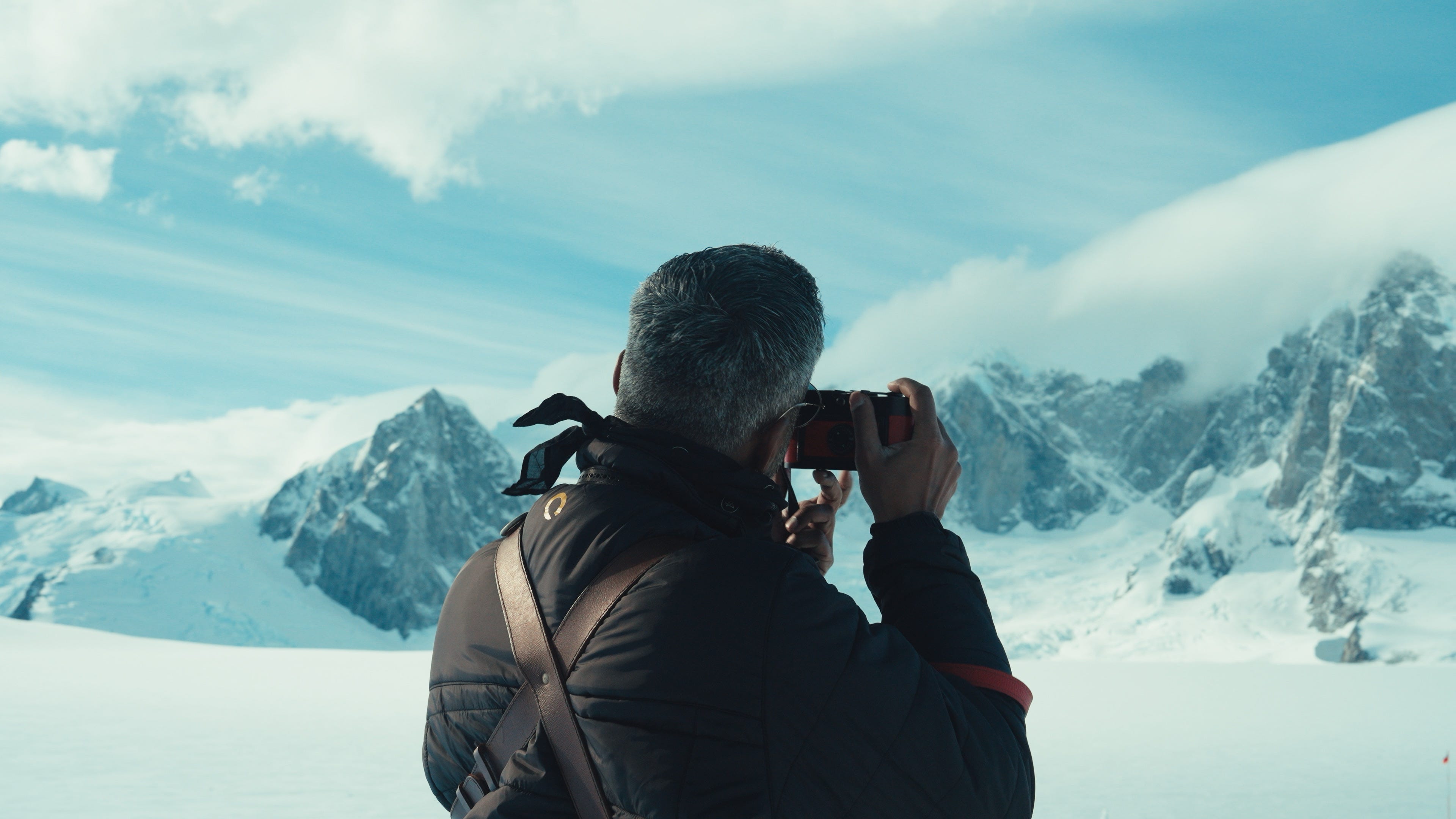
I wasn’t in pursuit of a perfect frame. This was about embracing the friction and meditative pace of analog to channel the spirit of the explorers who visited this region long before me. These are the frames, the mistakes, and the tension that made the experience one I’ll never forget.
All Things Film: My Lab of Choice
Developing film is the ultimate bottleneck in analog photography. You’re often stuck choosing between the time sink of doing it yourself or the loss of control that comes with a distant lab. All Things Film bridges that gap by treating the lab-photographer relationship like a true partnership.
They build custom profiles for your work to ensure your rolls are developed exactly as you intended. They’ve earned my trust for both my personal and professional work. If you’re ready to reclaim your creative vision while accelerating your analog process, send your next batch to All Things Film and tell them I sent you.
The Camera & Lens
I decided to pack a single film body for this journey and reached for my trusted Leica M6. Since it shares the same M-mount with my digital rangefinder, it was the most practical choice for a streamlined kit. It’d also serve as a proper field test: my M6 was fresh back from repair after I’d inadvertently burned two holes in the shutter curtain last year.
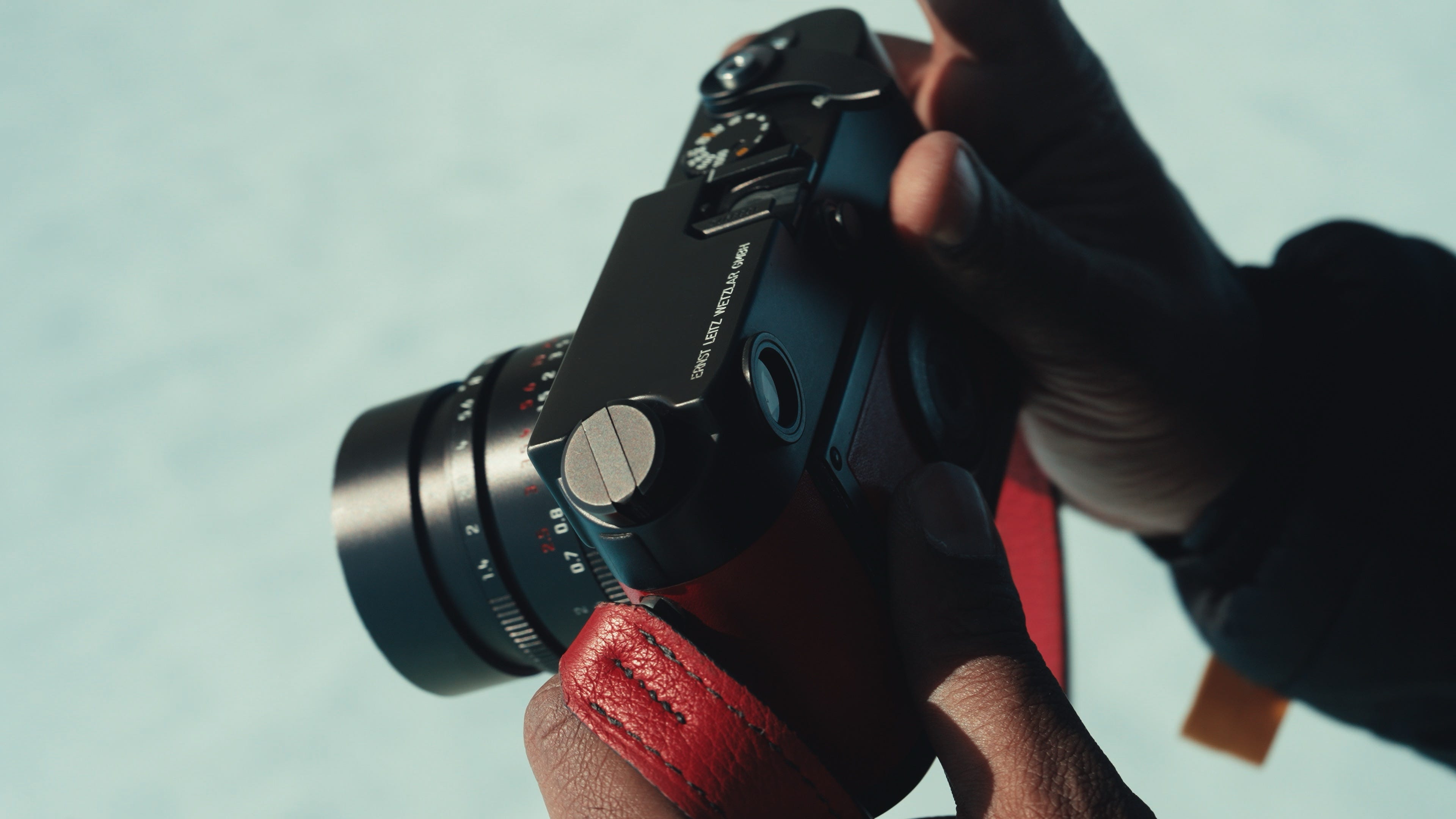
Because this entire effort was tied to an experience—this quest to channel the essence of the explorers who came before me—I opted for a more traditional perspective. While the glass itself is very modern, I brought my Summilux 50mm F1.4 to compose my frames.
I’ll be honest, this wouldn’t have been my first choice if I were prioritizing specific results, but I wanted to work with a focal length that felt ubiquitous in the 70s and 80s. For better or worse, I wanted to see the world through that era.
The Film
My digital work in the polar regions puts colour at the forefront of the conversation. For this film exercise, I wanted to remove that layer of context and work entirely in monochrome.
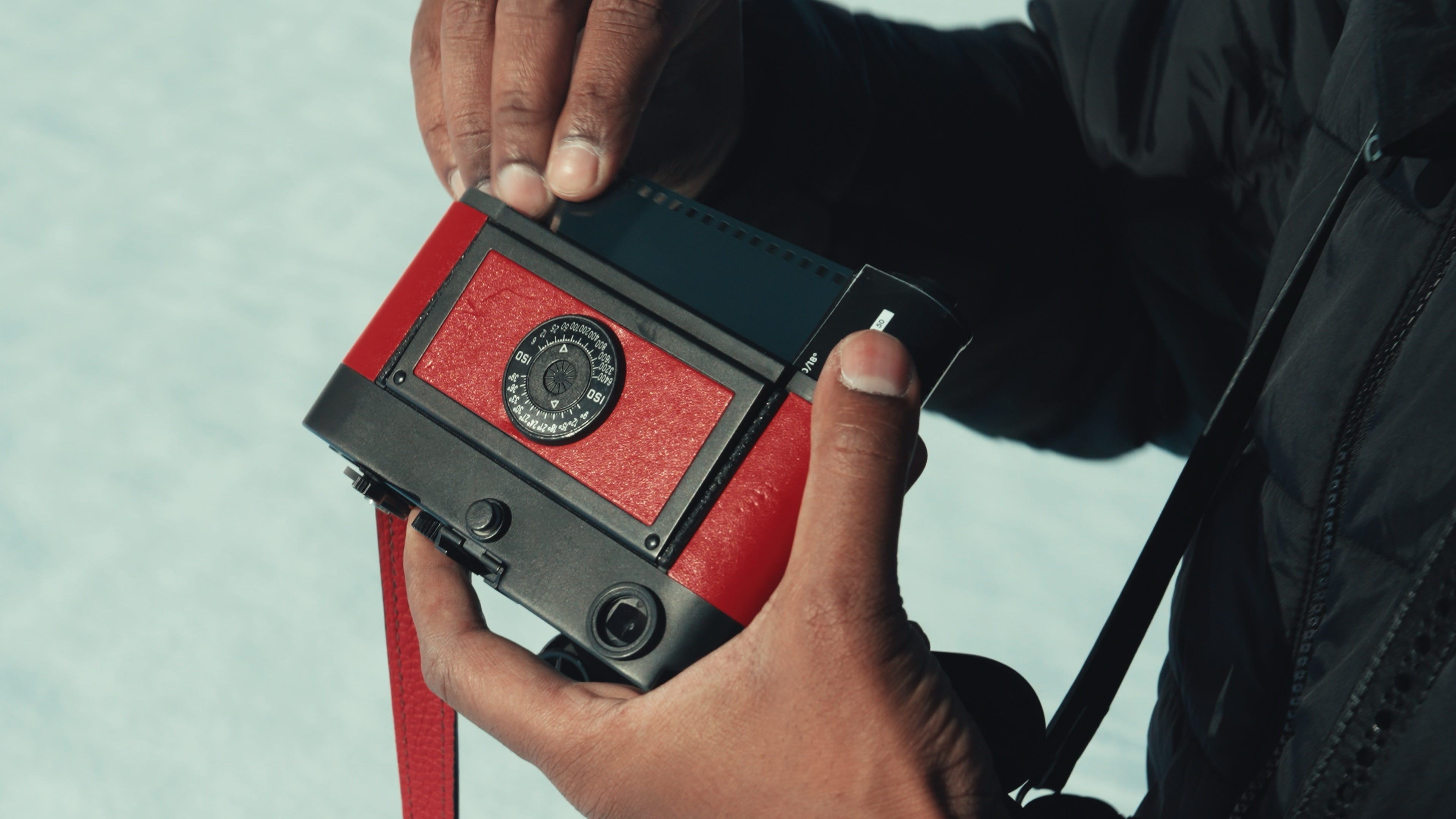
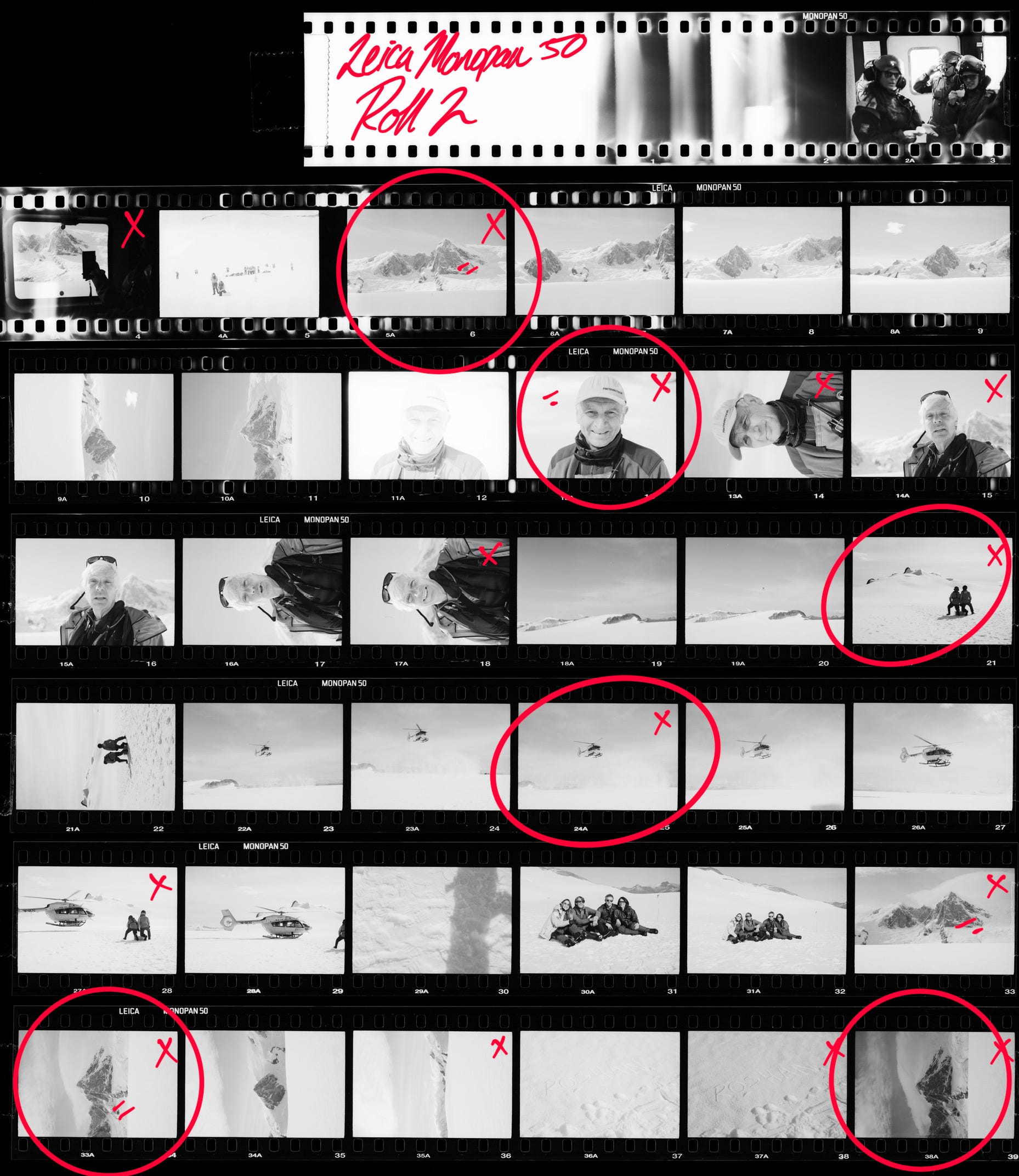
Leica Monopan 50 is a low ISO, fine-grain film that demands a significant amount of light. That appetite for light made it the perfect companion for the high-reflectance environments across Patagonia. I packed half a dozen rolls for the trip and below, you’ll find a few of my favourite shots and the lessons they left behind.
Early Frames
You’ll notice some heavy overexposure on the first few frames here. This wasn’t a creative choice for added effect. It was a consequence of my own forgetfulness. At one point, I opened the bottom plate to reload before I’d finished rewinding the previous roll. I snapped the plate back on as fast as I could, but not before the light left a permanent souvenir on the emulsion.
Live and learn.
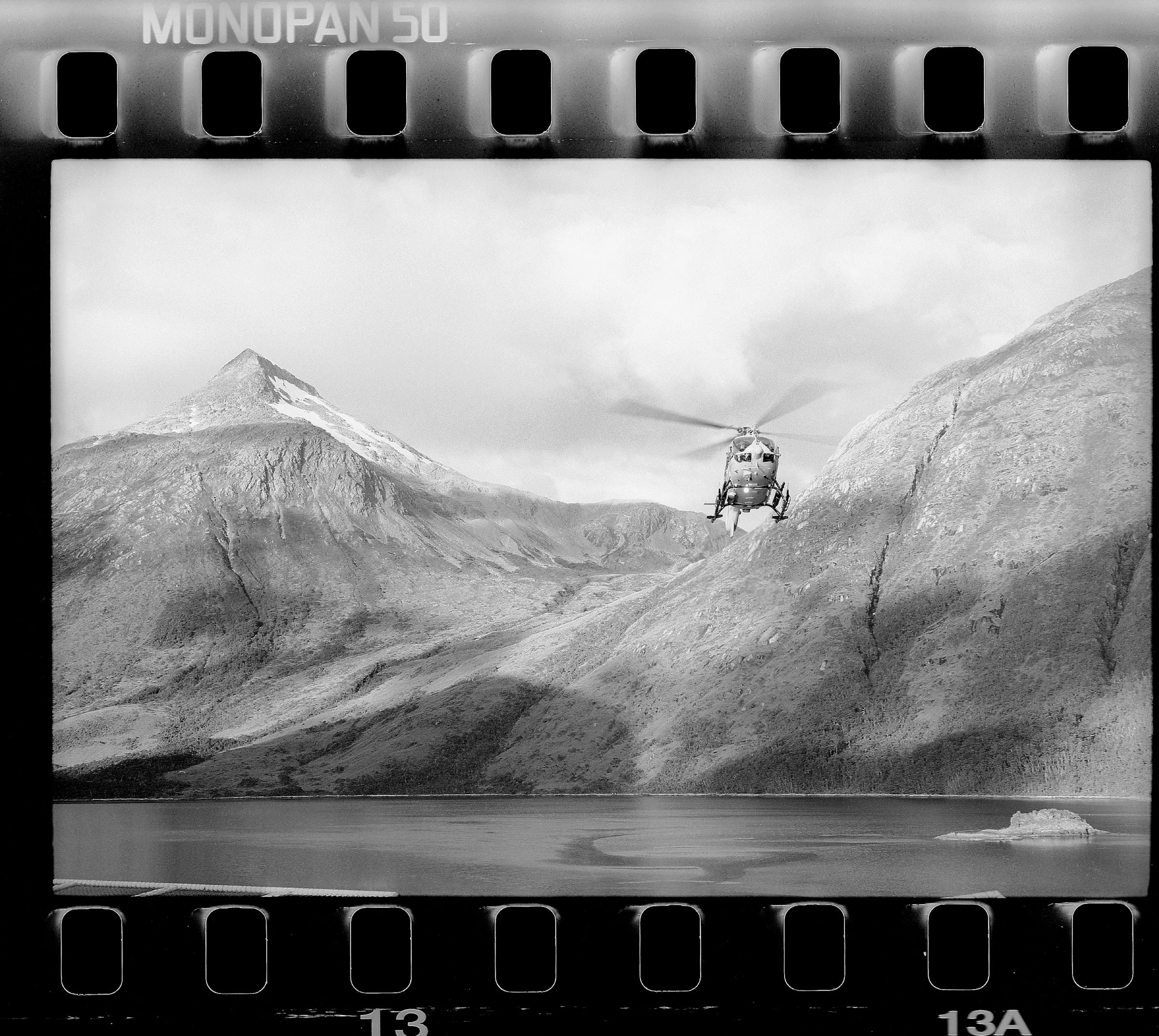
Monopan craves contrast. In a scene like the one above, where the yellows and greens fell under light cloud cover, the results can feel muted.
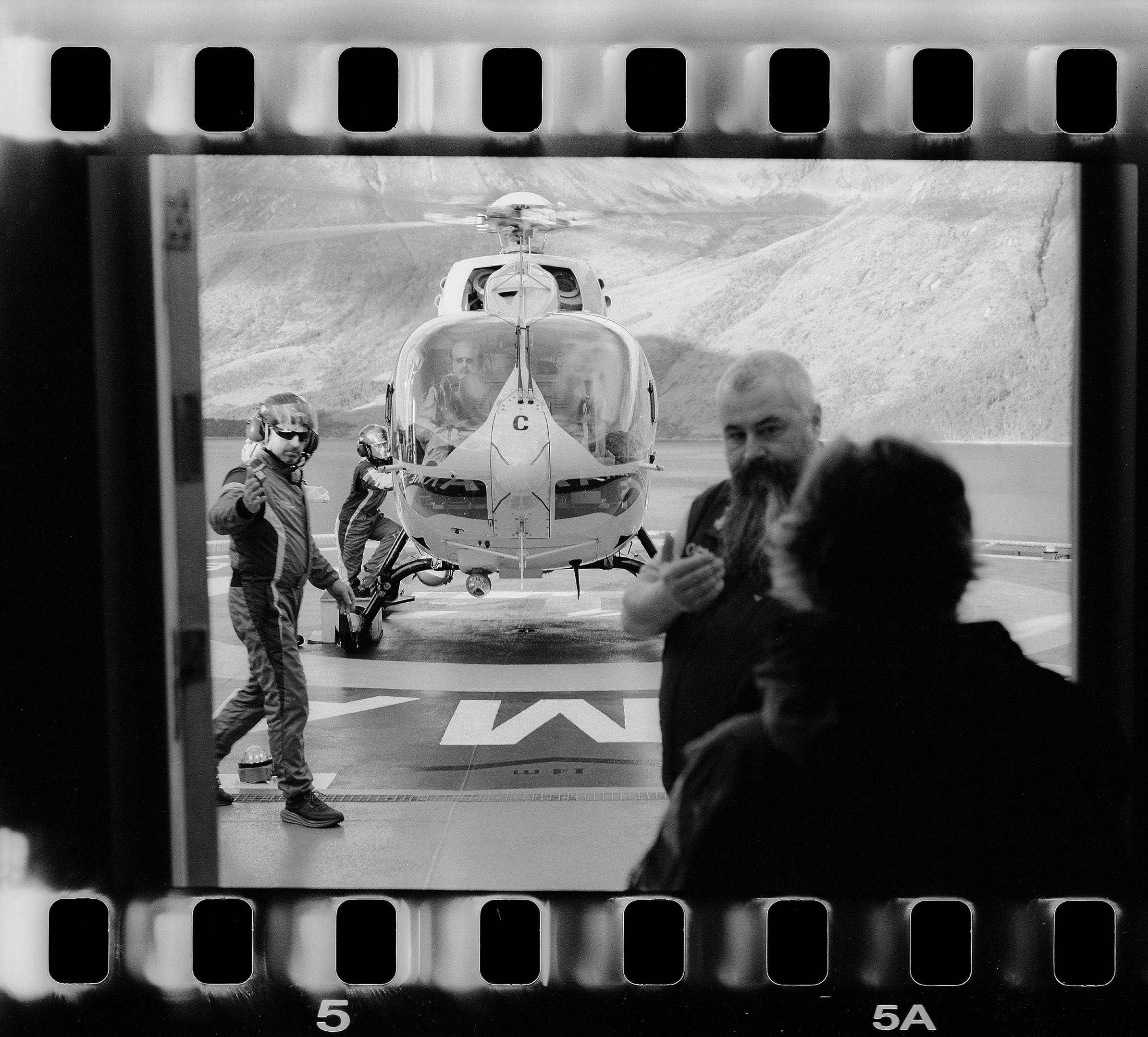
Compare that to this shot taken just as we were about to board our helicopter. There’s a healthy depth to the shadows that brings a sense of drama to the frame. I metered for the exterior, knowing the subject in the foreground would fall into underexposure.
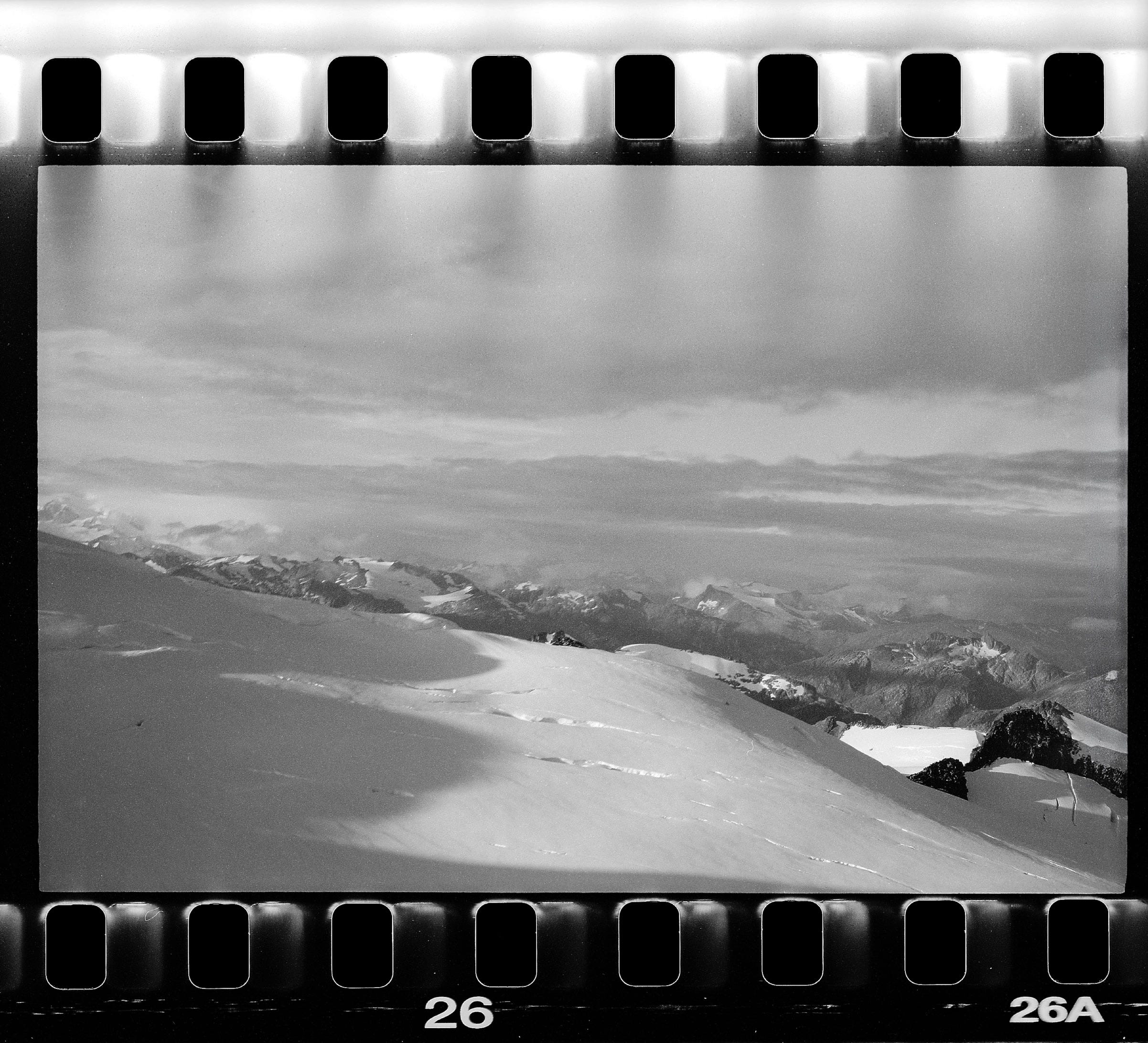
The view from my seat over the Darwin mountain range.
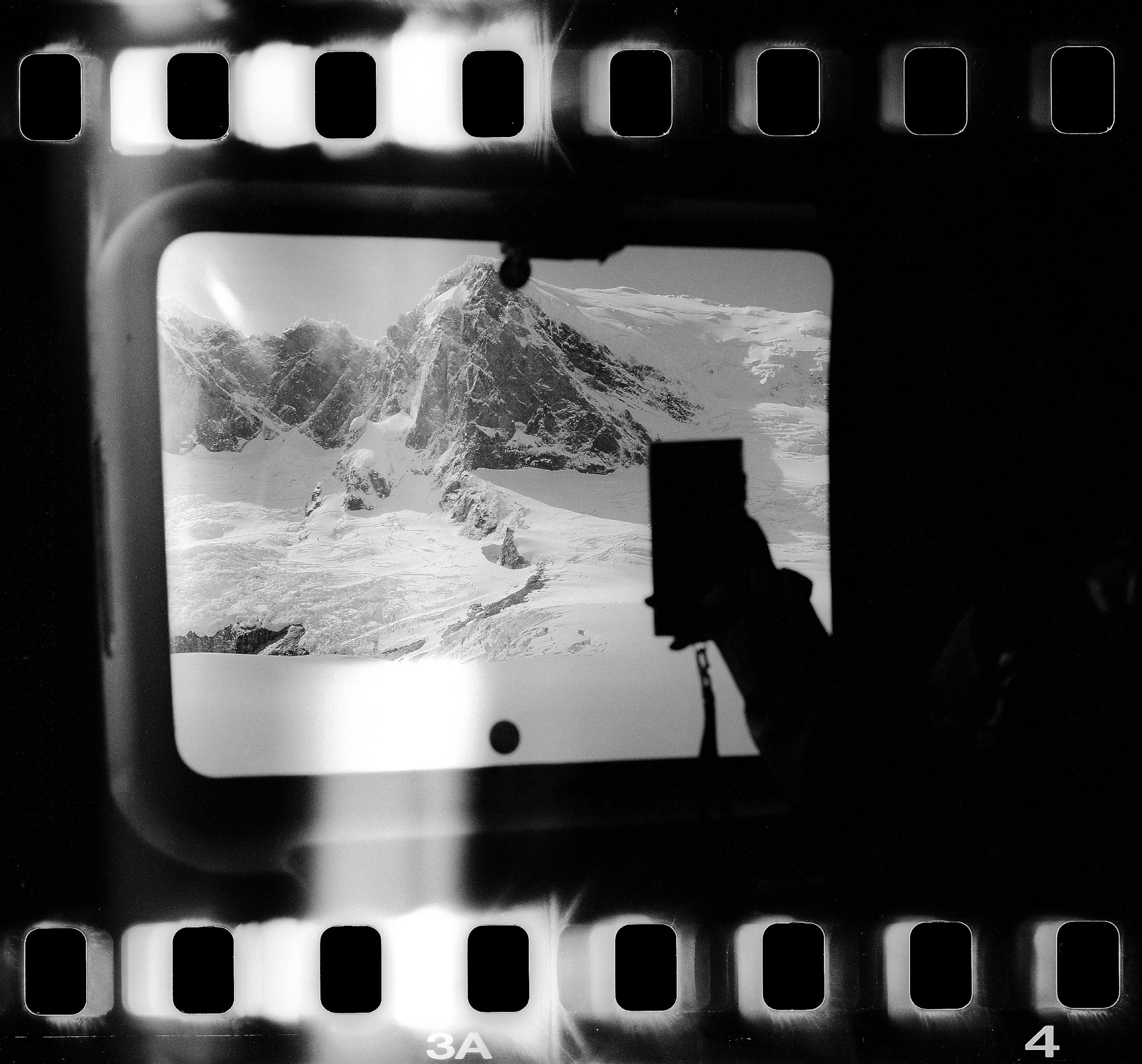
Light leaks damaged this frame in a way I don’t mind. It captures the essences of the flaring and astigmatism you experience when squinting through a window directly into the sun.
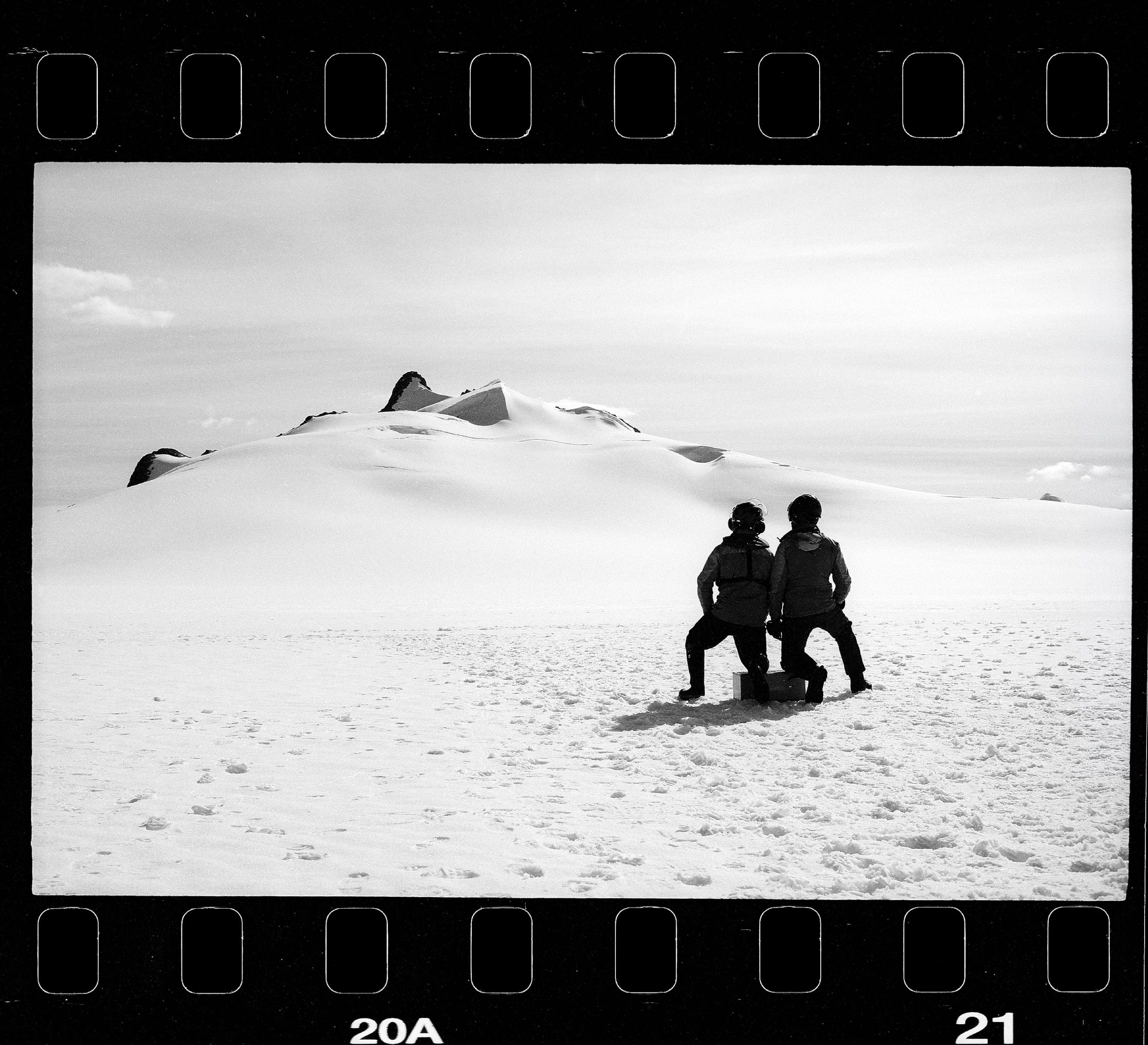
Expedition guides standing by for the next helicopter landing.
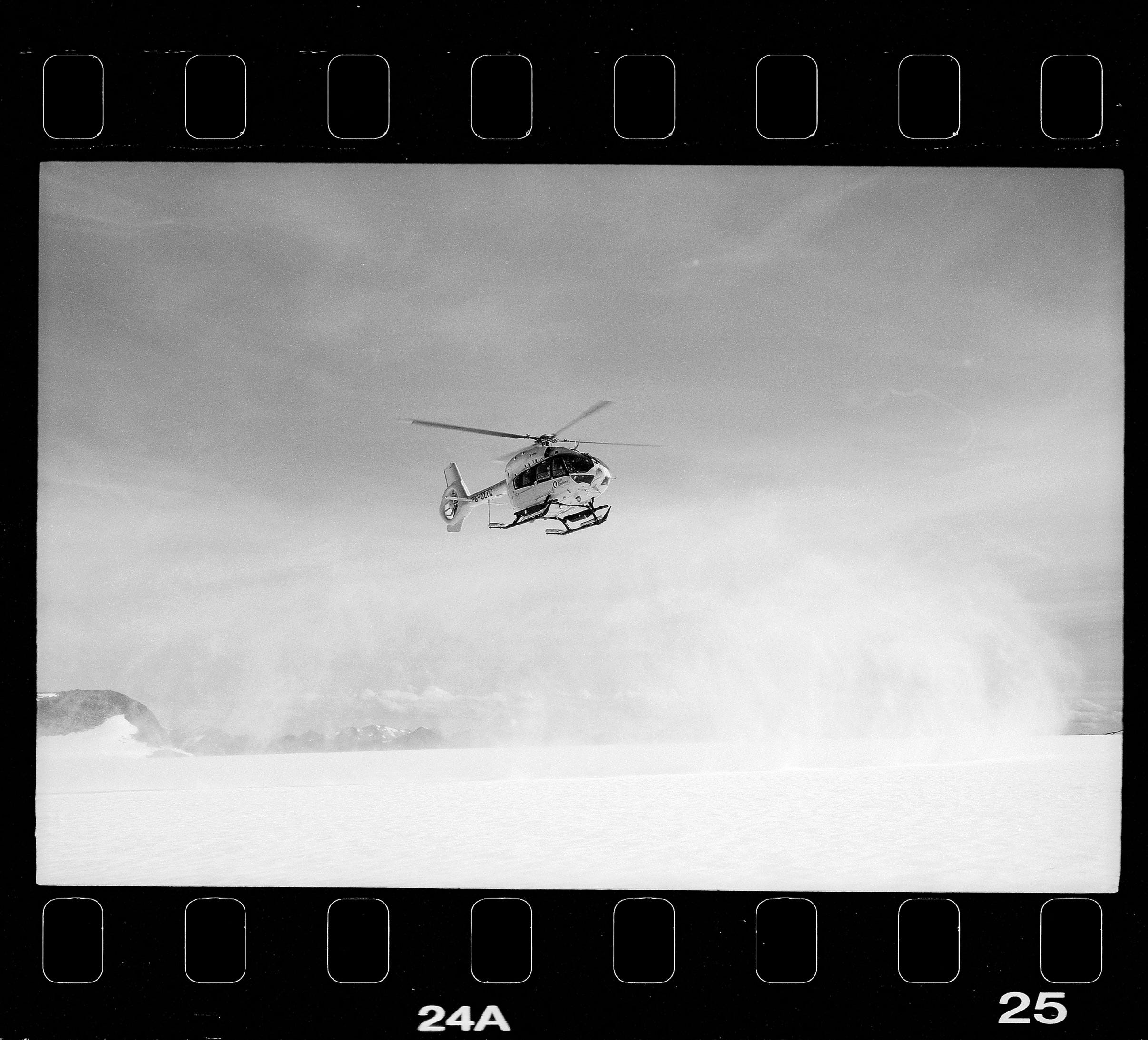
Landing on a glacier is no small feat. For safety reasons, I had to keep my distance from the site, but this shot captures the sheer force of the rotor wash kicking up snow for anyone within range.
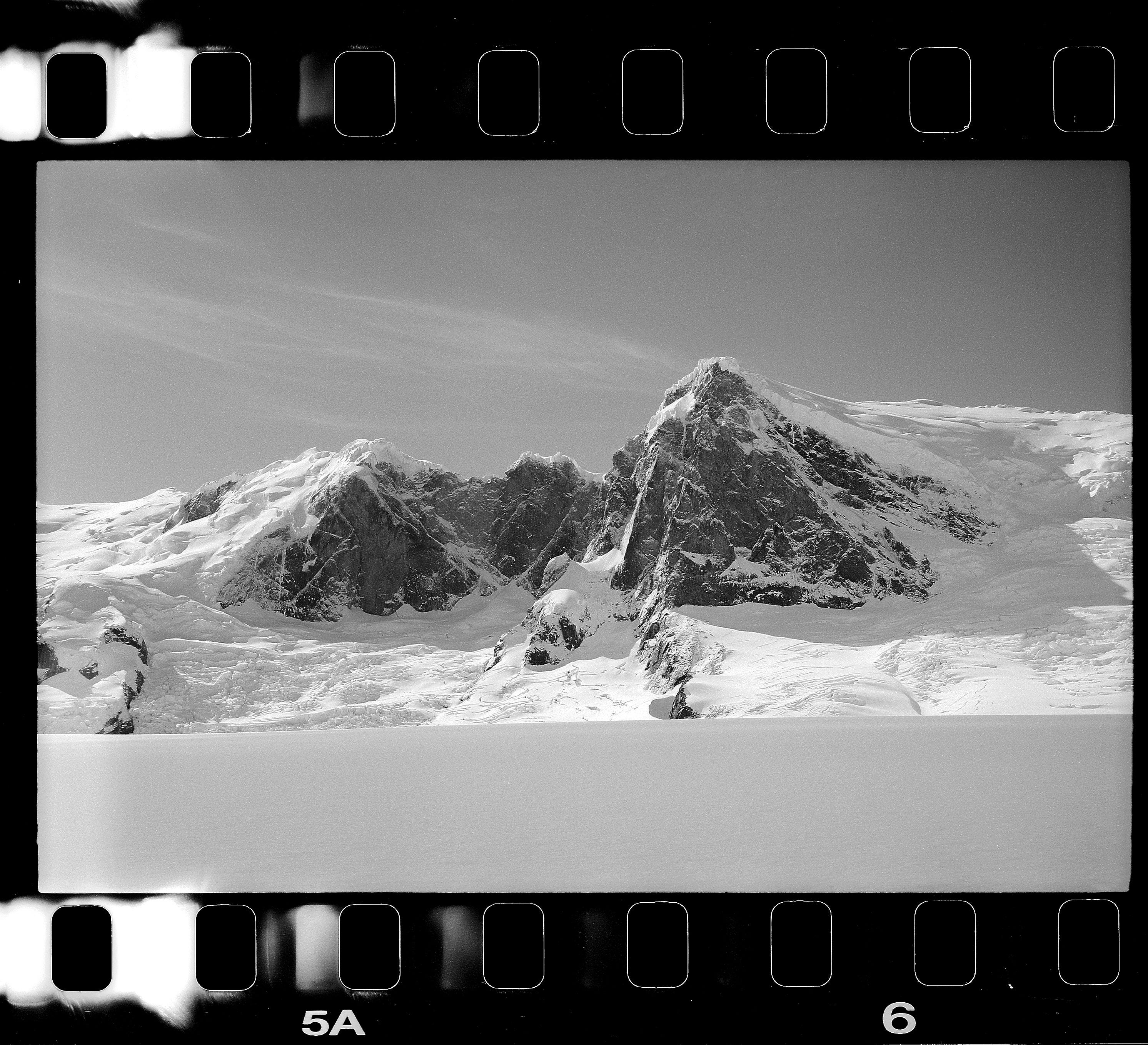
Mount Darwin.
There’s no image I’ll ever share that can truly encompass the feeling of standing atop a glacier and seeing Mount Darwin with my own eyes. But, I try.
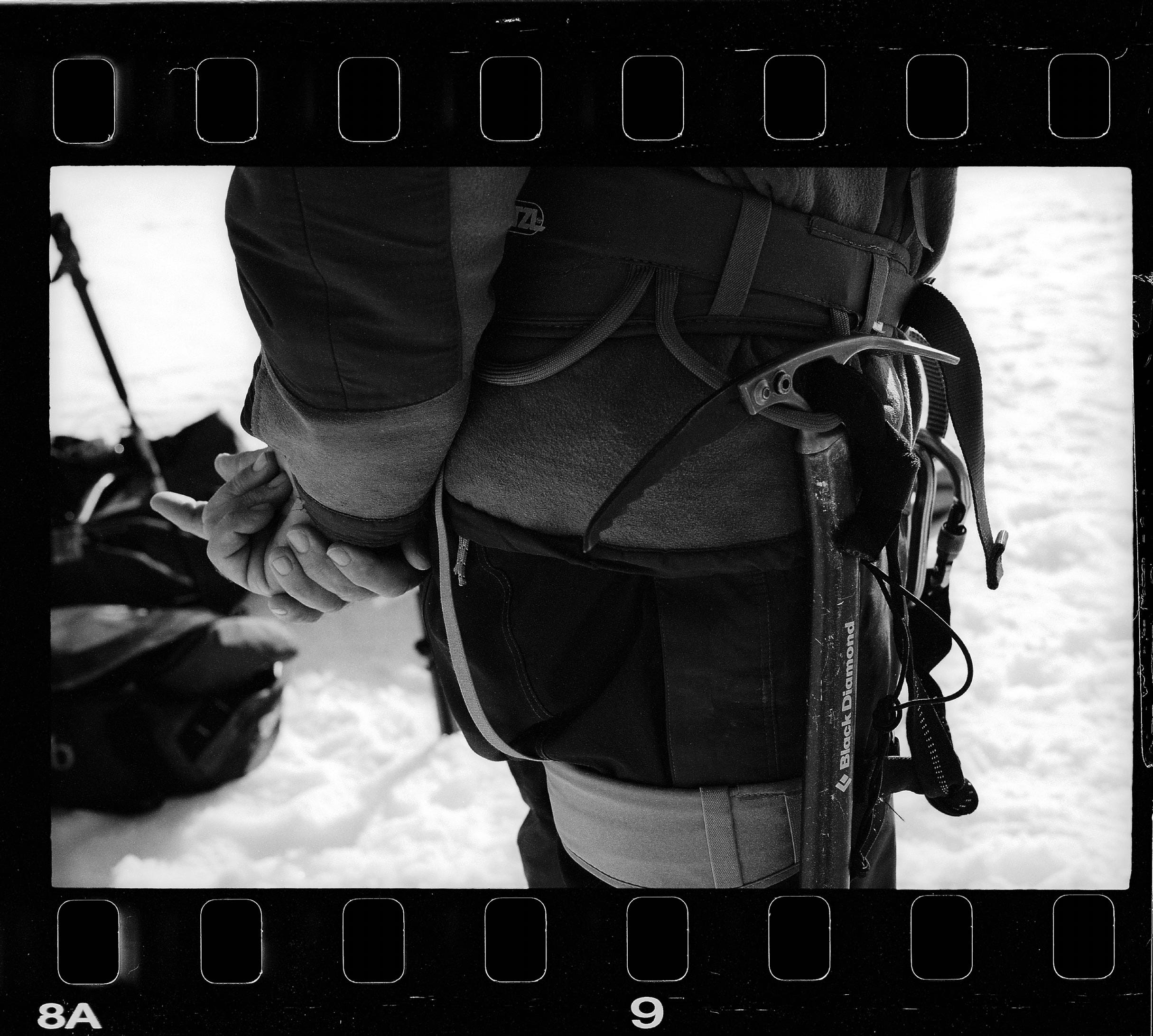
This experience wouldn’t have been possible without the incredible team that Quark Expeditions pulled together. The roster included some legendary mountain guides and explorers who’ve spent their lives in these extremes.
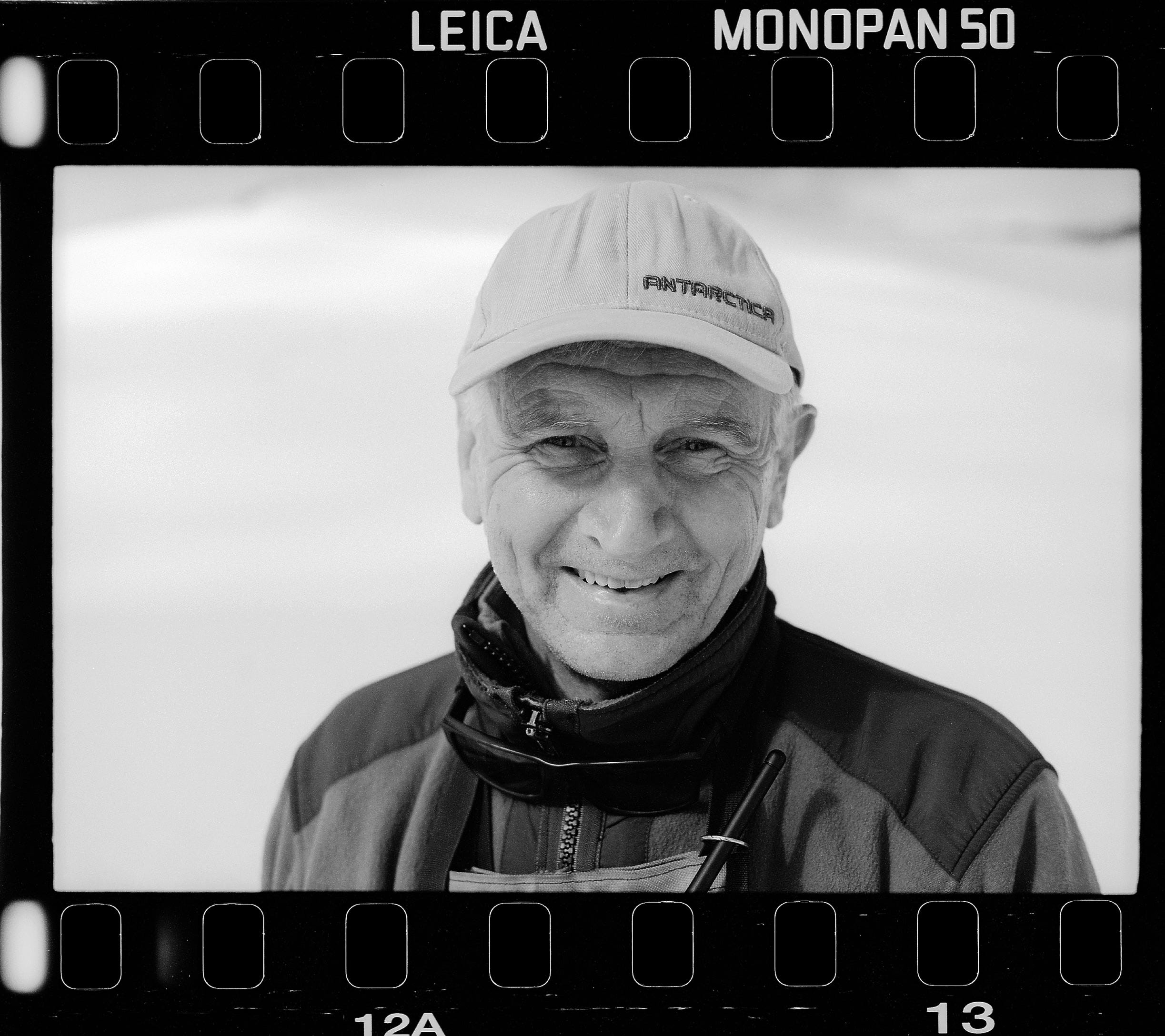
John Roberts is a mountaineer from New Zealand. He hosted a talk one evening about his adventures in Antarctica and, let me tell you, he’s a madman in the best way possible.
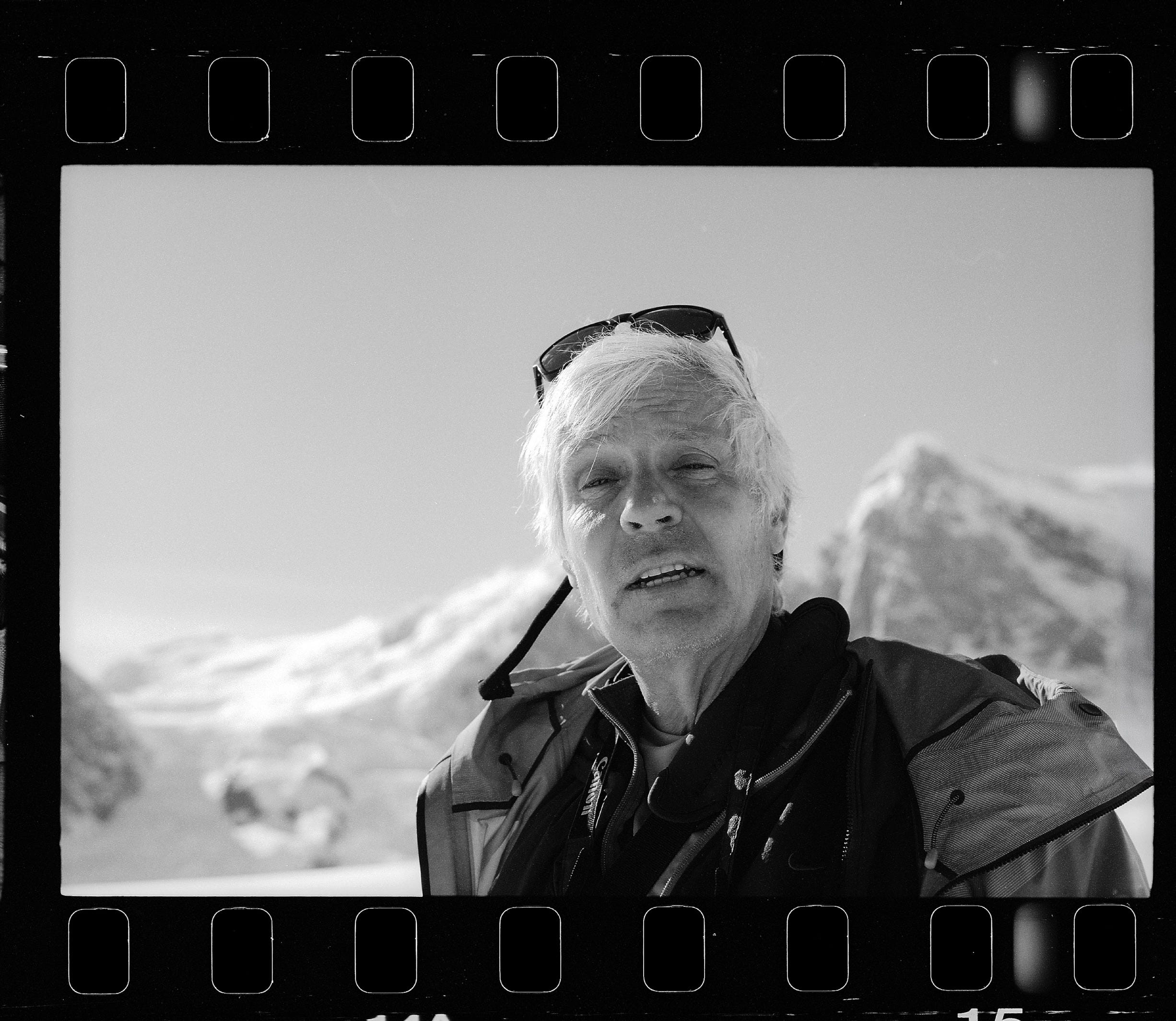
Marcos Couch was another legend on this voyage. Hailing from Argentina, he’s full of character and charisma. We had a lot of great conversations about film, photography, and the creative journey. It was truly a gift to share this trip with him.
When you have a moment, I’d highly recommend checking out this film about his climb up Mount Fitz Roy at the ripe age of 22.
Landing The Shot
I had six rolls of film with me in Patagonia, which translated to just over 200 opportunities to engage in this analog process. Most of the time, it was a meditative escape. Occasionally, it introduced a level of friction that demanded a bit more effort. And at one point, as I shared earlier, it gave me a genuine “oh sh*t!” moment.
But the entire process was made worth it for this single frame right here.
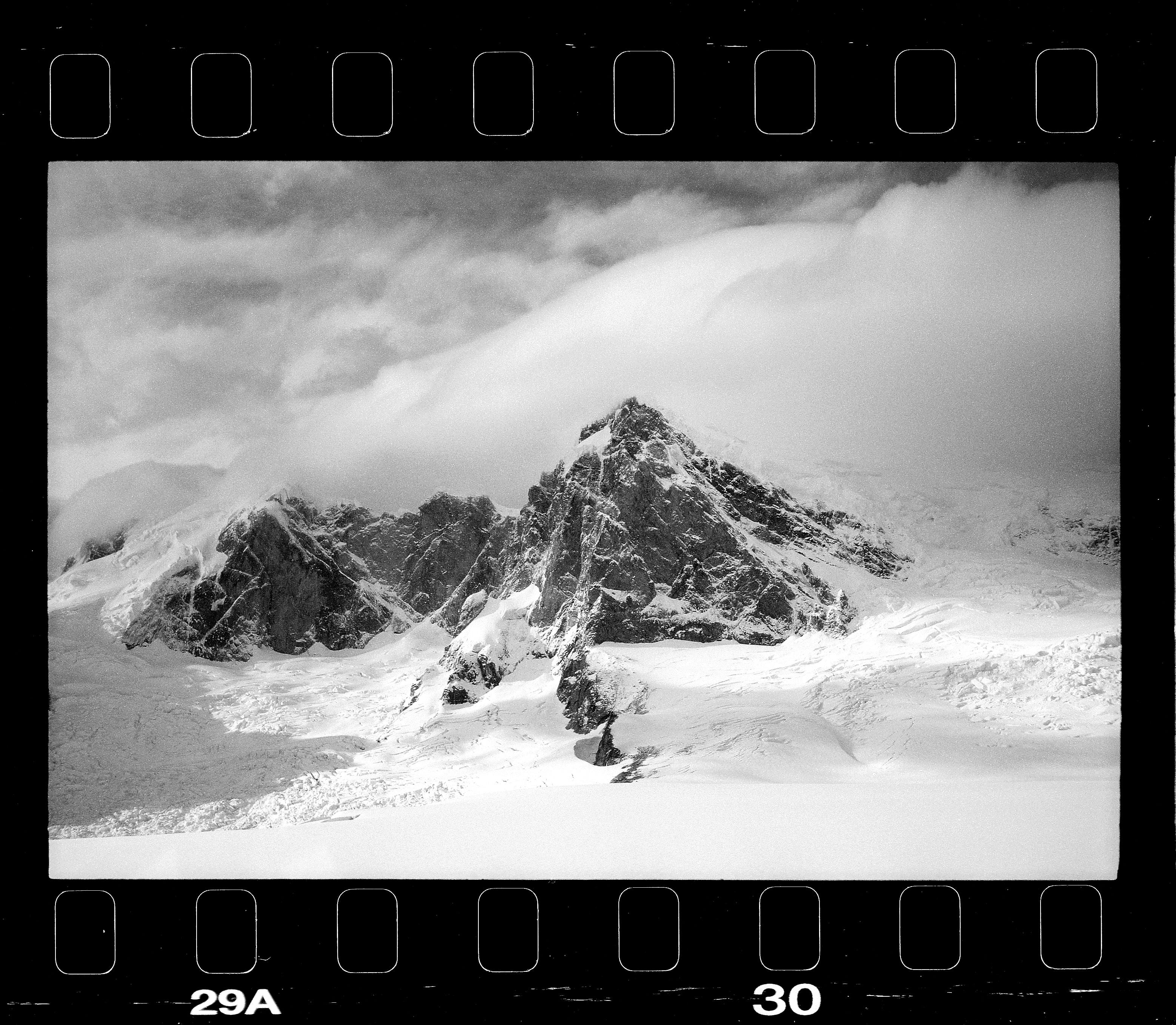
This is my favourite shot from the entire trip. The drama of Mount Darwin, the dynamism of the clouds, and the omniscience of the shadows below all converge into a perfect postcard for me.
For me, this image feels like it’s from another time and yet, exists as something created just a month ago. The texture, the contrast, and hell, even tiny imperfections from being forced through an Argentinian airport scanner, it all works.
This is a photograph that connects me. To the past. To an idea. And to myself.
Worth The Squeeze
So much of my creative journey is tied to a specific result. From studio sessions for brands to overseas projects for books, and even street photography for this newsletter, the end goal often guides my approach. This trip was the first time in a long time where I consciously ditched that mindset.
My approach in Patagonia was entirely rooted in channelling the photographers and explorers of the past and observing the environment as it is, rather than what it ought to be. And incorporating film was an important attempt to bridge that gap so you might be wondering: did it work?
It did, though I’m not sure I have the words to accurately describe the feeling.
It’s like a blend of déjà vu, a “eureka” moment, and a healthy dose of “a-ha!” thrown in for good measure. Standing before the Darwin mountain range from atop a glacier, shooting film, and now looking at this final photograph, I feel like I’ve gained a glimpse into the passion, ambition, and conviction that drove those who travelled here before me. Yet, the moment those thoughts become conscious, my frontal lobe shouts that I can never truly know what it was like for them.
I am there, and then I am me.
It’s a back-and-forth that creates tension. A tension that, if you’re asking me, seems to be exactly what this is all about. Why we as photographers do so much of what we do.
Perhaps it’s not about finding answers or even asking the right questions. Perhaps it’s simply about dialogue, keeping it going as long as possible, and seeing where that takes you. Tension that generates movement, and movement that creates memories.
At least, that’s what I’m starting to believe.
Upcoming Events & Workshops
Leica Akademie: Video for Photographers - London
This June, I’m leading a two-day workshop in London for photographers who want to learn video. Whether you’re looking to create short films, branded content, or simply elevate your visual storytelling, this workshop provides a practical introduction to filmmaking. Sign up here.
Seats for my 2026 India workshop are currently sold out. If you’re still interested, you can join the waitlist here to be notified if a spot opens up or when new dates become available.
Previous Favourites
April Contest
This month, I’ll be giving away a $200 gift card to the Moment Shop where the winner can save big on their next camera, lens, bag, or courses. Moment has so many creative products to choose from and $200 can absolutely make for a great deal.
How will I pick the winner? Make sure you’re signed up for this newsletter then leave a comment on at least one post from this month. I’ll be randomly picking one person, confirming they meet the requirements and contacting them directly before announcing the winner publicly.
As always, this contest is void where prohibited by law. Good luck!
My thanks to the team at Moment! Not only for this contest but for being the longest supporter of my work online. They’re a lean team of passionate creators that truly believe in supporting other creatives on their journey. Whether it’s a new camera, lens, workshop, or just some great articles, visit ShopMoment.com today.
What’s Next?
Once again, my deepest thanks to the team at All Things Film for bringing these frames to life. They cater to professional photographers and truly looking to keep the film experience thriving. Make sure to visit them for your important work.
Last year, I had the chance to sit down with Leica for their newly launched podcast. The episode is live and you can watch it here. If you enjoy this newsletter, I think you’ll appreciate the conversation that was shared.
This week, I’m headed to Chicago for the grand opening of Leica’s newest store. If you find yourself there, make sure to say hi.
GB
Those Monopan images 👏
Hi Gajan. Great effort with the film photography. It did remind me to break out the Leica MP and a roll of Ilford Delta 400 (bnw of course). The experience was so creative and liberating being free of cables and batteries and I am encouraged to try and do more with film, although with the cost of film and developing here in the U.K. I will have to be more selective about my subjects and individual shots (no bad thing).
As always great content and all the best from Plymouth UK.