

Leica Summilux 21mm F1.4 Long-Term Review
A comprehensive look at Leica’s least talked about stunner

Blackjack is not a complicated game. Get close to twenty-one without going over. Simple enough. But anyone who’s spent real time at a table knows the truth. The players who understand the mechanics, the timing, and the discipline can shift the odds in their favour. And the bold ones, the ones who play right on the edge, often walk away with the biggest wins.
Photography has its own version of that edge. The 21mm lens tempts the fearless, rewards the disciplined, and gives its best results to those confident enough to play right at the limit.
Note To Readers
This is a longer story and if you’re reading this in email, there’s a good chance it may not load properly. This story is best experienced on Church & Street or through the Substack app.
You’ll also find a disclaimer at the end of this review. Given my relationship with Leica, as well as other imaging brands, I’ll be sharing additional context with each published review.
What Makes This Lens Special?
The secret to what makes the Leica Summilux 21mm lens such a potent storytelling tool lies in its ability to place the viewer in the scene. Because of its unique angle of view and high-quality glass, you have a lens that creates a natural perspective that rewards photographers who are willing to get close to the story. And I mean really close.

What takes this lens even further is its wide aperture paired with such a wide perspective. The result is something you just don’t encounter often in the photography world. When you add the exaggerated falloff in sharpness and contrast from the plane of focus—the signature of Leica Summilux lenses—you have something that creates compositions impossible to replicate with standard wide-angle lenses.
In a nutshell, that’s what makes this lens a powerful tool. But there’s so much more to the story. To fully appreciate what this lens can do, let’s examine why you’d reach for a 21mm lens in the first place, discuss what Leica’s 21mm brings to the table, and ultimately, decide who should consider adding this specific lens to their kit.
Why Choose a 21mm?
Now, considering a near ten-thousand-dollar lens for our photography is a gamble. So before we talk about optics or image quality, we need to address the whale in the room: why is a 21mm lens valuable in the first place?
The value of this perspective lives in both the science and the art.

Let’s start with the numbers. At 21mm, you have a diagonal angle of view typically at 90 degrees. Why does that matter? Because this is the visual edge of the wide-angle world. Beyond this point, you drift into ultra-wide territory where the growing angle of view starts to bend and twist the environment in ways that move against human perception. Things look distorted. The science tells us that 21mm sits at the limit of what feels wide without feeling unnatural.
So what does the art tell us?
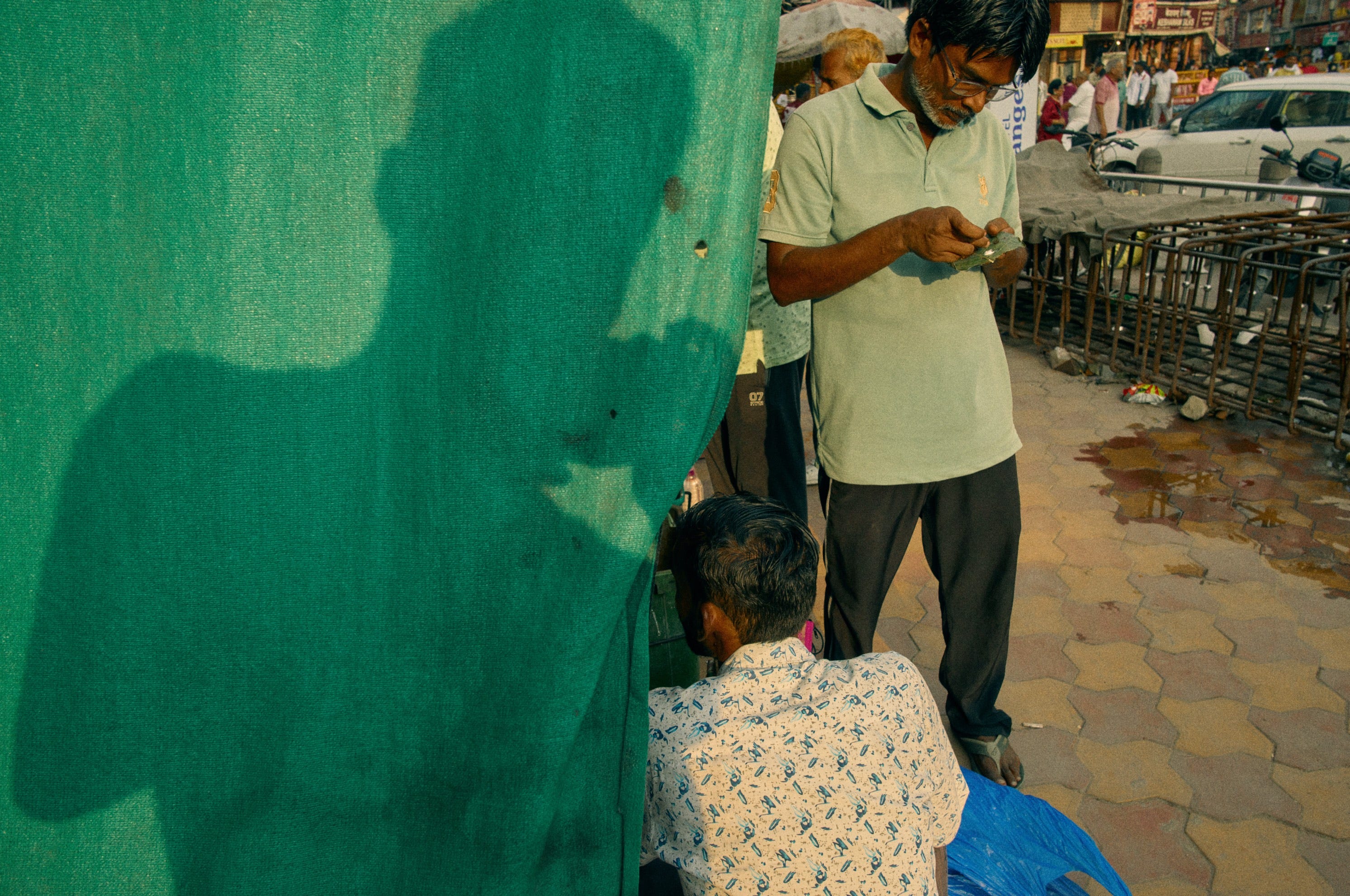
Think of the masters of wide-angle storytelling. How do they use perspective to elevate a moment? Legends like Sebastiao Salgado and Mary Ellen Mark relied on this broader perspective to establish a scene and place the viewer right inside it. Their images felt lived in. Contemporaries like Alex Webb use layers to pack a frame with information and invite the eye to swim around the story. And in cinema, the lesson becomes even more powerful.
Roger Deakins leans on the wide angle to build atmosphere and mood. Kubrick uses it to drive immersion and push depth so far that the frame almost becomes a character. The right wide angle can pull emotion out of a scene that a longer lens may gloss over. In the hands of a great artist, the wide angle is not simply a lens. It’s a feeling.
Bringing this back to the 21mm focal length, you start to see why this tool can be so valuable for our photography. At the widest edge of what still feels natural, you can establish a scene with conviction. You can place your viewer inside a moment instead of outside looking in. You can build depth with layers that feel intentional. You can pull atmosphere out of ordinary environments without drifting into distortion. And perhaps most importantly, you can push yourself into tighter spaces and create a sense of intimacy with your subject that longer lenses simply cannot match.

For the active photographer, once you understand the power of a wide angle, especially one sitting right at the threshold before things seem unnatural, it starts to feel less like a gamble and more like a calculated bet. If you want to learn more about what makes the 21mm focal length special, you can check out my previous story here where I dive into more of the science.
Now that we understand why this perspective can be valuable, let’s dive into Leica’s Summilux offering and see how it holds up for such an opportunistic field of view.
Built for the Bold
Good things take time, and it took 83 years from the first production Leica camera for the first 21mm F1.4 to come into existence. That’s largely because of the technology that Leica required to bring a lens like this to life. From the aspherical elements to the advanced coatings and even the computer modelling, there was so much needed to create this lens.
Compared to a 28, 35, or 50mm lens, wide-angle lenses that contain a large aperture are much more prone to aberrations that need to be corrected. This correction process generally increases the size and weight of a lens. And as you look to scale the volume back down, you have to create more complex solutions to land at a reasonable size. But that’s exactly what Leica has done here.
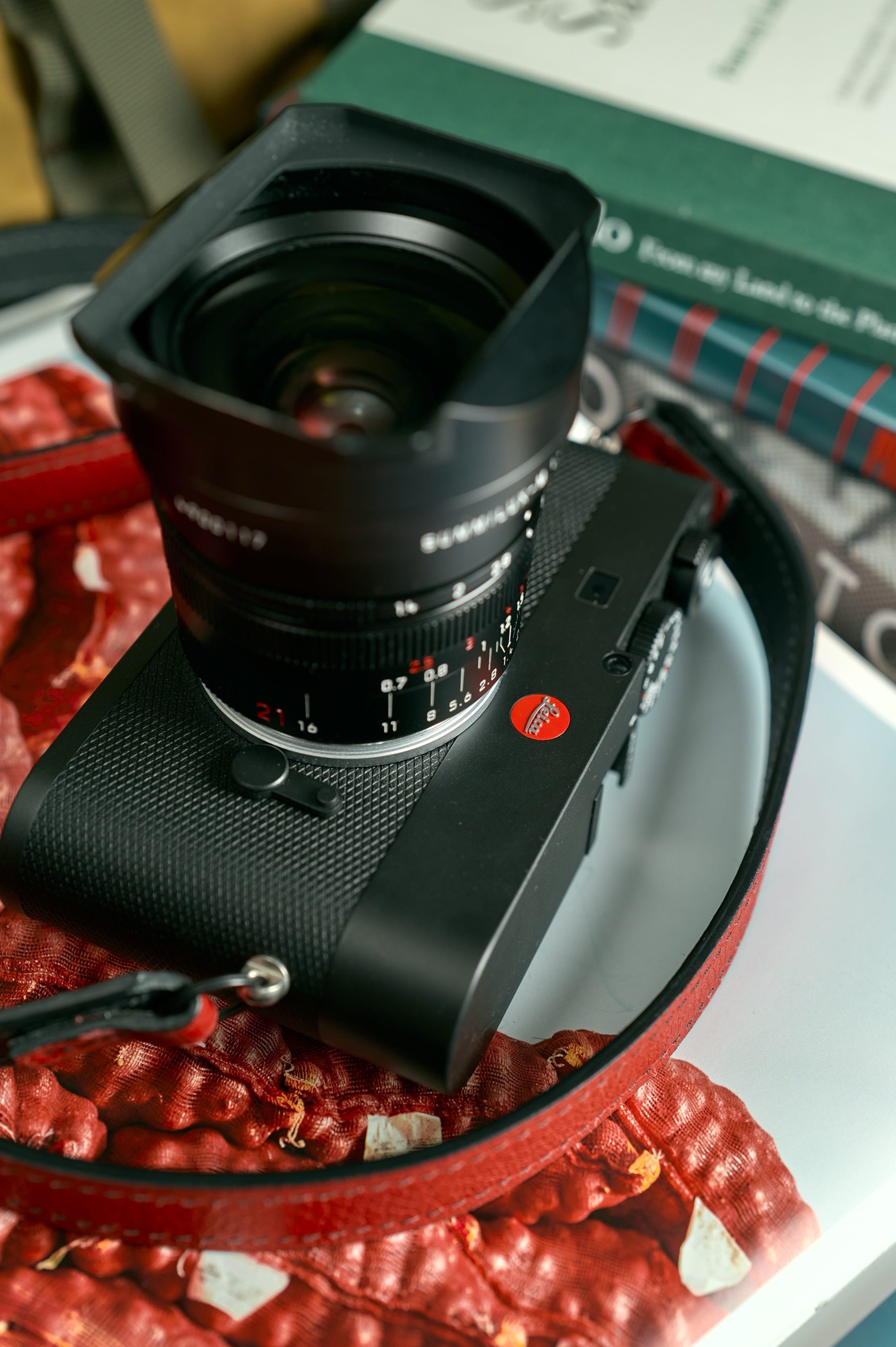
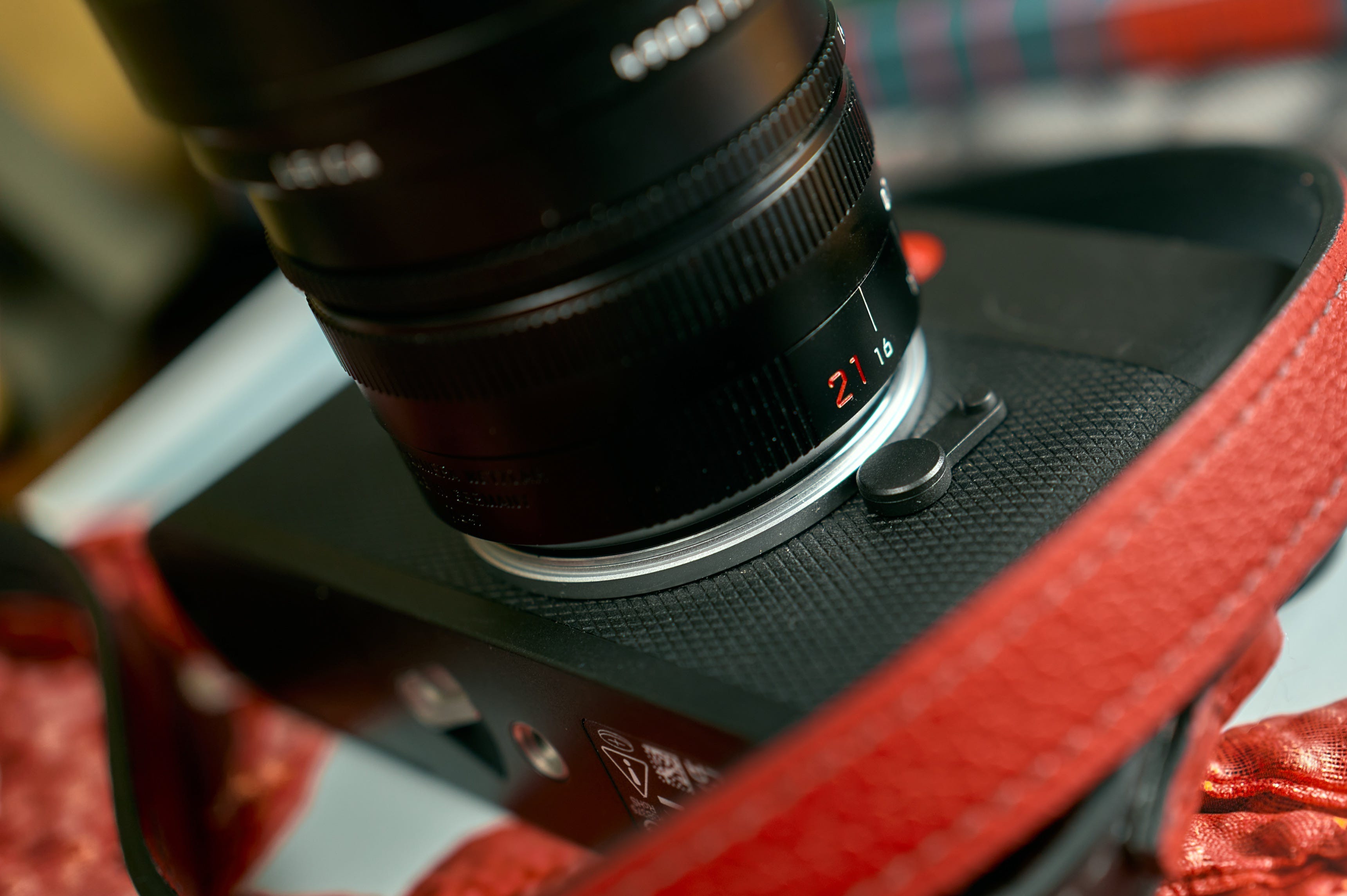
The Leica Summilux 21mm F1.4 is just over 7cm from the front to the rear element. At 580g and with a hood that could swallow a deck of cards, this lens sits toward the larger side of the M glass family. However, it’s still a wonder when you consider how advanced the performance is.

Inside this lens sit aspherical elements that are precision-crafted to deliver a generous amount of sharpness when photographing wide open. There’s a floating lens element inside that moves as you focus the lens. When I asked the team at Leica about this, they explained that quite simply this helps to keep the optical performance at a high level across the whole focusing range.
There are 10 elements housed inside this Summilux. The front and rear elements are these bespoke designed aspherical elements that help to correct aberrations, especially toward the outer fields of the frame. What elevates this performance was the new-at-the-time technology in the form of an aspherical doublet, a process where an aspherical element is cemented to a spherical element. The unique measuring process and extremely tight tolerances meant that this lens could perform exceptionally well for its size. How well? Well, the distortion on this lens lands around -2%, meaning that it’s practically imperceptible in your photography.

The Summilux 21mm was designed to be this high-performing lens from the start, but not something that would be sterile and soulless. What elevates this lens to generational territory and arguably allows it to command such a high asking price is the look that it deals.
Dealer’s Choice
There’s no shortage of F1.4 lenses in the photography world but few strike the jackpot feeling of a Summilux. I’m sure this will come across as hyperbolic fan-service to those outside of the Leica space, but indulge me for a second as I elaborate on what makes this F1.4 so unique.

The secret lies in the departure from clinical results. You see, the glass here is designed in a way where images captured wide open have this expected sharpness at the plane of central focus, but then this exaggerated falloff in sharpness and contrast as you move away from that point of focus. The result is a photo with marginally more depth and character.
In a world where most wide-aperture lenses have this predictable falloff and bokeh, the Summilux line looks to deviate from the norm to create something that feels truly unique. It’s not hard to find an F1.4 lens that’s sharper than a Summilux. But you’d be hard-pressed to find one that delivers this much depth.

The advanced design and distinct visual signature make the Summilux 21mm a singular tool for street, documentary, and environmental portraiture. When you factor in where a 21mm focal length really shines, you can create images that feel different without feeling unnatural. For those that push closer to the story, the images deliver a feeling like you are in the scene. And that’s just an incredible storytelling opportunity for photographers.
Wide-angle lenses are prone to vignetting and this lens is no different. However, the 6-bit coding on this lens allows the camera to imprint some metadata on the raw file. This means you won’t have too much correcting to do once you have downloaded your images into your editor. That being said, stopping down to F2.8 will pretty much eliminate any vignette from your raw file.

For those looking for maximum sharpness across the frame, perhaps for reportage, architecture, or landscapes, shooting at F5.6 will give you optimal results with a healthy amount of depth of field. Personally, I find myself jumping between F1.4 and F8.0 with this lens.
I’ve had this Summilux for the last eight months and brought it to over a dozen cities around the world. There were times when it never left my camera. There were other times when I never reached for it at all. As I look back, the utility of this lens really came down to whether or not the scene in front of me was something I wanted viewers to be a part of. There are so many environments and genres where a lens like this could be great, but ultimately your proximity to the action is going to decide whether or not your images have something special to them.
But when I could get close, and the scene was overflowing with layers, the results felt simply incredible.

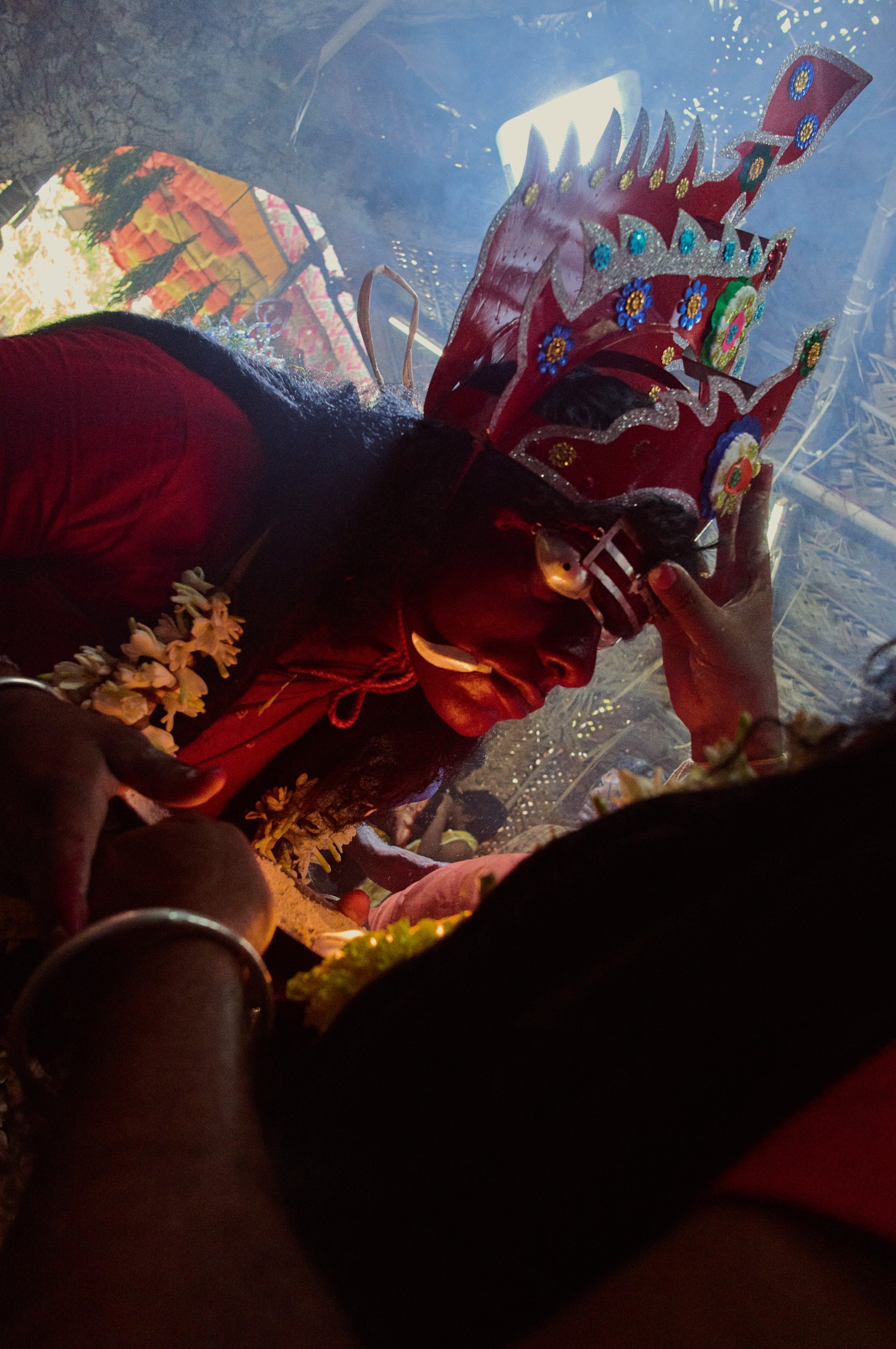
This may be the third Summilux lens in my collection but it’s the first one that felt like it was putting people in the places that I was. Nothing speaks to this more than my time at the Dussehra festival that took place toward the southern tip of India. Traditionally, I woul’ve leaned on my 28mm Summicron to tell a cohesive story about this event. But with this 21, I get to pull people right into the chaos. And do it in a manner where you can appreciate every drip of sweat and wisp of fire.
When you spend a healthy amount of time shooting with this Summilux lens, you’d have a hard time believing that it first hit the market over 17 years ago. But that just goes to underscore the staying power of a meticulously designed product that prioritizes quality and depth.

That being said, it has been a long time since this lens was first released. So, if Leica were to upgrade this product what could they do to create the best Summilux 21mm possible?
Stacking The Deck
For me, there are four clear ways to improve what this lens offers to photographers. First, we borrow from the trend that w’ve seen in recent M lens updates. Introducing close focusing of 30 or 40cm to this Summilux would make for an incredible upgrade. While challenging, it would significantly enhance the look that you can achieve with this perspective. And with the new Leica M EV1, taking advantage of this focusing would be easier than ever.
Next, I’d love to see a focus tab added to the lens to elevate the overall experience. It’s not hard to focus this lens and given the wide angle, range focusing isn’t tricky. But the inclusion of a focus tab would just make the tactile operation feel a bit more polished.
I love the hood that is included with the Summilux 21mm and for the love of all things Leica, I do not want to change this to a built-in hood. However, I’d appreciate a small change where the hood could split into two pieces so the user could insert a 52mm filter of their own. Right now, you need to purchase a drop-in attachment accessory. It’s clever, but I’d prefer something more accessible.
Last, and I may be alone in this, but I would appreciate Leica including a 21mm viewfinder with the purchase of a Summilux 21mm lens. As Leica shooters know, you can’t view the frame lines on a lens this wide so you have to use the back of the camera, a Visoflex, or a dedicated viewfinder to frame with this lens. Unless of course, you’re shooting with an M EV1. Personally, when I look at the whole customer experience, I believe that a dedicated viewfinder should be included. But let me know if you feel differently.

There are some ways in which this lens won’t get much better, and they may prove to be dealbreakers for some users. Most notably, this is a lens that demands a lot of the photographer. It’s not something that makes photography easier, even though the F1.4 might imply that. You have to work to get great results and that’ll push some people away.
There is also the size of this lens. Relatively speaking, it’s a chunky one and it obstructs a good amount of the rangefinder. That makes for an experience that just narrows the audience, given that much of the appeal of an M system lies in how compact and nimble it is.
Lastly, there’s the price. At well over $9,000 USD, this is one of the most expensive lenses in the Leica M catalog. Because of the advanced optics, unique engineering, and strict tolerances, the Summilux 21mm is not a product that’s synonymous with affordability. This, perhaps more than anything, will be the bust card for many Leica shooters.

With all that said, let’s make sure to keep one thing in mind: just because this specific lens may not be for us, that doesn’t mean it’s not valuable for someone else. I’ve seen no shortage of people claiming that alternative lenses offer better value. And they are right. The price-to-performance ratio from budget-friendly glass is simply incredible. But to say that they can deliver what this lens is doing would be a lie.
Having tested several options, I can confidently tell you that there are different 21mm options for different needs. Not everyone needs a Summilux. In fact, most don’t. And it’s great that users have a some choices now. But to imply that there is a “Leica-killer” on the market, something that can do what this lens does, is simply disingenuous. And besides, if any of these manufacturers actually created a Leica-killer, they wouldn’t be in my DMs offering it for free.
Where Have I Landed?
Getting good at blackjack is a double-edged sword. When you’re good enough to count the table, well, you’re playing with fire and setting yourself up to get burned. That’s what it feels like to get intimate with the Summilux 21mm lens. In my time using this glass all over the world, I learned firsthand how great the payoff can be when you really understand what this lens can do. It’s a result so tempting that I’ve found myself in a precarious situation more times than I care to count. But like a shark who just doesn’t know when to quit, I keep coming back.

The Leica Summilux 21mm is a rare draw. It’s a lens that manages to be incredibly wide without feeling warped or gimmicky. Combining an ultra-fast aperture with that signature Leica rendering, it creates a natural, enveloping perspective that lesser lenses simply cannot replicate.
For those who have the courage to get impossibly close to the story and crave a tool that can make viewers feel like they’re in the moment, the Leica Summilux 21mm isn’t just a good bet. It’s the Ace in the hole.
Disclaimer
If you’re asking me, there’s no such thing as a completely objective review, especially in the imaging world. As someone who continues to work with Leica products, it’d be dishonest to suggest I could remove all personal attachment to these tools.
That said, my review structure has always been the same: share what I enjoy, highlight what could be improved, and outline who I believe would benefit most. YouTube culture has pushed this idea of hyper-focusing on perceived flaws and arbitrary comparisons without actually sharing an opinion. I find this useless.
The truth is, most cameras are better than most photographers. The harder and more valuable task for a reviewer is to articulate who a product is best suited for rather than drone on about what it cannot do.
My reviews are designed to give real-world insights for people considering a product for their creative journey. My hope is to deliver that in a way that’s useful, honest, and yes, occasionally entertaining.
Finally, no review I publish is seen, edited, or approved by anyone other than me. That includes Leica and any potential sponsors. Everything you read here is entirely my opinion.
This Week’s Sponsor: Espresso Displays
I’ve been using Espresso displays for over a year, and they’ve become a staple in my workflow—whether as an extra monitor at home or my main screen on overseas shoots. The Pro series is built for creatives who care about colour, clarity, and portability.
You already know the perks of their new 15 Pro. What sets them apart even more is their customer support. Based in Australia, the team at Espresso is focused on building quality products and backing them with top-tier service. As you can see from their Trustpilot score and immediate response to concerns.
I only partner with brands I genuinely use and believe in. After a year of putting these displays to work, I can confidently recommend them to any creative looking for a high-quality travel monitor.
Use code GAJAN10 at checkout to save 10% on your first order. And if you do try one out, let me know how it goes. I’d love to hear about your experience.
Upcoming Events & Workshops
Leica Akademie: Video for Photographers (Seattle)
In March of next year, I’m leading a three-day workshop for photographers who are new to video. Whether you’re looking to create short films, branded content, or simply elevate your visual storytelling, this workshop provides a practical introduction to filmmaking. Learn more here.
Arctic 2026 Photography Adventure
In 2024, I traveled to Svalbard with Quark Expeditions and it was unforgettable. I’m planning a return trip in 2026 with a group of photographers. This is not a workshop. It’s an excuse for like-minded storytellers to visit one of the most remote places on earth. If that sounds like you, fill out this form to learn more.
Next year, I’m heading to India again for our second street photography adventure across the North and South. Seats have just been made available for those looking for a deep, immersive photography experience. Learn more here.
Previous Favourites
The BIG December Contest
Alright, loyal readers! If you’ve been hanging around Church & Street for a minute, you know December means it’s time to go big. And this is hands-down my biggest giveaway yet. Here’s all the goodness one lucky person is taking home:
What’s a Church & Street party without my pals at ShopMoment.com? This year, we’ve decided to stop messing around and just drop a $500 Gift Card straight into someone’s account. Go nuts. Treat yourself to all the gear.
You know I drag my Espresso Display everywhere. And since I can’t stop talking about how essential it is, I put together the ultimate travel bundle so one of you can upgrade your adventures and stop hunching over a tiny laptop screen. One winner will receive a 15” Espresso Pro 4K display, Stand+, and Nylon Case.
This is my personal favourite. Two Wolves was, without question, my best shot of 2025. This image won’t even be available for purchase until next year, but one of you gets to own the first print.
How will I pick the winner? Make sure you’re signed up for this newsletter then leave a comment on at least one post from this month. I’ll be randomly picking one person, confirming they meet the requirements and contacting them directly before announcing the winner publicly.
As always, this contest is void where prohibited by law. Good luck!
What’s Next?
Later this week, I’ll be sharing a story around the documentary photography kit I brought with me to Belize. I’m trying not to write more than two kit stories per year, but I feel like this one shares some valuable context for the story that comes afterwards.
Stay tuned.
GB
I think if I were to describe this post to someone... I'd call it the omnibus of a lens.
I'm convinced. This is a lens I want to start keeping an eye out for. Given that I'm in the Canon family, with an older model, I think I'll have to just settle with finding what I can closest to this range, but I am excited to try and find it!
You have an amazing eye! I find it difficult to compose with ultra wide angle lenses. I have a 21mm elmarit pre asph and after seeing these images I am inspired to step out of my comfort zone of 28-35-50 and put 21mm into circulation. Don't you find the 21 Summilux a bit heavy? Is it worth the extra stops? I find that as time goes by I gravitate towards lighter and smaller lenses. Very cool shots!